Friday, May 12, 2023

Book Review: The Hidden Oracle


Book Review: The Hidden Oracle by Rick Riordan 

Goodreads Description: How do you punish an immortal?

By making him human.

After angering his father Zeus, the god Apollo is cast down from Olympus. Weak and disorientated, he lands in New York City as a regular teenage boy. Now, without his godly powers, the four-thousand-year-old deity must learn to survive in the modern world until he can somehow find a way to regain Zeus's favour.

But Apollo has many enemies—gods, monsters and mortals who would love to see the former Olympian permanently destroyed. Apollo needs help, and he can think of only one place to go... an enclave of modern demigods known as Camp Half-Blood.

My Review: Spoilers ahead for the book's main twist. Proceed with caution. 

Here we are again, back with another Riordan book. I was expecting the usual delightful romp through the Percy Jackson universe, but was surprised to find The Hidden Oracle has a completely different vibe than previous installments, both in good and bad ways. 

As punishment for indirectly aiding Gaea and the giants in their war against the Gods in the previous series, Apollo is cast down to Earth in mortal form and must reclaim the five Oracles that have gone mysteriously silent. Due to his circumstances, Apollo is not the jovial or wide-eyed protagonist that usually appears in the Riordanverse: he's irritable, arrogant, cowardly, and most importantly, an adult. While his memories are hazy enough that "Lester" is able to embody a somewhat juvenile perspective on the world, Apollo's characterization still feels like a bored adult being forced to endure this magical childlike adventure, and his cynicism at times brought me out of the fun of the story. It's hard to say if it's me, or Riordan, or his choice of protagonist (perhaps all of the above), but this book felt like it was bored of its own formula. It constantly tries to buck against its universe's well-cemented formula with differing levels of effectiveness, with Apollo's characterization being the most difficult change to climatize to. He does transform over the book, as well as the series, and his more grating traits are sanded down as he learns and grows. I have read the third book in this series (you can find my review for it here) and Apollo's arrogance, cowardice, and his negative attitude towards the quest are toned down to a much more tolerable degree by that point in the series. In this book, though, it can be a bit much. However, there's still a lot to like about this protagonist. Apollo, as a lover-not-a-fighter God, often tries to avoid solving conflicts with force, like previous demigod protagonists, and is often using music to overwhelm his enemies or advance his quest. As much as Apollo's attitude can be somewhat grating, it was refreshing to follow a pacifist character who will wander off in hilarious directions to avoid a fist fight, and whose creative approach to problem solving breathes new life into a series that has largely solved problems through finding different flavours of how to hit someone. 

Apollo's characterization is far from the biggest formula shake-up. Historically, Riordanverse villains have been large, mythical beasts and creatures, and while The Trials of Apollo still features the existentialist monsters we know and love from Greek myth, the new series features a host of "god-emperors" to join the cast of baddies - real historical figures that have ascended to legend status due to their stories being told again and again. While previous Riordan books have featured humans or demigods working alongside the primordial baddies, the god-emperors from this series are "bosses" while previous humans and even demigods like Luke were treated and behaved more like disposable "peons" or "soldiers." These god-emperors are not only part of the problem, they are leading the problem, and this creates room to question the goodness of humans, the evil within monsters, and everything in between. 

The book raises questions about the capacity of good and evil not only in its villains, but also in its protagonists. Meg, daughter of Demeter, is presented like no other demigod up until this point. Her story doesn't follow the typical pipeline of discovering powers-traveling to Camp Half-Blood-being claimed-establish self at camp-define oneself through questing. When Apollo meets her early on in the book, she already knows how to fight of monsters, has some conception of her powers and origin, and is content to survive in the urban jungles on her own than journey to a camp to be trained like a traditional hero. Meg presents as neurodivergent throughout the novel, from her antisocial tendencies, her lack of concern for hygiene, poor social skills, and odd behaviour, including behaviours that could be considered "stimming." Because she isn't a high-functioning charismatic attractive teenager, Apollo clearly doesn't like her and is even grossed out by her, but as time passes he grows to see past her presentation and comes to care for her compassion, tenacity, and resilience. Because she presents so differently than most other characters, Meg gives readers who may be neurodivergent themselves, or who may feel like the 'weird outcast,' a character they can really connect to. Many of Riordan's character, like Percy himself, are larger than life - a little too charismatic, a little too friendly and patient, a little too eloquent, a little too perfect. While these characters can be excellent aspiration models, it can be intimidating to compare your messy human self to a character so perfect. Meg's imperfections felt like a release of tension in comparison. It also creates a bit of mystery, as Meg doesn't always communicate her thoughts with Apollo or the reader, opening space to question her motivations by the time she comes to betray Apollo to Nero, one of the god-emperors. It's revealed that Meg was actually working alongside Nero throughout the entire book and her betrayal leaves the ending uncertain, a sort of cliff hanger that allows readers to wonder in what capacity Meg will return -- as a villain, as someone who needs rescuing, or as someone who need redemption? Only time, and pages, will tell. 

All in all, I enjoyed The Hidden Oracle for what it was. I enjoyed the change-ups to the formula, and the honest attempt to scratch at good and evil while staying within the bounds of a middle grade formulaic novel, but these change ups both helped and hurt in many ways. Ultimately, it was Apollo's negativity and bitterness that dragged the vibe down and made it hard to enjoy the mythical romp. 

TL;DR: 3/5 stars. A solid Riordan romp that changes up the formula to open up conversations on villains and heroes, good and evil. 


Monday, May 8, 2023

Book Review: Book of Rhymes


Book Review: Book of Rhymes: The Poetics of Hip Hop by Adam Bradley 

Goodreads Description: If asked to list the greatest innovators of modern American poetry, few of us would think to include Jay-Z or Eminem in their number. And yet hip hop is the source of some of the most exciting developments in verse today. The media uproar in response to its controversial lyrical content has obscured hip hop's revolution of poetic craft and experience: Only in rap music can the beat of a song render poetic meter audible, allowing an MC's wordplay to move a club-full of eager listeners.

Examining rap history's most memorable lyricists and their inimitable techniques, literary scholar Adam Bradley argues that we must understand rap as poetry or miss the vanguard of poetry today. Book of Rhymes explores America's least understood poets, unpacking their surprisingly complex craft, and according rap poetry the respect it deserves. 

My Review: This book is Adam Bradley's love letter to rap, and what a letter it is. Despite being a nonfiction book set on teaching readers about the fundamentals of rap poetry, Bradley writes this book more like a memoir, centering his real-life experiences of studying and loving hip-hop. In this way, the book feels intimate and personal, while making solid arguments for the recognition of an art form that promotes community pride, encourages activism, and rebels against a system that has actively oppressed minorities since its inception. 

Bradley breaks down rap into six major elements and spends a chunk of the book looking into each element: rhythm, rhyme, wordplay, style, signifying, and storytelling. Bradley begins the book by digging into rap's influence on the world, its historical roots, role in black communities, and what separates it from other forms of poetry or music. He directly tackles difficult questions that have plagued rap for years and seeks to "explain without apologizing" when it comes to the genre's homophobic, misogynistic, or violent lyrics that appears antithesis to political activism. He does this by framing hip-hop within the socio-economic environment from which it grows, its lyrics therefore a reflection of the intergenerational trauma of black communities and their desire to be heard, to have a voice. As any troubled kid looking for attention will tell you, sometimes being unapologetically offensive is the best way to make society pay attention to what you have to say. Rap's authenticity resonates because it doesn't censor its expression; it just spits feeling onto the page and lets the dominos fall where they may. Unfortunately, that leads to some problematic lyrics now and again. 

Bradley splices in bits of history, interviews, and quotes from famous rappers, industry professionals, poets, English scholars, as well as plenty of rap lyrics, to illustrate hip-hop's place in the wider linguistic, poetic, and musical world. Bradley's writing is easy to read and engaging, and by centering his own passion for the subject in first person reflections, readers are able to easily connect to the subject matter through Bradley's enthusiasm. At times, his wordplay rivals the lyricists he is praising, ultimately leading to a delightful read obviously imbued with substantial passion for the art form. 

TL;DR: 3/5 stars. A well-written and passionate analysis of rap poetics. 

Wednesday, May 3, 2023

Book Review: Far From You


Book Review: Far From You by Tess Sharpe 

Goodreads Description: Sophie Winters nearly died. Twice. The first time, she's fourteen, and escapes a near-fatal car accident with scars, a bum leg, and an addiction to Oxy that'll take years to kick. 

The second time, she's seventeen, and it's no accident. Sophie and her best friend, Mina, are confronted by a masked man in the woods. Sophie survives, but Mina is not so lucky. When the cops deem Mina's murder a drug deal gone wrong, casting partial blame on Sophie, no one will believe the truth: Sophie has been clean for months, and it was Mina who led her into the woods that night. 

After a forced stint in rehab, Sophie returns home to find a chilly new reality. Mina's brother won't speak to her, her parents fear she'll relapse, old friends have become enemies, and Sophie has to learn how to live without her other half. To make matters worse, no one is looking in the right places, so Sophie must search for Mina's murderer on her own. But with every step, Sophie comes closer to revealing all: about herself, about Mina, and about the secret they shared. 

My Review: Sharpe's Far From You exists in a nebulous space for me. Even after several months, I still can't decide how I feel about it. It's a mixed bag; while the positives are on point, the negatives make me so frustrated that I wanted to throw the whole book out, good parts be damned. For one, it's an excellent read, full of twists, turns, red herrings and scattered clues that make it a satisfying mystery to unravel. It also has a deep emotional core that sits atop a romance that meshes together so many confusing adolescent feelings and experiences: love, jealousy, anxiety, social stigma, interpersonal drama, grief, and loss. The romance captures a realistic look at teenage social dynamics that spiked a wave of nostalgia for my own adolescence, where the interpersonal drama and intense emotional reactions were all claustrophobically bottled up within our tight-knit teenage cliques. Yet despite the realism, the book falls into the YA publishing trap when it comes to depicting teenage drug use: wanting to borrow the drama of addiction while failing to actually represent people with addiction. YA publishing errs on the side of caution when tackling these stories, preferring to depict addicts as victims rather than as having an active hand in their own addiction. While this is the safer approach when appealing to parent pocketbooks, it purposefully skews the perception of addiction and differentiates between "deserving" and "undeserving" addicts. When the point of writing a story like this is to encourage empathy towards people living in different circumstances, creating this distinction in fiction that isn't reflective of reality is more problematic than not publishing fiction on addiction in the first place. 

Before I elaborate on its problematic elements-- we'll start with the basics. The book features a first person POV with a writing style focused primarily on action, with little introspection or lyricism to its style. This helps to keep the pacing swift as the mystery builds upon itself layer by layer. The text also features heavy flashbacks that jump all over the timeline, and this scattered sense of events shows the reader how Sophie's trauma and addiction have rattled her memory and ultimately the story of her life. The book is gritty, managing a noir detective-like tone, but not as much as one would expect -- Sophie largely hangs out with non-drug users, which significantly reduces opportunities for sketchier scenes. The book's focus on the romance subplot also detracts from its 'edginess.' The depictions of drug use are minimal and purposefully vague, which ultimately prevents glamorization and copycat behaviours. There are just enough signal words, like 'snorted,' to give hints to the methods, but no overt descriptions of her use.  

As far as queer representation goes, this book is wonderful. It features a relationship between a bisexual woman and a lesbian, and explores the nuances of how labels affect them - Sophie's ability to love men as well as women allows her to blend in with heteronormative society, while Mina doesn't have that option. The book also beautifully conflates the stigmas of addiction with WLW attraction - showcasing how both addicts and LGBTQ2S+ people live dual or shadowed lives that prevent them from self-actualization. The text also digs into how homophobia manifests differently for bisexual vs lesbian women, which is just... *chef's kiss* Books that dig into the nuances of identity and interpersonal relationships really get my motor running, because expanding empathetic understanding for those different from you is what writing is all about. 

Which is why the depiction of drug addiction left me seriously disappointed. Firstly, I want to be clear: Far From You is not completely unrealistic. There are a lot of very real elements to Sophie's addiction that do speak truth to the experience, but the narrative still falls into the same victimization pits that claim many other YA books dealing with the topic. The origin of Sophie's addiction is revealed within the first few pages: a car accident left her with chronic pain and a near--unlimited access to prescription painkillers. The addiction that develops almost feels inevitable. The 'car accident' narrative is extremely popular in YA when tackling drug addiction, because it removes a character's personal responsibility for their addiction. This unfortunately creates a distinction between "deserving" and "undeserving" addicts --  those who are victims of treatment mismanagement are therefore worthy of our attention, support, and treatment, while characters who instigate their own addiction through the use of street drugs are ultimately "monsters" who deserve to be vilified and forgotten. Unfortunately, Far From You highlights who is "deserving" and "undeserving" very clearly when Sophie encounters a teenage meth addict later in the book who is trying to get clean -- she is incredibly rude to him, condescending, and treats him as the liar 'addict' stereotype - a stereotype she vehemently fought against when parents and adults pinned it on her. This lack of empathy for someone going through nearly the exact same situation as her feels strange - I could write it off as a character flaw, if the narrative itself didn't treat Sophie and Matt so differently. Matt is in recovery, yet spoken about like garbage, the worst is assumed about him, he goes to NA meetings, and he is heavily watched by his entire family. He's treated as dangerous, as a bomb that's about to blow, while Sophie, on the other hand, gets incredible freedom, and people act like they're just disappointed in her -- when Sophie is the one who has supposedly gotten someone murdered. 

This unbalanced treatment left a bad taste in my mouth, especially because in my experience working in a youth detox/rehab facility, teenagers don't follow Sophie's trajectory of car accident, pain killers, addiction. They usually look more like Matt, and have chosen to use substances to cope with trauma, or because their parents did it, or because of abusive peer pressure, and now find themselves powerless against their addiction. The Matts of the world are just as deserving as the Sophies, and I'm tired of fiction that draws a line between types of addicts, because this distinction influences our politics, our laws, and how we treat the most vulnerable in our society. Frankly, I think understanding what makes someone reach for a pipe is far more fascinating than borrowing the drama of drug addiction through a victimization narrative that allows characters to "play bad" without being "one of them." 

TL;DR: All in all, 4/5 stars. A story about love and loss that enmeshes the stigmas of homophobia and drug addiction, while ultimately failing the addicts it hopes to represent. 

Thursday, January 5, 2023

Book Review: The Last Unicorn


Book Review: The Last Unicorn by Peter S Beagle 

Goodreads Description: The unicorn discovers that she is the last unicorn in the world, and sets off to find the others. She meets Schmendrick the Magician—whose magic seldom works, and never as he intended—when he rescues her from Mommy Fortuna's Midnight Carnival, where only some of the mythical beasts displayed are illusions. They are joined by Molly Grue, who believes in legends despite her experiences with a Robin Hood wannabe and his unmerry men. Ahead wait King Haggard and his Red Bull, who banished unicorns from the land.


My Review: When it comes to classics, The Last Unicorn is the quintessential fairy tale. Beagle is thrown up there with other classic heavyweights like Tolkien, Lewis Carrol, or EB White, and it's clear why. Beagle crafted a world rich with wisdom, where fact and fiction twist until they call into question the objectivity of perception. 

The Last Unicorn features a typical fantasy setting modelled after medieval Europe - full of kings and knights, peasant villages, and royal courts. Yet the familiar mythical beasts of classic fantasy are oddly lacking - the colour feels zapped out of the world, much like the unicorn's coat fading from sea-green to a snow white. Magic has been drawn to the edges of the map, leaving some to question its existence at all, yet the unicorn, the harpy of the Midnight Carnival, even Schmendrick's magic, as underwhelming as it may be at times, points to the existence of something greater. The text makes a convincing argument for the existence of magic in our own world, as some characters, even when faced with magic and myth, are unable to see it. Sometimes this is due to magical interference, but usually it's the characters' closed-mindedness that prevents them from seeing outside of their own perception, leading them to see only what they expect to. The entire book plays with themes of reality and illusions, myth and fact, all funneled through an individual's ultimately malleable perception. Since this book was published in 1968, it's highly likely that Beagle shaped modern fantasy with this concept of magic existing just outside our periphery, and it's exciting to see this concept executed so well and thoughtfully. The Last Unicorn doesn't just throw in some cheap "veil" explanation, but dives deep into concepts of seeing and recognition that will make you re-evaluate what might be lurking in the corner of your own vision.

The book is written as a fable, like the ones Molly Grue is so enamored with, and while this approach allows for an easy dispense of wisdom, it keeps the reader at a distance and doesn't allow for easy self-insertion. Many times while reading, I wondered what was really going on with Schmendrick and if his intentions were actually what they seemed. Beagle achieves this through an omniscient narrator that gives us glimpses into each character's head before pulling back out again. The audience therefore never fully knows each character, making it difficult for readers to identify with them. This likely led to my lower rating, as I love identifying with characters while reading as a form of escapism, though I acknowledge this would have dealt a blow to the fable atmosphere and prevented the characters from reaching a more 'legend-esque' status. 

The writing throughout the book is breathtaking and creates many quotable lines heavy with meaning. While Beagle's world stands on its own, there are many allusions to real life plays, poetry, books, and more that connects The Last Unicorn to a sense of 'real' life and history. This connection to our world, combined with the way the text harmonizes various ideas of what a 'traditional fantasy fable' constitutes, creates a seamless mythical story that feels far older than it is, since it resonates with so many intangible cultural conceptions of medieval fantasy. It's filled with whimsy that feels directionless at first, but hums with thematic meaning. The lyrical language alone carries readers into a world of wonder and draws together the fable-like aspects, soft magic system, and distant characters to create a fairy tale truly deserving of the name. 

You can't go wrong with this classic. It feels like the wellspring from which much of modern fantasy has erupted from. 

TL;DR: 3/5 stars. A classic modern fairy tale employing all the wit and whimsy language has to offer. 

Tuesday, November 15, 2022

Book Review: Binti


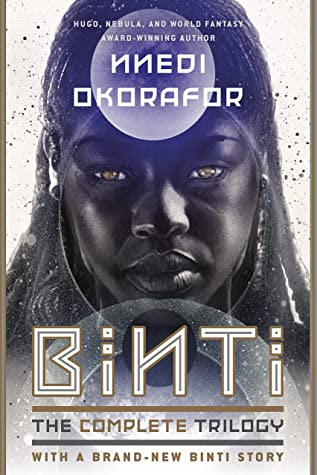
Book Review: Binti: The Complete Trilogy by Nnedi Okorafor 

Goodreads Description: In her Hugo- and Nebula-winning novella, Nnedi Okorafor introduced us to Binti, a young Himba girl with the chance of a lifetime: to attend the prestigious Oomza University. Despite her family's concerns, Binti's talent for mathematics and her aptitude with astrolabes make her a prime candidate to undertake this interstellar journey.

But everything changes when the jellyfish-like Medusae attack Binti's spaceship, leaving her the only survivor. Now, Binti must fend for herself, alone on a ship full of the beings who murdered her crew, with five days until she reaches her destination.

There is more to the history of the Medusae--and their war with the Khoush--than first meets the eye. If Binti is to survive this voyage and save the inhabitants of the unsuspecting planet that houses Oomza Uni, it will take all of her knowledge and talents to broker the peace.


My Review: Okay, I'll be the one to say it. You know what's wrong with sci-fi? Not enough magic in it. 

Okorafor took on the challenge to blend the two genres in her space opera novellas about a human woman accepted into an intergalactic university - the first of her tribe to leave her humble Himba home and sharpen her skills alongside multiple races in an intergalactic university. For Binti, her math skills aren't just about numbers, they're a type of magic that allows her to understand other life forms and influence the universe. The novellas employ a soft magic system that's purposefully vague on its limitations, but appears to mainly facilitate communication between Binti and the wider universe. Math, as they say, is the universal language. 

In the west, science fiction and fantasy genres seem to inhabit opposite ends of the spectrum - mimicking the divide between religion and science outside of fiction. Religion and science are seen as dissonant forces, like oil and water, fascists and freedom, or the gays and a monochrome color scheme. Okorafor, however, takes a very different approach. The Binti novellas showcase a more African perspective by representing science and magic as two heads of the same coin. These novellas don't seek to separate and categorize, but to harmonize the various pieces of our world into one complete image. Math is a language. Science is only a technical definition of magic. The currents that run through machines also run through humans. We are made of stardust. This fusion of ideas unleashes a torrent of new opportunities for a genre that, like science itself, isolates pieces from the whole -- making itself smaller in an attempt to isolate truth. The Binti novellas are antithesis to that, and therefore a breath of fresh air for the genre. These novellas tackle the whole of human experience, yet lean on soft magic and vague technological explanations to enhance the mysticism of life -- that not everything can be known or seen, even when taking in the whole picture. 

Okorafor has stated that the Binti novellas are not young adult, but the novellas very much read like YA works -- coming of age narratives, leaving home/parents to exert independence, a school setting, the focus on action over introspection, the flavour of 'chosen one' that follows Binti throughout her adventures, etc. There's an innocence to these books that is incredibly heart-warming and makes these works accessible to both the young and young at heart. The way conflict is resolved over the works also adds to a more innocent/YA style, as each problem is resolved with relatively few complications. This is likely due to the novella format, as if these stories were combined into a single novel, it would prompt more escalation before resolution. This trend breaks by the end, as the conflict from Home and The Night Masquerade bleed into one another to make for a more triumphant climax. 

These stories tackle a variety of very human topics while taking us beyond the stars - racism, xenophobia, diaspora, transhumanism, trauma, etc. Binti spends most of the text reeling from the traumatic massacre that takes place in the first novella, which forces her to dig deep into her identity to create an internal stability and find resiliency. Several characters remark on Binti's unstoppable tenacity, yet Binti's healing remains at the forefront of the story, creating a balance between strength and pain that felt true to the human experience. The interactions between human and alien cultures also felt true to human psychology, as opposed to sci-fi's tendency to view culture clashing only through a militaristic lens. The first novella leans in that direction, as the Meduse at first appear quite militaristic in their willingness to complete a suicide mission for honor, their formidable war history, hive-mind structure, etc., yet the Meduse culture is rounded out as the novellas progress, creating a more nuanced picture of their reactions to other cultures. The university offers the perfect setting to explore xenophobia, as characters from very different races and backgrounds have to co-operate with each other, creating a setting that closely mirrors our own western society. Instead of the savage environment that sci-fi loves, where racism and xenophobia are expressed in kill-or-be-killed scenarios, a setting where different creatures have to co-operate and learn from one another or risk expulsion or jail, opens opportunities to show the nuances of our own experience reflected back under a fantastical metaphor. It's easy to see why these stories collected their share of Hugo and Nebulas. 

The only reason why I couldn't give the book full stars was I found a weird number of plot holes or confusing choices throughout, but particularly in the first novella. Some things are lightly contradicted later, and some moments felt weak without a proper explanation. Binti is used as a translator for the Meduse, yet when they arrive at the University, it's discovered Meduse is commonly-spoken. She knows what forests smell like, despite only reading about them. Okwu begins the story happy to die for a mission it knows it cannot win, yet in subsequent novellas, says it wouldn't fight a war it couldn't win. Little inconsistencies like this that may be due to the novellas being written at different times and them compiled into this book at a later date. 

All in all, what an amazing story. The only other complaint I have is there isn't more, and I hope Okorafor will write more novellas in Binti's world, should the ideas be there. I highly suggest picking up a copy, especially if you're a fan of science fiction, young adult, or just a damn good story. 

TL;DR: 4/5 stars. A beautifully human space opera that carries readers to the stars and then back home again. 

Wednesday, September 28, 2022

Book Review: Magical Boy


Book Review: Magical Boy by The Kao

Goodreads Description: Although he was assigned female at birth, Max is your average trans man trying to get through high school as himself. But on top of classes, crushes, and coming out, Max's life is turned upside down when his mom reveals an eons old family secret: he's descended from a long line of Magical Girls tasked with defending humanity from a dark, ancient evil! With a sassy feline sidekick and loyal gang of friends by his side, can Max take on his destiny, save the world, and become the next Magical Boy? A hilarious and heartfelt riff on the magical girl genre made popular by teen manga series, Magical Boy is a one-of-a-kind fantasy series that comic readers of all ages will love.


My Review: This will be another review in my series of, "I don't usually review this genre, but..." Magical Boy is a beautifully drawn, full colour graphic novel with an anime inspired art style. The story originally debuted on the comic website Tapas, which is where I first stumbled upon it. I was thrilled to see it was picked up for print publication by Graphix, an imprint of Scholastic. This story holds a special place in my heart, so I'm thrilled for the opportunity to share my thoughts and help connect it to more readers. 

To begin, the art! This book is drop-dead gorgeous. The cover gives you a glimpse of what's in store, but the art inside takes it a step further, from small intimate panels to gorgeously detailed fight scenes that convey a tremendous sense of movement and action. The colours pop, backgrounds are detailed, the linework is clean, and the art blends an eastern and western comic style that is refreshingly original. Traditional anime/manga facial expressions and expressive reactions are mixed with a western action style of large, detailed panels and classic comic sound effects, like 'whoosh, pow, smack.' Unfortunately, the panels were originally drawn for a vertical setup on a webpage, where readers could scroll infinitely, so at times, the panel spacing on the page is cramped and the flow is disjointed. While the panels and speech bubbles are usually arranged in a way that takes your eye smoothly through the scene, some pages failed to achieve a flow and became messy and confusing. Even though I had already read the comic, I struggled on some pages to figure out in what order some panels and speech bubbles were supposed to be read. This confusion was overall minor and didn't take away from the story. 

As for the story, have you ever been bouncing around the internet and stumbled across a story prompt idea that you would die to see happen? Magical Boy is one of those. The world we live in is incredibly gendered, though many cis people fail to realize how deep the gendered expectations go, as many have never resisted or took issue with them. Magical girl stories are often hyper-feminine, and when you toss a transman into the mix, who is trying to assert his own masculinity through stereotypically masculine behaviours, you've got an excellent environment to play with and parody gendered expectations in western society. The magic that gives Max his feminine battle outfit also works as an excellent metaphor for cisnormative expectations - as he attempts to transition, the magic pushes Max towards a femme presentation, until he's able to assert his will and the magic adapts to an outfit that matches his identity. One major change I noticed from the online version was Max's deadname has been censored in dialogue, but left untouched if it's part of the background/scene. This sort of bothered me, as I felt it was silly to censor the name when the book tackles some of the realities of transitioning, which includes misgendering and deadnaming. I understand that the target audience, however, is younger and probably far more sensitive about seeing beloved characters misgendered than my old, jaded soul, so I can understand why the change was made. 

At times, the story can be a bit cheesy, but more in a wholesome way than overtly cringy. Then again, I do enjoy a nice helping of cheese now again, it keeps my soul from becoming too black and crispy. The story is mostly focused on Max, his transition, and trying to get his mom to accept and understand him, so some part of the narrative can fall a little flat. The villains were very one-dimensional, as if they were trying to hit every square on the Classic and Stereotypical Villain Bingo card, but as the fantasy is mere metaphorical dressing for the interpersonal drama, it didn't take away from the story that much. However, if the antagonists and magic system had more depth put into them, it could have reinforced the interpersonal themes and scaffolded this story up into something really cool. Max's friends also come across as a little one-dimensional, as they don't seem to have lives outside of Max and focus entirely on him and his issues. While this turns them into a wholesome cheerleading squad, it constricts the story into something small and simple, which has its own set of pros and cons. 

All in all, Magical Boy is an adorable, heartwarming, gorgeously drawn trans story that makes a great addition to any child's library. I can't wait to get my hands on volume 2, the finale, if only so I can flip through and admire all the beautiful artwork. 

TL;DR: 4/5 stars. A hyperbolic trans metaphor using the magical girl trope to highlight the absurdities of gender. 

Tuesday, September 6, 2022

Book Review: The Book Thief


Book Review: The Book Thief by Markus Zusak 

Goodreads Description: It is 1939. Nazi Germany. The country is holding its breath. Death has never been busier, and will be busier still.

By her brother's graveside, Liesel's life is changed when she picks up a single object, partially hidden in the snow. It is The Gravedigger's Handbook, left behind there by accident, and it is her first act of book thievery. So begins a love affair with books and words, as Liesel, with the help of her accordian-playing foster father, learns to read. Soon she is stealing books from Nazi book-burnings, the mayor's wife's library, wherever there are books to be found.

But these are dangerous times. When Liesel's foster family hides a Jew in their basement, Liesel's world is both opened up, and closed down.


My Review: There will be mild spoilers for Max's arc in this review. 

I have... many conflicting feelings about this book. The one I can't shake is this work is problematic AS HELL. It reminds me of the politically correct mentality that was in its relative infancy in the mid 2000s, when our understanding of feminism was 'girl power' marketed by men, when allyship was enveloped by white saviour mentalities, when minorities were fetishized for their pain and their stories commodified by privileged folk. 

I mean, we still have all that going on, but at least we're somewhat more aware of it happening these days.

Before we dig our digits in the dirt, let's take a walk on the brighter side and focus on the book's positives. The Book Thief's use of language is gorgeous and evocative, its diction thick with richness and flavour that oozes off the page. Death's preoccupation with colour lends an extra edge to emotional scenes as colour is used as metaphor for individuals and feelings, as well as pathetic fallacy. Because of this, the colour descriptions infuse deep emotionality into the mundane, which reinforces the hollowness of experiencing an apocalyptic moment in history while you still have to buy milk and go to work. Zusak also uses creative verbs and descriptors to imbue life into his scenes, from "the sound of the turning page carved them in half" to "the conversation of bullets." While some of his descriptions  could be considered flowery, it's kept to a minimum so it doesn't drag down the pacing. A lot of careful thought was placed into the use of words throughout, both as a theme and a practical application. 

I wish the book's beautiful language could carry it alone, yet some of that early 00s thinking held it back from what it could have been. As my creative writing teacher would say, death is a source of instant drama that immediately cranks up the tension and intensity of the story, and when your novel is narrated by Death himself, taking place in one of the most genocidal periods in modern history, you're responsible for depicting the nuance of all that drama. Zusak juggles a boatload of suffering, death, grief, hope, and resiliency in The Book Thief, but centers the narrative around the day-to-day life of the Germans. By focusing on the German perspective, Zusak inserts a lot of domestic normalcy that readers can relate to, and contrasts it against the most dramatic and harrowing events in modern memory. 

I understand that focusing specifically on the Jewish experience -- hiding, life in the ghettos, or surviving concentration camps-- would make it harder for average readers to relate. I also understand the appeal to feature a story about the Germans who resisted, as that's a narrative with a lot of potential that isn't usually addressed when talking about WW2. The problem comes in when understanding that the story of the Holocaust, which this and most WW2 stories center back on, is a Jewish story to tell. Jews were dehumanized and their stories were de-emphasized so much that it took decades to re-center the narrative back onto the Jewish experience. At the time this book was written, white saviour mentality was still ripe in mainstream culture i.e., white people pleading the case for what black Africans needed, Indigenous history taught by and through the perspective of white people, etc. The Book Thief manages the major missteps of any white saviour narrative: focusing the story away from the marginalized minority and onto the privileged majority, while also objectifying the minority characters and fetishizing their pain in order to prop up the virtues of the privileged group. While I think a story that looks at the Germans who resisted Nazi ideology can be good, that's not what this book is about. It's about Max's suffering and how good Lisel's family is for caring about his well-being, instead of focusing on what a life of resistance would really look like. Where are the narratives about Sophie Scholl and her resistance efforts? Books that seek to tell the stories of Germans who resisted should focus on that experience, and not the suffering of Jews. The closest the Book Thief gets to depicting what it would be like living two lives was the scene where Hans smacks Liesel for speaking out against the Nazis, and yet this scene is undermined by the threat that Max may be discovered if they do not behave like proper Nazis, bringing the focus again back onto Jewish suffering. 

Before starting the book, I knew that Max, a Jewish man, comes to live in Liesel's basement, as it's part of the back cover blurb, but I was surprised how little the story featured his perspective or gave him any opportunities to demonstrate autonomy. While there are some scenes from his perspective when he lives with Lisel's family, they focus on his suffering with brief moments of joy thrown in to enhance the drama of his pain later. He has dreams about boxing Hitler and laments about being a burden, but again these only highlight his helplessness and misery. Even when he eventually leaves Liesel's house, we don't see how he survives on his own - instead we are left in the dark until it's revealed he was picked up by the Nazis and taken to a concentration camp. He becomes a lamp in the narrative after he leaves the house, as once Liesel sees him marching with Jewish prisoners through the city to the concentration camp, he's merely an object for her to demonstrate her virtue around. There were plenty of opportunities to give him some autonomy over his circumstance - show his wit, resilience, and ingenuity as he's surviving on his own - and it might have mitigated some of the narrative's exploitative feel. I understand this may have taken away from the day-to-day mundane perspective that Zusak was going for, to which I will argue: then Max should have been removed from the story. At the very least, it may have lessened the blow since seeing Max the Sympathy Lamp up close only highlighted how the narrative sidelined Jewish voices in a story about a major event in Jewish history. 

It's been a couple weeks between finishing the book and writing this review, and in that time my feelings on the book have only soured. Despite its critical acclaim, the book's attempts at allyship have aged considerably in the 17 years since it was published. Instead of diving into the psychology and real experience of Germans resisting Nazi rule, Zusak took the lazy way and focused on the suffering of a marginalized group to squeeze out easy drama for his narrative. 

TL;DR: 3/5 stars. Sideling Jewish voices in a Holocaust narrative? Bold move, Captain.