Showing posts with label reading. Show all posts

Saturday, December 30, 2017

Too Sensitive for Sensitivity Readers

Quote from Kira Hawke


'Twas the day before Christmas, and all the writers on twitter,
Were snuggled in their jammies, filled with wine and baked fritters.
When a post appeared online that arose such a clatter,
and had writers yelling, "Sensitivity readers matter!"

The New York Times is known for ruffling feathers in the YA community and kid lit with tone-deaf articles based in sensationalism rather than the full picture. Just in time of the holidays, they've gifted us with a new piece called, In An Era of Online Outrage, Do Sensitivity Readers Result in Better Books or Censorship? in which NYT picked and chose their words in a way we might call censorship to make it seem like the white authors who've used sensitivity readers were victims of an oppressive scheme to destroy art. I hate to give articles like this any extra hits but I think it's important to read the other side of the story (hah). Plus, I like knowing the opposing viewpoint, so I figured you would to.

So What Are Sensitivity Readers Anyway?

When an author finishes writing a book, it's not actually finished. Not if that writer has plans to publish it in any way. As said in many acknowledgement sections in books, "writing is a solitary art, but publishing is a group project." When someone writes a story, it is a wholly personal thing, a reflection of what's in their heart, and a testament to their experience. But once that person shares their story with others, it's no longer theirs. Readers are affected by it, and they ascribe their own interpretations and meaning that can change the message actually being conveyed, which makes the whole writing-publishing process a bit trickier. At the end of the day, you are trying to convey a message or story, and you want to do that as clearly as possible without inadvertently having your narrative say something you didn't mean to, such as reinforcing racism. This is where sensitivity readers come into play.

Sensitivity readers are a part of a book's editing stage, and are similar to beta readers. What makes them different is they are specifically looking for how a minority group is portrayed on the page, looking for accuracy, and to get rid of things that might be offensive. When writers write outside their cultural experience, they can sometimes get it wrong. No matter how much research one does-- and writers often have to research non-stop while writing-- when writing about a different way of life, tiny inaccuracies can pull readers out of books, can cause readers to put it down, or just plain offend someone. (Think of the marine biologist getting so worked up over Jaws inaccuracies, then imagine POC and minorities feel that except x100000). Sensitivity readers are people with the same experience or background as the characters, who can (hopefully) pick out the things that would be culturally insensitive or inaccurate. That way we could avoid the whole cycle of people getting mad on the internet and poorly worded apologies and conveniently trying to forget that book is a thing.

Notes from sensitivity readers hold no more power than a beta reader or your mom's opinion ("Oh sweetie, your characters shouldn't use so many naughty words") and though major publishing houses are starting to hire them, most sensitivity readers are unpaid, unofficial, and just trying to help out their fellow writers. Though some people's reactions have been harsh, sensitivity reads are a voluntary thing for writers, and many do seek them out. Because at the end of the day, this is a craft issue. Characterization is a major component of good writing and this is just another side to writing characters. For decades, publishing has, and most media as well, assumed the only experience out there is white, able-bodied, straight, with westernized views and a Christian background. That any other experience is considered 'niche,' 'specialized,' and in a 'significant minority,' and most people have the same experience in life. Slowly, we're realizing the opposite is true. Each of our experience is so varied and our culture hugely affects how systems and people react to us, that we can't paint all people in one brush. That even the experience of walking down the street is hugely different if you're white, compared to black or Muslim. Now that we're realizing that, we are striving to make each character's experience wholly accurate, and sensitivity readers, or input from people in the same shoes as your character, is vastly helping writers improve their craft. We're taking characterization to a new, better level. We're bringing our literature to eye level with reality, so we can more accurately express what it's like to be alive in this world.

The NYT article really said it best in the article with: "Like fact checkers or copy editors, sensitivity readers can provide a quality-control backstop to avoid embarrassing mistakes, but they specialize in the more fraught and subjective realm of guarding against potentially offensive portrayals of minority groups, in everything from picture books to science fiction and fantasy novels."

Oh yeah, fact checkers handling some seriously subjective subject matter. Which is probably why things are getting a little explosive.

The "Outrage"

I hate how the word "outrage" has been used lately. It's thrown out as a demeaning phrase used to devalue legitimate concerns, often raised by people of colour. Adding "online" seems to knock it down another peg, insinuating that because it's done online it has less merit somehow. It's not people marching in the streets, so it must not matter. Which is utterly ridiculous.

Minorities and people of colour have for decades felt this level of outrage for misrepresentation in
Black people protesting Birth of a Nation in 1915
media. Sometimes, before the days of the internet, they took to the streets to express their disgust at the level of harmful misrepresentation. Now that we have the internet, there is a public platform for minorities and POC to voice their concerns-- allowing publishers to easily see it and respond. Which makes it so much harder on the part of publishers, producers, creators, everyone, not to take responsibility for these things. If you know better, you do better. Or isn't that what we expect of each other? Publishing is beginning to listen to these concerns and is responding with sensitivity readers, especially children's publishers. As they publish content for the most vulnerable and impressionable, they need to ensure their representation is accurate. More than just making POC kids feel bad about themselves, books with stereotyped characters and cultures can indoctrinate white kids (or those unfamiliar with that culture) with inaccurate and harmful information, which perpetuates the racist and white supremacist systems in our society.

For most writers, this all seems pretty simple. Writing about a major medical incident? Get a doctor to read over your manuscript. Writing about Victorian London? Consult a historian. Writing about Navajos living on the reserve? Maybe you should talk to a Navajo living on the reserve.

One of the examples from the article really hit home the importance of sensitivity readers, especially for me, as someone who works with kids in foster care and who are in adoption processes. Kate Milford received feedback from sensitivity readers for her middle grade novel Ghosts of Greenglass House, who, like her character, were also adopted internationally by white American families. "In one small but meaningful change that a sensitivity reader suggested, she stopped referring to Milo’s mother and father as his adoptive parents, and simply called them his parents." This, to an adopted child, is a huge change they would've definitely noticed. They are often highly sensitive to the concept of "real" families and belonging. So reading this book, it may be a trigger for them to see a distinction between "my adoptive mom" and just "my mom" normalized in a published book. That word sticking out there reaffirms that they're outside the norm which can have damaging effects to their self-esteem over the long run.

So where's the problem? Sensitivity reading seems to do a lot of good. But the article, as well as some writers, seem to suggest this is all censorship.

Censorship? 

Cries of censorship echo all across the writing world, flying hand-in-hand with sensitivity readers. Yet I have trouble seeing the issue, especially when the process of sensitivity reading is the same as beta reading but with a different focus, and we didn't see cries of censorship there. Some writers (primarily white) are feeling afraid in this climate to "write outside their lane" as they fear getting it wrong and the inevitable backlash. Some are even claiming that they don't feel they can write about people of other backgrounds anymore, which doesn't make any sense to me. The whole point of sensitivity readers is to allow writers (primarily white) to write outside their own lane and do it successfully. The NYT article claims this is leading us to more homogeneous literature, when really the scrutiny towards accurate representation will allow us to write wider and write better. Instead of relying on internalized stereotypes and assumptions, we can get the inside scoop to allow writers to improve their craft and connect better with readers. Some critics are claiming that sensitivity readers are only one voice of a minority, and one black person can't speak to how all black people will feel. And while I agree wholeheartedly, it is still better to get the opinion of a few black people rather than none, is it not?

Criticism hurts at any point. It sucks to be told that the writing you've poured your heart into is bad, but that's all part of the process. If you want to improve, you have to take a hard look at your faults. If you want to publish, you have to be aware of your impact.
Shades of Magic series

Real censorship is awful, but criticism isn't censorship. Censorship is what happened to author VE Schwab. Her fantasy series, Shades of Magic, contains a gay relationship which was redacted from the Russian publication of the series without her permission. The contract stipulated that the plotline would remain, but the Russian publisher breached the contract to keep in line with the Russian "gay propaganda" law. Censorship comes without your knowledge or your consent. Censorship is the suppression or elimination of information. Sensitivity reading is the improvement of your content so you can tell the story you want. Sounds like the opposite of censorship to me.

People who take up arms against sensitivity reading don't have a lot of answers to the concerns POC raise about the lack of diversity in publishing. Nor do they really care. The way publishing Has Always Been benefits and suits them, and it can be difficult to engage people who can't see problems outside their own experience. So they claim that those who "don't like what's being published" should go off and "start their own" publishing houses/imprints/magazines/etc/etc. Aside from how difficult that is for people who don't come from rich backgrounds, POC have been starting their own houses/imprints/magazines/etc/etc for decades now. They've put in the work, building everything from the ground up just to publish works with accurate representation, and are still outpaced by big publishing houses who continue to publish books with harmful representation. Segregating publishing does nothing to address the problematic books being published all across the board.

The Core of It

Why is all of this such a big deal? Why should we even have to bother with sensitivity readers? At the end of the day, the need for sensitivity readers reflects the lack of diversity in the publishing industry. Where are the black editors? The Muslim agents? The Asian-American immigrant book reviewers for major publications? The more diversity we have within the industry itself, the less we'll have to reach out to sensitivity readers working unappreciated on the fringes. We're already asking for these people's input, and it's about time we put them in places where they can use their input to influence publishing. Not only will that open the door to more unique voices, but it will help to build sensitivity reading into the foundations of publishing itself, which is something we're long overdue for.

As it stands now, most of the gatekeepers within the publishing industry are of that white, straight, able-bodied, westernized, Christian background, and so don't have the experience to culturally vet so widely. That is also why we have more of a focus on white experiences. This is also why it's so much easier for white people to publish books about POC than for POC to publish books about POC. The expectation is (because the industry is mostly white) that the audience will also be mostly white. So even when books on POC are published, it needs to be through the viewpoint of a white person to make it more appealing to the "general" audience. And once that "Book about POC" slot is filled on a house's list (and because the assumption is the audience majority is white, there usually is only one or two slots a year for books about POC), most other submissions are shit outta luck until next year. So even when publishing about POC, white people still have the advantage to get those coveted spots of POC books to be published that year.

At the end of the day, sensitivity is nothing to be afraid of. If you want to write about black people, don't you want to get it right? If you're publishing anything at all, don't you want to make sure you put your best work forward?

And if your major concern is that there's too much focus on diversity, and we need less of it? Well then you can go fuck right off. Because we all deserve a voice. And it's about time we all learned to share the spotlight.

Sunday, August 28, 2016

Slow Burn: Why I Read Slowly

There's definitely the assumption out there that to be a book reviewer, you have to be a fast reader. And while I'll admit that's definitely an asset, I don't think it's necessary in the pursuit of spreading the love of books. I get a lot of people (writers especially), who say things like, "I could never be a book reviewer, I just can't read fast enough/don't have the time." On the one hand it's meant to be a compliment, but I feel especially strange fielding comments like that, especially when I'm thinking, "I don't read quickly at all..."

It doesn't bother me. I don't stress out over how quickly I read or finish a book. I set goals for myself, usually yearly goals, but I don't do daily monitoring or beat myself up if I don't reach my goals. I also don't psyche myself out about other bloggers who can post over a hundred reviews a year, while I'm just bumping along at a little over twenty.

I don't stress because reading slow, for me, means I have fallen in love.

As a book reviewer, I receive a lot of requests for reviews. Since I don't like to turn people away, and since I always like to try new authors, I end up reading a lot of things that I would never, in a million years, pick up myself. Whether because of writing quality, or the way the pitch is framed, or whatever. There are those out there that say life is too short for a bad book, and while I agree in part, I also believe there's something to learn from every book. Even if it's What Not To Do. Often those books are the greatest teachers, as it allows you to understand why the rules are there in the first place.

When it comes to books I don't really enjoy, I tend to read much faster. The more I'm not enjoying it, the more I power through just for the sake of finishing. That isn't to say I skim. I just spend more time, and in longer stretches, with the book out in front of me.

But those books that I really fall in love with, I tend to read slowly. Not only do I read slower, but I often pause and stop. Most often at the end of a chapter or a break, and sometimes when something resonates with me just so.

I put a finger in the book, put it down, and stare back unseeing in space, relishing in the feeling. The only way I can describe my reaction to a beautiful piece of writing is like a high. I'm filled with awe or glee or just plain joy of language, and it usually takes a few minutes before I'm able to return to reading. I'm sure I must look like a spaced out lunatic to my roommates. If I'm hit with these continued blows of awe, I often have to put the book down entirely and take a break, which leads to the days stretching on while I slowly digest and work through the story.

If I really enjoy a book, I do what I consider 'savouring.' I roll the words around in my brain, churn the story and characters about, and 'taste' the prose like fine caviar. I can't stand the idea of ending a good book, so I try to enjoy it for as long as possible.

So at the end of the year when I reassess my reviews, I wouldn't at all be disappointed with a smaller number. Because at least it means I've really enjoyed what I've been reading.

Sunday, July 10, 2016

God Is In The Rain

Only a few hours from now on this Sunday evening, it will be exactly one week since the car accident that put my roommate and best friend of nearly 10 years in the hospital in critical condition. 

It almost seems too quiet for the turmoil raging in my head. Though clouds gather over the evening sky, the air is crisp and warm as a sunset paints the world in low romantic hues of reds and gold. Out in the neighbouring province of British Columbia, hundreds if not thousands of people are picking ripe fruit to send all over Canada. It's hard, hot work, and my roommate, Josi, left with a backpack and a huge smile only a few weeks ago to join them. Previous summers, she'd left on similar adventures, so by now she knew the ropes. This Monday morning would have brought another day of work, and before dawn Josi would be the one to run through the bunk houses cheerfully singing or banging on doors, yelling, "Everybody up now, I need my coffee!" Whichever greeting it was for the day.

But the camps have been quiet this last week. 

Not only for Josi but also in mourning, for the accident took the life of a talented young musician named Max. I only arrived home yesterday evening after spending the last four and a half days with her in Kelowna. Josi was airlifted there after the car she was in flew off the road and into a ravine. Her seat belt, though it broke, saved her life. She sustained severe injuries and had to have multiple surgeries to set her bones and repair damaged organs. The list of injuries grows more upsetting the longer it gets, as the number of broken bones almost rises to the double digits. 

It's begun to rain here at home, and I can't help but wonder if it's raining over Josi too. There was a quote from V for Vendetta that always stuck with me in a weird way, as I never quite understood it. 

"God is in the rain." 

I'm not much of a religious person. Neither is Josi. We're both spiritual and we believe in something out there, God, spirits, karma, energy, the universe--whatever. We don't always know what name to put to the forces out there that influence our lives, but we have always felt that presence. One interpretation of the above quote, at least one that I really love, is that there is always something good in the bad. God is in the rain, as in even when you're caught up in storms that seem impassable, you're not alone. There is always love there with you, and God or the universe or karma has not given up on you. There is purpose in suffering, even if by our own human sense of justice, it can seem unfair or imbalanced as to who undergoes what kind of suffering. 

When I first arrived at the hospital, Josi was not conscious. She had been initially, was even awake at the scene, as she had no head trauma. One of the more severe and worrying of her injuries-- her broken back-- meant that any sort of movement was dangerous. Josi, being fidgety at the best of times, was kept sedated so she didn't try to move in a way that ended up paralyzing her. 

Breathing tubes snaked down her throat. Two monitors showed, I'm sure, every bodily function of hers possible. There were about four IV stands in the room, and probably a dozen or so tubes coming out of her. They'd admitted her to the ICU, and a nurse sat outside her room at all times to keep a watchful eye over her. 

To say I was a mess would be an understatement. If my head was a storm cloud, my tears were the unending torrent of rain. Cheesy maybe, but the metaphor is certainly apt for how I felt. Let's just say I'm glad Josi didn't have to see me bawling like a baby. I managed to gather my composure, as hospitals are sadly not an unfamiliar place to me, and pulled out the book I'd brought to read to her. 

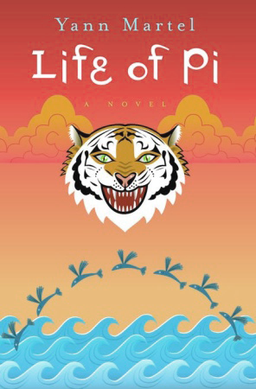
I'd seen the movie Life of Pi and of course fell in love with the story. I knew the book would be a much more moving experience, and so Josi offered me her copy to read a few months ago. I'd hoarded the book away in my pile, and with the other books on my list I hadn't been able to get to it as quickly as I should have, considering it's a borrowed book. But the tale was both familiar to Josi while being new to me, so I figured it would be the perfect thing to read aloud to her while the drugs kept her sedated and machines reduced her life to a series of graphs and numbers. 

I didn't get far in the book, but far enough. I did end up bringing it back to the place I was staying to read, because of course once I started it was hard to stop. I brought the book for Josi, but also hoping that the words would give me some healing as well. And there was so many beautiful words to give me solace in that cramped ICU room.

"I am not one to project human traits and emotions onto animals, but many a time during that month in Brazil, looking up at the sloths in repose, I felt I was in the presence of upside-down yogis deep in meditation or hermits deep in prayer, wise beings whose intense imaginative lives were beyond the reach of my scientific probing. Sometimes I got my majors mixed up. A number of my fellow religious studies students--muddled agnostics who didn't know which way was up, who were in the thrall of reason, that fool's gold for the bright-- reminded me of the three-toed sloth; and the three-toed sloth, such a beautiful example of the miracle of life, reminded me of God." 

Josi reminded me of a three-toed sloth strapped to that belt, her arms literally tied down with bandages to keep her from upsetting her spine. As I read to her, the story of Pi Patel's life unfolding, she began to transform from a sloth back to a human, back to the dragon she was. She began to fidget and turn, and come back more and more. Even after they upped the sedation, she continued to push back to the surface. The first moment she opened her eyes and looked up at me, my smile stretched so big it felt like it would break my face.

"Are you with me?" I asked, but hell, I didn't think she'd nod! She fought her way back to consciousness just enough to squeeze my hand back. After only a few days and after undergoing three different surgeries, Josi slowly came back to herself. I asked her if she wanted me to keep reading to her, and she nodded.

 I felt like, hey, at least I can do something.

The next few days I spent with her, she recovered incredibly quickly. To the point that amazed me, and made me wonder how the heck she could be so strong. She had full mobility in her hand with her broken wrist. She can wiggle her toes and move her foot on the ankle she broke. Her abdominal injuries are healing and her back was fitted with a brace, so moving her isn't so much of a concern anymore (aside from pain).

Despite all this, Josi's spirit is incredibly strong. The first day after regaining consciousness she was singing and joking around with us. When her dad listed off the injuries she had, she shook him off and simply said, "I'm alive."

By the grace of something, that's for certain. When Josi's seat belt broke and she was ejected from the car, someone or something was there to help cushion her fall. May sound crazy to some, but I've never really cared if people called me names. Initially upon waking, Josi told me her grandfather (who had passed away when she was a child) had been there to save her. "He looked like an angel, or Jesus, and he held me in his arms and cried before sending me back, because it wasn't my time."

It's hard not to believe in God, to believe in angels or karma or even damn luck, when you're sitting in the ICU gripping someone's hand. It's hard not to question the justice in it all, or look for meaning in it, or look for something to blame. With Life of Pi as my bible, I know I was looking for God within those hospital walls. They say more prayers are uttered in hospitals than in churches, though I believe not because people are unfaithful, but because hospitals are where prayers are needed most.

We all believe in something. We can also believe in things simultaneously, things that others may think contradict each other. Like with Pi Patel, who was a Hindu, Muslim, and Christian. Someone once said to know a man's beliefs is to know the man, and that is certainly true.

I can't even begin to explain what I felt watching Josi's recovery in the time I was able to be with her. She laid in bed and told me of the beautiful yellow dragon that snaked around her room, shyly hiding his face from view, but watching over her. I told her it was her guardian spirit, there to protect her when I couldn't. I told her it must've come back with her when she went to the other side with her grandfather. Hallucination or not, she looked up at that dragon with such love and gratitude in her eyes, I couldn't help but feel like she was looking up at God.

I think I reacted the same way a lot of other people do when they get the Bad News Call. The night I received the news, shock snapped over me like a bear trap, and I argued vehemently in my head with the notion that it was even real. I called upon God, though in an unclear and ambiguous way, and questioned why this had to happen to someone so kind and compassionate. Someone who always put others first. Who in the hospital screamed the first day she was conscious, defending her friend, the driver, because he merely fell asleep at the wheel. Why did this have to happen to them and not someone else? If I was angry at anyone throughout all this, I was angry at God, or fate, or karma. 

Yet at the same time, I couldn't be more grateful. She's alive. She will walk again. Whatever fate tipped her into that accident tipped her right back and kept her alive. 

I'm not sure what I walked out of that hospital feeling. I don't know what I believe-- hell, even down to the shifting stories of events, it's like trying to piece a broken vase back together. Even if God wasn't there on that roadside, even if it came down to dumb freaking luck that she lived and Max didn't, I do know one thing for certain: 

I believe in Josi. And I believe in her strength.


Thank you so much for reading this post, if you've made it this far. I rambled, but it was to get some healing from writing, the same way I find healing in reading. If you have any pennies to spare, there has been a Go Fund Me account started for Josi. The account is to cover medical expenses and transportation and eventual physio and rehabilitation. She will have to learn to walk again. There's a lot of details yet to handle-- the forefront of which will be somehow getting her home--but that's what it all comes down to: details. 

Monday, May 30, 2016

Falling in Love (With a Book)


You never expect to fall in love.

It always comes when you're not looking.

Or when you're not sure what you're looking for.

You're reaching blindly out into the dark, scratching at something, until a hand finally reaches back. All you intended for the day was a coffee, a bit of time out with the girls, when that striking someone catches your eye from across the room, jacket hugging them just right, all sleek and sharp. Attraction is undeniable, but you're not looking, just out for a good time.

Something tips your favor, and you decide to walk over, just to test the waters. An introduction isn't a commitment, after all. Something clicks, right from the start. It could be the entrancing art stamped on their jacket, or the swell of words and wisdom that spill forth once you get them to open up. Before you know it, an introduction becomes a fluttering of attraction and suddenly you can't walk away. Not that you can think of a single reason to anymore.

You spend hours together, pouring out words and sharing a connection you can't put a label to. There are ups and downs, tense moments, and times where you cry from sheer joy at knowing this someone was out there, just waiting for you. Inside the honeymoon phase with the two of you, it seems as though nothing could ever break up your happiness together.

Eventually, the firsts run out.

The last new words are spoken, and though you can replay the favorite stories again and again, you've grown comfortable in your knowledge of each other. So you bring your love to meet your friends, your family, and you know they will love them as much as you do. Your someone is perfection personified, and the people who know you best will recognize that.

Except they don't.

Because there are flaws in your special someone, in your perfect love. Some you don't want to admit to, some that don't bother you in the way they do others. And though you're disappointed-- how could people not see what you see?-- there's a small part of you that's relieved, because this is a love that is yours.

It's a love that makes you feel like the only one who matters in a crowded room.

A love that makes you the star of your own Hollywood happily ever after.

That piece of your heart clings to your words, to your love, because though they may not be perfect, something about them just syncs with you. All their jagged pieces fit your jagged pieces and you feel invincible. They press up against your back; a reassurance that you will never be alone. You can't describe why you're filled with such warmth, where this love for this flawed someone wrapped in an artist's jacket came from.

But you know it's magic. There's something otherworldly in the feeling.

You vibrate on the same frequency. Their words are your feelings.

They speak to something in you that you never knew could be communicated with words before.

You never expect to fall in love.

You never know when you'll find the book that seems like your soul personified on paper.

But when you do, you'll wonder how you ever did without it.