Showing posts with label tribe. Show all posts

Monday, January 1, 2018

Reviews in Review 2017


It's that time of year again! New Years is probably one of my favorite holidays, and not because of the partying that comes with it (I'm the lightest lightweight you'll meet, trust me). I love all the resolutions, the self-reflection, and looking back on accomplishments and celebrating them, or on failures and learning from them. It's like a holiday all about growth, rebirth and second chances, and who wouldn't love that?

Every year I like to do my Reviews in Review where I reflect on all the books I've read, see if feelings have changed on any of them, as well as pick the stand out books of the year. 2017 wasn't the greatest reading year for me. I managed to read 15 out of my goal of 25. My goal has been to read 25 books a year for the last few years, and though I haven't quite made it there yet, I still believe I can do it. I did better this year than my first year with this goal, where I only managed 14 books, but worse than last year when I got 19 under my belt. I think all us creatives have suffered under the first year of Trump in office, so I'm hoping next year I'll finally be able to meet my goal of 25. I've got high hopes for 2018, though that may just be the optimism of the season taking hold. Either way, I'm stoked to see what the new year has in store. For now, let's look back at the stand outs of last year.


Outstanding in the Field 
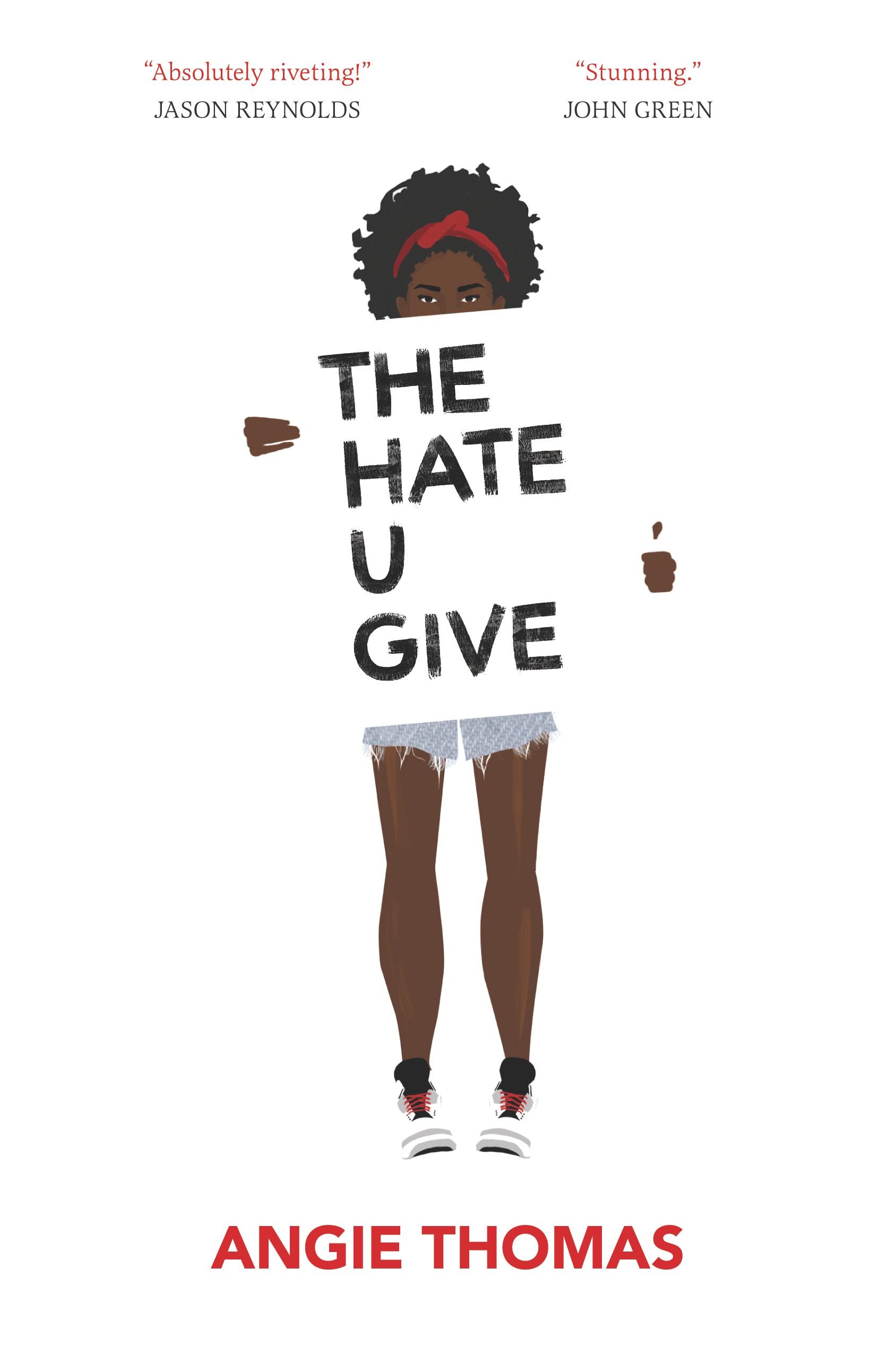
The Hate U Give by Angie Thomas 

My first contact with this book was the Publisher's Marketplace deal announcement. Right from that little paragraph I knew there was something magical in this manuscript. When teaser releases became available, it only made me want this book more. This is the first book that I've ever watched go from deal announcement, to teaser marketing, to release day where I greedily grabbed the second last copy on the shelf. The book didn't disappoint, either. The question, I wondered, was would it stand up to the test of time? The answer was obvious, and with a slam dunk yes, this is one of the books I still think about often. I think about how many Starrs are out there right now, living eerily similar lives, and trying to find their voice in this world. And every day I'm grateful for the industry reps that championed this book, plucked Thomas out of the slush pile, and gave all those Starrs the representation they so deserved. It is the perfect example of writers using our craft to fight back and say something about the state of our world. For all these reasons and more, I can't help but name this one the real stand out of this year. 


Problematic AF 
I Am J by Cris Beam 

So, this book. If you want to be offended, then feel free to pick this one up. The main character was horribly mean throughout the whole book, even to people who openly cared about him. There was homophobia, biphobia, sexism, J degrades a sexual assault victim, and on, and on. I was enraged for my entire read through, and if anything that rage has only solidified over time. The biphobic comment especially still gets me really angry, as there was no need for it. It was just a hurtful comment the author wanted to throw in which added nothing to the story whatsoever, unless its purpose was to reinforce how awful J was, then it succeeded wonderfully. For the whole book, it was like the author hid their MC behind the transgender tag to get away with them being utterly despicable. Unfortunately, the writing style was just as bad, leaving this to be a particularly painful read to get through. A shame, since I'd had this one on my shelf for years and really connected with the premise. This book perfectly shows that writing is all in the execution. 


Best Romance 
Lies We Tell Ourselves by Robin Talley

Hands down, the prize for best romance, het or LGBTQ2S, goes to Lies We Tell Ourselves by Robin Talley. I heard good things about the book and was longing for a good lesbian love story, and wasn't disappointed when I dove straight in. This book is a romance with a rich period setting steeped in segregation issues. I can still perfectly picture that back room where the girls did their schoolwork, where romantic tensions ran high among race debates. The tensions of the time set a high-stakes backdrop for the characters, who overcome prejudice to let love win. The tensions were so beautifully balanced in this book, and the romance had that edge-of-your-seat quality that made the book difficult to put down. The romantic tension blew all the books with straight couples right out of the water. Just thinking of this book warms my heart.  

Biggest Disappointment  
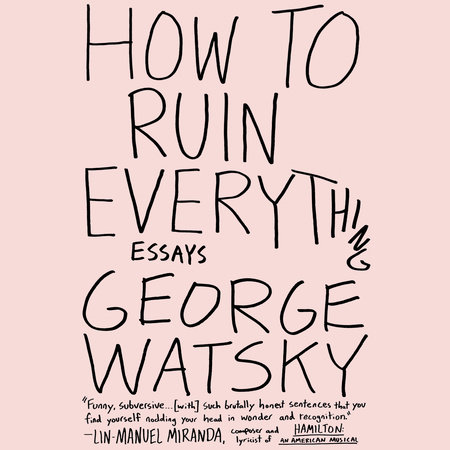
How to Ruin Everything by George Watsky

I was looking forward to this book as I'm a huge fan of Watsky's rap and spoken word career. He is a very talented poet and so getting a more in-depth look at his life was definitely appealing to me. And in some ways, the book was great. Each essay individually was beautiful and well-written, but they seemed lost when grouped all together. The book on a whole lacked that thematic connection that showed how to really ruin everything, which was disappointing as I feel the book could have been so much better with a thematic through line that helped loop each essay into a bigger picture. 


CSTAB Award - Can't Stop Talking About (this) Book 
More Happy Than Not by Adam Silvera

There are those books you read that just turn you into a chatterbox. You can't help talking about the book to everyone you meet, and for me, the book for that this year was More Happy Than Not. I was blabbing about it to everyone-- my roommates, friends, coworkers, even people at the gym. It's a premise that's captivating in its controversy, with an emotional plot that makes you extremely invested in the characters' lives. The book made me cry, it made me laugh, and it left me feeling a little bit empty and searching for answers from the world-- in a way that only a good book can. Adam Silvera is not afraid to rip your heart out and gift it back to you, which is probably what makes it so easy to talk about. Misery does love company, after all. 


Honorary Mention: The Resonator 
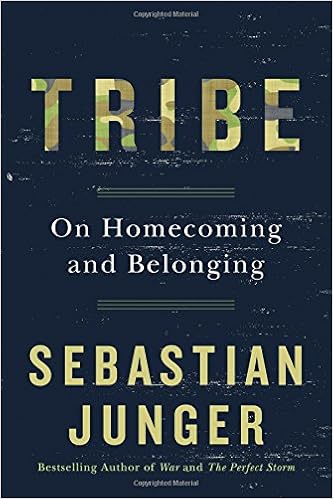
Tribe: On Homecoming and Belonging by Sebastian Junger

This book came to me at just the right time. The writing itself was easy and pleasant to get through, but it also opened my eyes to a lot of new ideals while piecing together things I had already learned and believed. Especially when our world is in a state of disunity and turmoil, this book helped me to realize how I'm going to resist and help my communities grow to a better place. At the end of the day, humans are social creatures, and when we commit to supporting one another and doing our part for the group, we can create amazing societies. This book really resonated with me and I'm often thinking about a certain part of the book where the author talks about the Siege of Sarajevo, how people banded together to survive, huddled together in basements while bombs flew through the city. One quote from the book that I loved was something a survivor of the siege, Nidzara Ahmetasevic, said about the experience: "We didn't believe in heroes. We were punk rockers. Our biggest hero was David Bowie." 

Tuesday, August 8, 2017

Book Review: Tribe: On Homecoming and Belonging


Book Review: Tribe: On Homecoming and Belonging by Sebastian Junger


Goodsreads Description: There are ancient tribal human behaviors-loyalty, inter-reliance, cooperation-that flare up in communities during times of turmoil and suffering. These are the very same behaviors that typify good soldiering and foster a sense of belonging among troops, whether they’re fighting on the front lines or engaged in non-combat activities away from the action. Drawing from history, psychology, and anthropology, bestselling author Sebastian Junger shows us just how at odds the structure of modern society is with our tribal instincts, arguing that the difficulties many veterans face upon returning home from war do not stem entirely from the trauma they’ve suffered, but also from the individualist societies they must reintegrate into.

A 2011 study by the Canadian Forces and Statistics Canada reveals that 78 percent of military suicides from 1972 to the end of 2006 involved veterans. Though these numbers present an implicit call to action, the government is only just taking steps now to address the problems veterans face when they return home. But can the government ever truly eliminate the challenges faced by returning veterans? Or is the problem deeper, woven into the very fabric of our modern existence? Perhaps our circumstances are not so bleak, and simply understanding that beneath our modern guises we all belong to one tribe or another would help us face not just the problems of our nation but of our individual lives as well.


My Review: Humans are more than pack animals; we're a community animal. In every facet of life, we rely on one another to not only survive, but grow and flourish. Yet somewhere along the evolutionary track we've been derailed, and now we find ourselves in a modern society with all the components of a utopia-- yet which is hurtling itself faster and faster towards dystopia. Sebastian Junger's Tribe takes a critical look at individualism in our modern society and how it conflicts with our tribal nature. 

During natural disasters, wars, and any breakdowns of civilization, Junger notes the emergence of primal tribal behaviours that are proven to improve mental health, reduce violent crimes, and curb crime against the collective such as fraud. Junger has spent many years as a journalist working on front lines from many different conflicts across the world.  He looks at tribal society vs 'civilized' society through a historical as well as anthropological lens that makes this book not only informative but fascinating.

The author's background in military has a palpable influence on the book. The book has a particular focus on PTSD in veterans, and comparing our modern soldiers to warriors passed. He argues that tribal societies were more effective at reintegrating warriors back into society after conflicts, thus why PTSD was not common in soldiers until modern times. The arguments were incredibly well-researched and supported, though most of the sources were cited in an appendix as opposed to in text, which some readers have said made it difficult to discern between fact and opinion. I found this method to be less disruptive and created a more seamless read for readers who may be intimidated by a textbook-like format. 

The focus in the book was particularly on wartime mentality, natural disaster responses, and the evolutionary support for tribal lifestyle, which was slightly limiting. From my own research into Native American culture, there is much more evidence for how tribal communities provide for people's spiritual, emotional, and social needs outside of conflict scenarios that wasn't even mentioned. In the prologue, Junger touches on a point that seems pivotal to the success of tribal society and yet was glossed over throughout the rest of the book. In discussing an experience he had backpacking, he states, "He'd been generous, yes, but lots of people are generous; what made him different was the fact that he'd taken responsibility for me." A centerpiece of tribal society--or any sort of successful community-- is not just caring for one another, but taking responsibility for one another--to ensure health and happiness, to protect from harm, to support, and to provide purpose and mastery. This shows through all the examples that Junger provides--from the survivors of the siege of Sarajevo to miners responding to a mine collapse-- that the responsibility that each member takes upon himself to ensure the well-being of the group is what creates that tribal environment. But the book itself doesn't look into how this sense of responsibility contributes to this communal environment, instead only focusing on examples of people banding together against a threat. 

The book begins with historical events and evidence from colonists' contact with Native American tribes. There is a fair bit of information conveyed in the opening pages, which may put some readers off or feel draggy. But the book quickly picks up and achieves a better balance between historical and anthropological evidence, as well as personal experience and current studies and statistics. The writing is easy to digest and flows well, aside from the boggy beginning. As someone working in mental health, I found the book especially interesting in how it related community to the process of healing, which is something supported in the practices employed where I work. It helps to bring some pieces together and suggests that the way to healing our society may lie in our tribal roots. 


TL;DR: 4/5 stars. An interesting look at the social, emotional, and mental benefits of tribal society with a focus on PTSD in veterans.