Thursday, April 17, 2014

Book Review: Confessions of a Sociopath by M.E. Thomas


Book Review: Confessions of a Sociopath by M.E. Thomas

Goodreads Description: The first memoir of its kind, Confessions of a Sociopath is an engrossing, highly captivating narrative of the author's life as a diagnosed sociopath.

She is a charismatic charmer, an ambitious self-promoter, and a cunning and calculating liar. She can induce you to invest in her financial schemes, vote for her causes, and even join her in bed. Like a real-life Lisbeth Salander, she has her own system of ethics, and like Dexter, she thrives on bending and occasionally breaking the rules. She is a diagnosed, high-functioning, noncriminal sociopath, and this is her world from her point of view.

Drawn from the author's own experiences; her popular blog, Sociopathworld.com; and scientific literature, Confessions of a Sociopath is part confessional memoir, part primer for the curious. Written from the point of view of a diagnosed sociopath, it unveils for the very first time these people who are hiding in plain sight. The book confirms suspicions and debunks myths about sociopathy, providing a road map for dealing with the sociopath in your life.

My Review: To start here, I believe the issue most people have when reading this book is a dislike of the author and her voice as she goes through her narrative, and I think it really highlights the differences between sociopaths and what M.E. Thomas refers to as "empaths." There is nothing in this book that will make you like M.E., and I don't think that's purposeful, simply a result of her laying out how she views herself and the world in the plainest terms possible. She is very cutthroat about a lot of social situations, and at times I was disturbed by the flippancy in which she cared for the others around her. There is no "soft blow" language here, and what I mean by that is when most people talk about something bad they've done, they will justify it, soften the blow, lower the risk or lessen the severity of their own actions to seem more "human" or sympathetic to those listening to their story, but M.E. doesn't bother with such fluff. She doesn't try to endear her to you, doesn't justify her actions beyond the straight "I did it because I enjoyed it" or "I did it to get X result." Because of this, I can see many readers being put-off by her and shutting down anything she has to say on the subject, which is a big mistake, in my opinion.

If you intend to read Confessions of a Sociopath, you must do so with an open mind and the understanding that everything M.E. writes is through a warped view. She has some great arguments, but everything must be taken with a grain of salt. However, if you go in with the right mindset, this book is absolutely eye-opening.

Confessions of a Sociopath is part memoir, part psychological research. M.E. looks at the history of study done on sociopaths way back into the 1800s and presents it in a very wonderful and informative way. She illustrates the faults in our tools for finding sociopaths, showing that most research and testing is done on the prison population. While many sociopaths do end up in prison, this only highlights one thread of sociopathy, and neglects to look at successful sociopaths who manage to immerse themselves in an empathetic culture and stay above the law. Looking at sociopaths as all murderers or serial killers is no different than looking at all Mexicans as lazy or all black people as criminals-- it is just not reality. She goes on to show the study of the brain and that sociopaths have been proven to have a different brain make-up, and explains the theories and research behind why sociopaths are so unempathetic, looking at something such as inattention to be the cause of this lack of empathy.

M.E. builds a wonderful case for how a sociopath may be a "successful" member of society. She insists that sociopathy is not as much of a "mental illness" as a different brain structure or personality type. Her description of sociopathic thought processes certainly brought the 4% statistic into reality for me, took away the stereotype of the "serial killer" and illustrated a very real person, whose personality traits I could see in people around me. But the thing that made this book so wonderful was the argument she raised on what should be done with sociopaths. All books and journals and readings about sociopaths indicate a need to find them, expose them, and avoid them. But if we come to a place where we can identify sociopaths, what would we do with them? Would we ship them off to camps to be put to death, because they are "beyond saving" or "monsters"? How is this any different from the way Jews were treated in WW2?

Confessions of a Sociopath is a fascinating read, and really opens up this topic to another perspective. Are sociopaths really monsters, or are we the monsters for thinking of them in such a way? Are they not just another structure of the human form, like autistics or geniuses? Sociopaths, much of the time, thrive in our world. They are our CEOs, our lawyers, friends and coworkers. They are people who are doomed to repeat the same destructive cycles time and time again because they lack the ability for self-reflection and introspection, and would have to work to obtain any level of self-improvement. But when autistics need this outside help, does anyone say they should be "avoided" because of their differences? Do we toss them to the curb because of the way they were born?

If you are at all interested in sociopathy, mental illness and psychology, I highly suggest the read. However, I'd advise readers to calm that emotional knee-jerk response when reading, and reserve judgement. The experience will be so worth it. 

TL;DR: 4/5 Stars. If you can put aside your own judgements, it is such a fascinating ride. 

Follow my reviews on Goodreads here

Thursday, April 3, 2014

Meet Soman Chainani and win a copy of School of Good and Evil!


I cannot express my love enough for this book. If you want to check out my review of School of Good and Evil, you can find it here. From page one it was a wild ride and I'm so happy to be able to host the author, Soman Chainani today on my blog! I could talk up this book all day, so in anticipation of the sequel, A WORLD WITHOUT PRINCES, which comes out April 15, I'm doing a fantabulous giveaway!! I can't thank Soman enough for agreeing to chat with me.


1) What or who inspired you to become a writer?

Writing is a truly meditative activity, in the sense that it feels like you're breathing thoughts onto a page. Growing up, I always felt like I had to write. If I didn't, I'd either explode, go mental, or stagnate. Even now, if I go more than a few days without writing, I feel myself slipping into a sad fugue. It just is at the core of who I am. Perhaps, for that reason, it's impossible to say what exactly inspired me to be a writer. Because I was a writer long before inspiration ever arrived.


2) You've had a lot of success with film over the years. What kind of challenges did you face when writing SCHOOL FOR GOOD AND EVIL?

The publishing process happened with alarming speed. I had been adapting the novel The Pushcart War into a film for legendary producer, Jane Startz, who has adapted practically every major kids’ book of our time – Tuck Everlasting, The Indian in the Cupboard, The Babysitter’s Club, etc. I told her the idea for SGE and she immediately loved the idea of growing a series from the ground up as both novels and films. Once I had the proposal for the series ready and a few sample chapters, she sent it out to 16 publishers, but Harper preempted it and bought worldwide rights within 48 hours. The challenges all came after I sold it, rather than before, which is highly unusual. That said, you can imagine the pressure I felt to deliver once the series was sold. I wasn’t a particularly pleasant person for the better part of a year and a half. God bless Jane and my phenomenal editor, Phoebe Yeh, for their wisdom and calm. Now that I’m on Book 2, I’m more relaxed and secure in just spreading my wings.


3) What was your favorite part of writing SGE?

I love writing Sophie's scenes with Agatha. They're the ultimate odd couple, so they usually end up churning into high comedy -- even camp at times. Sophie, in particular, can be ludicrous, so I'm always pushing the boundaries of what even I find appropriate for a children's novel. Agatha's certainly the heart of the series -- but Sophie, perhaps, is the fun.


4) Since you do come from a background of film, did you ever see SGE becoming a movie, or did you intend to leave it as a novel?

Hollywood is a different world. If you ever have ANY presumed expectations of success there or having your book turned into a movie, you're an absolute fool. You can only navigate the rocky waters as best you can and hope it works out for the best. To that end, I wrote SGE purely as a novel, but knew it would make a fantastic movie if anyone had the courage for it. Right now, it's slated to be a film for Universal (I just delivered the script). So here's hoping the tide stays in our favor...

5) We all have personal challenges when it comes to writing. Do you have any bad habits as a writer you've had to shake?

I tend to want to control the story as much as I can and come at it consciously. But I think that's probably the worst habit of all, because if you can plot something ahead of time and just execute a linear outline for a novel, chances are the reader will predict what's going to happen as well. If I'm not surprised, then the audience won't be either. So it means I've had to write more from a place of the unconscious, just letting the story unfold on its own.


6) When do you take the time to write? Do you have any routines or rituals?

My routine is pretty simple – I get up at about 7am, then either go to yoga or spinning or play tennis until 9. I start writing by 9:30 and write until 3:30 or 4, with a lunch break in there (during which I watch a bad episode of reality TV to calm down). Then I run errands before I teach at nights. There are two keys to my writing process, I’d say. One, that I stay super fit, because the stamina required to write, edit, and promote SGE, where I’m doing both the books and movies at the same time, is absolutely inhuman. And two, that I don’t work too late. I need time for my brain to solve the problems of the day so I can move forward the next morning clear-headed.


7) What kind of responses have you gotten from kids about SGE? Have any stories?

The tour for Book 1 was beyond belief. I spoke to over 8000 kids, got to perform on massive stages, and had moments where I felt like a member of One Direction, simply because of the nature of school presentations. You have an hour, a captive audience of anywhere from 200-400 kids, and you have to bring it or the kids will either go to sleep or boo you off the stage. So instead of a traditional reading, I try to put on a full-scale theatrical 'show', with videos and slides and interactive games, and all kinds of little surprises that will help kids get access to what it's like to go to the School for Good and Evil.

Every school I went to, something absurd happened. But my favorite was one school where the boys had all read the book and were totally into it -- but had all taken the jacket covers off so no one would see the 'girls' on the cover. God forbid anyone know there were girl characters in their book!


8) Do you have any advice for aspiring authors?

I think worrying about the end goals -- when a book will be published, how much money you might make, a sliver of hope for fame -- will only destroy you as a writer. Write because you love it. Live your story only for yourself. The audience will come when it and you are truly ready.


9) Can you share anything about the upcoming A WORLD WITHOUT PRINCES?

It's a darker, more emotional and more ferocious experience than Book 1. But that isn't surprising, since instead of the schools warring as Good versus Evil, this time its Boys versus Girls. Only as we learned in Book 1, sides are never all that clear in this world... It's a battle of the sexes like you've never imagined.


10) If you had been dropped into either the School of Evil or the School of Good as a kid, would you have tried to escape or would you have worked for your fairy tale?


Wow. Brilliant question. I'd like to say that I'd have missed my family so much that I would have tried to escape… But truth is, I'd likely stay and try to find as happy ending as I could. I'm a sucker for adventure.


I know what you guys are waiting for now. No doubt you're all pumped up for the book now, and I know I'll be first in line for the sequel. So, to make sure that you're right up there with me, I'll be giving away a copy of SCHOOL OF GOOD AND EVIL.

free glitter text and family website at FamilyLobby.com 

HOW TO ENTER:

1) Comment on this post with your email address and you will be given one entry.
2) Follow me on Twitter here for another entry.
3) Every tweet you send out about this contest (preferably with link) that is @katieEcarson will earn you an extra entry. Tweet 50 times? Get 50 entries. 
4) On April 15, I will be drawing a winner and will email that person for their mailing address. Not only can you celebrate the release date of A WORLD WITHOUT PRINCES, but you'll end up with a free copy of the first book, which ain't a bad deal if you ask me.

Ready, steady, GO!!

Thursday, March 27, 2014

Authors, have you been "leading" your audience?


We've all been there. You've picked up a new book and you're whipping through pages. You love some of the characters, the story has got you hooked and you're definitely enjoying the ride. But then you begin to notice something strange. You seem to be "led" in certain directions, not by the character or the narrator, but the author. You notice the way certain characters are described seems over the top, while other major characters are mostly ignored in comparison. How does it make you feel when you realize the author is trying to manipulate you into feeling certain ways about their book?

It sounds like a bit ridiculous, doesn't it? But it's true. As authors, we attempt to manipulate readers in many different ways. We ask ourselves "How can I make readers sympathize with this character?" "How do I play out this relationship so X character will not be seen as an idiot?" It's not a bad thing to be aware of what effect our writing is having on our readers. After all, we want readers to feel sympathy if we kill off a character, we want their hearts to swell and sink with each exciting plot point. But I believe there's a limit, and after a certain point the author is not so much telling a story as leading a reader through it.

The book I'm currently reading has a bad habit of trying to "lead" me, and it's not a new occurrence among young adult books. When the MC is introduced to a new character, "leading" authors tend to specialize the introduction. Is this your character's love interest? They'll probably have a cool entrance where they are the spotlight of the scene, where your MC is overly focused on them. Their descriptions may seem overdone, or they over focus on features that are supposed to be desirable--their attitude, their clothing, or even just the fact that they're "a good person but a little crazy in certain respects." Not all of it is negative, but it definitely feels like the author is pushing a character forward, like a helicopter parent putting their child on a pedastal and saying "Okay, go ahead and adore him."

It's perfectly reasonable that your MC should see your love interest as the spotlight, but sadly it's come to a place where it seems a character's role can be predicted based solely on how the author presents them upon their first couple scenes. When you MC meets the "third wheel" character, the person your MC may flirt with but not ultimately "fall in love with," the way that character is presented takes away all our mystery. They're introduced as a side character, with some thrown in tidbits about their life, but for the most part they recieved about as much attention as the description of your MC's house. So, why should I care about this character, when based on your introduction, I know he not only won't stand a chance of being with the MC, but that his part will probably be cut down or minimized? The author is saying without words that he is not worth me paying attention to.

There is a thin line between narrator and author at times. The narrator can be your MC, or simply the voice that has developed to tell your story. When you're in the MC/narrator's head, you need to ask yourself what it is they are focusing on AT THIS VERY MOMENT. I think a lot of authors get caught up in what's to come, and it ends up tarnishing the moment. Take the introduction of a love interest. Your MC has no idea what future lays between them and this new character. It's exactly the same as meeting a new person in real life. Yes, there are moments (especially as a teenager) when meeting someone is love at first sight, where birds are singing and the heavenly choir is christening your union. But about 99% of the time that is NOT the case, so why is it that YA likes to paint it the opposite way? When your MC meets their LI, you need to focus on the real moment feelings of the characters, instead of instilling little author clues of "Hey, there might be romance here!" Because honestly? The best romance is the one you never saw coming.

Leading readers in this way can be severely limiting, but also can be used as a great tool if you're aware of what you're doing. A great example of this would be Unearthly by Cynthia Hand. Throughout much of the book, the author leads you to focus on Christian as being the main love interest. The way she paints him makes the reader make a lot of assumptions about him, meanwhile Tucker was introduced and played out in many of his initial scenes as a side or background character. And this made so much sense for the book, because our MC, Clara, at the time is fully invested in Christian, putting him in the spotlight in her mind, while Tucker is just that annoying kid in class. As opposed to many other books, which use leading to bring the reader to the conclusion the author wants, Cynthia Hand led her readers to cliched conclusions, allowed the reader's assumptions to get the better of them, and then twisted it and changed the entire flow of the story to create a thrilling and surprising tale. (If you dig angels and haven't picked it up yet, YOU MUST.)

I like to think of leading readers as using blinders on a horse. As an author, you can highlight certain traits, bring the reader's attention to specific details, and by doing so you are putting blinders on them. This is not necessarily a negative thing, as sometimes readers and horses need to be focused, but if you leave them on all the time, the reader will not be able to fully experience your world. They will only have the story you drew for them, the conclusions you led them to, which takes away from one of the most important and exciting parts about reading: discovery.

Thursday, February 27, 2014

Book Review: In The Path of Falling Objects


Book Review: In The Path of Falling Objects by Andrew Smith 

Goodreads Description: Jonah and his younger brother, Simon, are on their own. They set out to find what’s left of their family, carrying between them ten dollars, a backpack full of dirty clothes, a notebook, and a stack of letters from their brother, who is serving a tour in Vietnam. And soon into their journey, they have a ride. With a man and a beautiful girl who may be in love with Jonah. Or Simon. Or both of them.

The man is crazy. The girl is desperate. This violent ride is only just beginning. And it will leave the brothers taking cover from hard truths about loyalty, love, and survival that crash into their lives.

One more thing: The brothers have a gun. They’re going to need it.


My Review: This review will have spoilers, which is something I don't normally do, but I feel it's necessary to explain my thoughts about this book, so warning's ahoy.

I'm kind of conflicted about this book. The truth is I wanted to give it a higher rating. It was a book I thought I would be too forgiving of, or too generous with when it came to my stars. The reason for this is that I absolutely love Andrew Smith's style of writing. I like the light touch, the way he peppers his work with onomatopoeia and these threads of ideas that blend together. I loved the heart of this story, which is two brothers try to get somewhere and hitching a ride with a pair of mysterious folks that turn out to be much more than they bargained for. But I feel like the threads that were begun didn't come together in time, or at all, and the characters had been set up like fireworks but weren't ever lit.

I'll start by saying that I think the light touch was a little too light for this book. The heart of this story is majorly character driven, and so I feel like we needed to see more of what was going on in each character's head and heart to ultimately see the whole picture. For example, the beginning of the book was quickly building tension between Jonah, our main character, and Mitch, our antagonist. The two characters butt heads over Lily, as well as Simon, but there's no heat under their words. I feel like we got to bare minimum for what they were feeling, when really that emotion and heat should have been fueling the story. In some places, the emotions and motivations for the characters were drawn out beautifully. For example, Mitch's hatred towards the brothers wasn't random, and it became achingly apparent that it was fueled by jealousy, since the brothers got so close to Lily. But on the other hand, I felt like I didn't know enough of what drove Simon, and made him so fully embrace Mitch and his ways.

Which brings me to a big reason as to why the rating sunk so low, and that was Lily. I really liked her and the dynamic that she introduced. She caused a lot of tension between Simon and Jonah, poked and prodded at Mitch and kept things interesting, but at the the end of the day she was nothing more than an object. I was excited by her and what her character could bring about (for example, I was surprised at the suddenness of which she crawled into bed with Jonah, and loved the sudden shake up of it all). She was the reason why the boys got into the car with Mitch, she was the main reason Mitch hated and even wanted to kill the brothers, in a way, she was the one who began the road trip with Mitch, since it was revealed she was asking him for a ride to California before Jonah and Simon came into the picture. She was the reason and the cause of all these plot points, but she was SUCH a passive character. She didn't so anything, barely made her own decisions, and even when she did, we were kept in the dark about a lot of her history to make her more 'mysterious' but it only left her motivations seriously lacking. I wanted to learn more about this character. The brothers were convinced she was "messing" with them, but I saw no evidence of this, nor any clarification as to what she was actually doing.

Now, I knew Lily was going to die. It became pretty apparent by mid book, but even still I wasn't upset by this. I expected her to take action before the finale, perhaps take a bullet for Jonah, but I was sorely mistaken. Lily grows weaker and weaker after she and Simon escape from Mitch until, wait for it, SHE DIES. That's it. They put her to bed, she's sweating and obviously ill, and the boys decide she needs help. They run out to the truck, (avoiding Mitch who is hiding outside somewhere hunting them). They make it to the truck, get the gun, and then RUN BACK TO THE HOUSE. You see my confusion here? They didn't even bother to drive the truck back to the house and grab her so they could actually get her help. And why didn't the author bother with this? Because when they run back to the house, Lily has already "stopped breathing" due to some mysterious pregnancy illness. I literally balked at the page. I couldn't believe how Andrew Smith had so blatantly disregarded a character, used her as an object and then tossed her away without so much as an explanation to her death. I was absolutely flabbergasted. She started this book as Mitch's possession, made little to no effort to establish herself as her own character outside of things pushed on her by the brothers (running away wasn't even her idea, nor did she express much want for it), we learned next to nothing about her history or her motivations, and then she died to make the antagonist a little more angry and to drive tension up a notch. I was thoroughly unimpressed.

More so, what dropped this rating even lower was some of the style choices the author used. The story was written in first person through Jonah's POV, but we continued to jump from POV to POV, while keeping Jonah in first person. This was ridiculous, in my opinion. The story called for third person with multiple POVs, and it felt like the author was clinging to first person for whatever reason. It dragged the story down and, in my opinion, came across as highly amateurish. First person can be a great way to tell your story, if it's used properly.

The second style choice that made me see red was the choice to switch between present and past tense, often between Mitch's POV scenes and the rest of the story. I understand why some authors choose to do this, but there should be a damn good reason to mix tenses like that. It should be apparent, so when a reader starts on a passage that has switches tenses/POVs, they understand the reason for it. It felt like the tenses and POVs were chosen and thrown out at random, again really making this feel like a teenager's first book. Which is such a bummer, because I mean it when I say I really like Andrew Smith's style and the overall story here.

TL;DR: 2/5 stars. A real bummer. 

Follow my reviews on Goodreads! Check it!

Tuesday, February 11, 2014

Book Review: The Archived


Book Review: The Archived by Victoria Schwab 

Goodreads Description: Imagine a place where the dead rest on shelves like books.

Each body has a story to tell, a life seen in pictures that only Librarians can read. The dead are called Histories, and the vast realm in which they rest is the Archive.

Da first brought Mackenzie Bishop here four years ago, when she was twelve years old, frightened but determined to prove herself. Now Da is dead, and Mac has grown into what he once was, a ruthless Keeper, tasked with stopping often—violent Histories from waking up and getting out. Because of her job, she lies to the people she loves, and she knows fear for what it is: a useful tool for staying alive.

Being a Keeper isn’t just dangerous—it’s a constant reminder of those Mac has lost. Da’s death was hard enough, but now her little brother is gone too. Mac starts to wonder about the boundary between living and dying, sleeping and waking. In the Archive, the dead must never be disturbed. And yet, someone is deliberately altering Histories, erasing essential chapters. Unless Mac can piece together what remains, the Archive itself might crumble and fall.

My Review: If you could stroll through a library of the dead, whose memories would you want to read? 

It's the question that came to me after I finished THE ARCHIVED. Honestly, going in I wasn't expecting this book to be as amazing as it was. The book begins with a back and forth in time that serves to not only reveal more of the world-building, the Archived, and all its components, but also establishes a strong emotional bond with the Archived. Because the information was relayed through Mac's grandfather, it allowed the reader to associate the Archive with the warm memories of Mac's childhood. I was sceptical of the back and forth at first, but not only did it beautifully open up the world without dumping info, but the tone and tension of each shortened scene actually made me ache for the next flashback, even if there was no overarching action taking place within them. 

Mackenzie's character opened up rather nicely. I was worried because in the beginning she came off as a tad bland, and I worried that would be a constant. Nothing worse than cardboard when you're looking for meat. But Mac proved me wrong. The way the character opened up, both with the flashbacks and then later with her actions and admissions, it made me almost feel as if I was getting to know her one on one, and the more I discovered about her passion for the Archive, for closure, and as the pieces of her character came together, the more I grew to like her. 

The rest of her characters shone through beautifully, including the antagonists of the story. Though throughout the book, the antagonists remain a mystery, I had my suspicions and was proved right in some cases, however I was surprised that at certain points I didn't want them to be the villains. They were well done characters with wonderful motivation, but more than that, the glimpses into their humanity really sealed the book for me. 

Besides the characters, I absolutely adored the world-building. The Archive itself is a wonderful idea, where history is at your fingertips. The vast, gleaming world of the Archived coupled with the dark and craggy Narrows made for great atmosphere and a fascinating backdrop. I found the use of keys and doors and locks fit so nicely with the secrecy and deceit that makes up the Archive. And just as the writing would have you believe you were looping through the Narrows, pursued by Histories, the plot is as thick and creamy as clam chowder. (Is that an expression? It is now.) As I writer, it was an absolute joy to read, because it was as though I could see each plotline spread out like threads across the pages. I couldn't always guess what was coming, but I was given enough information to guess and ponder, which I love when you've got a mystery on your hands. 

All in all, the Archived was pleasantly surprising. I didn't expect to fall as in love with it as I did, but it has left me pondering death and legacies and with a wonderful book hangover. This is a book that sinks into your skin and stays there, quiet but insistent.

TL;DR: 5/5 stars. This one's a Keeper. 

Follow my reviews on Goodreads here

Monday, February 10, 2014

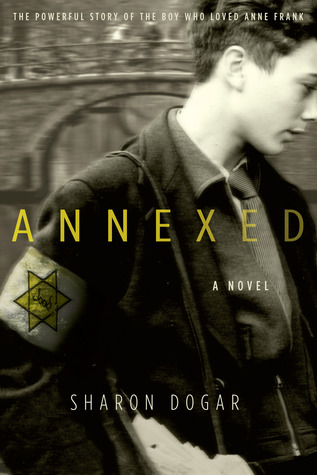
Book Review: Annexed


Book Review: Annexed by Sharon Dogar

Goodreads Description: Everyone knows about Anne Frank and her life hidden in the secret annex – but what about the boy who was also trapped there with her?

In this powerful and gripping novel, Sharon Dogar explores what this might have been like from Peter’s point of view. What was it like to be forced into hiding with Anne Frank, first to hate her and then to find yourself falling in love with her? Especially with your parents and her parents all watching almost everything you do together. To know you’re being written about in Anne’s diary, day after day? What’s it like to start questioning your religion, wondering why simply being Jewish inspires such hatred and persecution? Or to just sit and wait and watch while others die, and wish you were fighting.

As Peter and Anne become closer and closer in their confined quarters, how can they make sense of what they see happening around them?

Anne’s diary ends on August 4, 1944, but Peter’s story takes us on, beyond their betrayal and into the Nazi death camps. He details with accuracy, clarity and compassion the reality of day to day survival in Auschwitz – and ultimately the horrific fates of the Annex’s occupants.

My Review: After finishing Anne Frank's diary, I was stunk in a Frank funk, so I immediately reached for ANNEXED. Right from the beginning, I was a little off-put by the relationship between Peter and his mother. After all, hadn't he said they didn't get along well in Anne's diary? I liked the relationship between Peter and his parents, for sure, but I felt like the author missed out on a golden opportunity. A famous quote that came from Otto Frank after reading Anne's diary was "Most parents don't really know their children." And since this is a YA novel, it would've been a great chance to expand on that idea and show how Peter's parents, though their relationship with their son was good, they didn't know all of him. It felt kind of one-dimensional at times because we didn't see much or any conflict between Peter and his parents. 

Expanding on that, I think part one in the Annex was really lacking. This is historical fiction. You get to dip your fingers into the past and expand. Where was the development between the others in the attic? What about all the fights Anne talks about, the discussions, the grievances with each other? These people were trapped together for two years! There was tension between them! Anne mentions things briefly (like the arguments), and I'm really disappointed that the author didn't expand on them, show what got on each other's nerves! The entire first part of the book consisted of Peter moping around (and do you really think that wouldn't get old after two years, trapped inside or not? The people in the Annex kept busy!) and even when Anne enters his life, there was no real spark or excitement. Yes, Anne and Peter's romance wasn't of the ages, but the feelings could've been touched on, explore more of why they are clinging to each other, and it could've been much more poignant. 

A scene near the beginning of the book, when they are in the attic and Peter shouts, I found absolutely ridiculous. I could handle it when he whistled. I could deal with him shouting. But when his father shouted back, and then they all go after Peter and he's "screaming"? I know it was meant to be a representation of his emotions and the feelings of entrapment, but come on, these people were in hiding. Like I said, I could understand the shout, but when his father shouted back? You really think the adults would be so stupid as to add to any noise? 

The end was very nicely done. I enjoyed the camps and the way it was presented. I felt like the "light touch" writing style that the author had really worked well here. The ending really brought it up for me, but ultimately I was disappointed. ANNEXED could have pushed the boundaries a bit more, got into the details a bit more, and explored the Annex enough to bring it alive.

TL;DR: 2/5. A pretty bland retelling. 

Follow my reviews on Goodreads here!

Sunday, February 9, 2014

Book Review: Diary of a Young Girl


Book Review: Diary of a Young Girl by Anne Frank 

Goodreads Description: Discovered in the attic in which she spent the last years of her life, Anne Frank's remarkable diary has since become a world classic—a powerful reminder of the horrors of war and an eloquent testament to the human spirit.

In 1942, with Nazis occupying Holland, a thirteen-year-old Jewish girl and her family fled their home in Amsterdam and went into hiding. For the next two years, until their whereabouts were betrayed to the Gestapo, they and another family lived cloistered in the "Secret Annexe" of an old office building. Cut off from the outside world, they faced hunger, boredom, the constant cruelties of living in confined quarters, and the ever-present threat of discovery and death.

In her diary Anne Frank recorded vivid impressions of her experiences during this period. By turns thoughtful, moving, and amusing, her account offers a fascinating commentary on human courage and frailty and a compelling self-portrait of a sensitive and spirited young woman whose promise was tragically cut short.

My Review: There's so much I could say about this book, but I can't seem to scramble the words together. To say that this is an amazing study of the human condition would be true, but I feel like it would take away from the people who lived out the days recorded in the diary. We are all products of the human condition, we are all tested and tried, but often we don't realize the magnitude of the trials we face or the successes we've achieved. 

While I read, a strong and steady thought stayed with me: What was the point of all of it? The Frank family did what they could to survive, and yet I continued to ask myself if it was worth it. If they were to die, why waste time locking themselves away, to suffer and wait for death? Will this simply be two years of bitterness and suffering until their misery is ended? It's horribly heartless, I think, because it is a very removed question. It's akin to asking: What's the point of living? And yet I couldn't stop myself from comparing the merits, asking if this little bit of happiness makes all this worth it. 

And yet, another thing I wondered to myself. Every time Anne discussed her dreams to be a journalist, her desire to write a book and even publish a book based on her diary, I asked myself: Have you really accomplished your goal if you aren't even alive to witness it? Or is it simply another coincidence in life, something that would have happened whether or not you desired and worked for it? 

As the diary came to a head in 1944, I found some solace in the joy that she managed to find, the self-discoveries she'd made, and the endless hope and optimism that had me flabbergasted by this point. How could someone who has suffered like that, had to endure such hardship, continually hold out hope and optimism? The way she would casually talk about her future-- leaving the Annexe, going back to school, whether she wanted to be a housewife or a writer-- as if there wasn't the possibility of dying, is heart-breakingly beautiful. It made me wonder why people so readily give up when faced with simple problems, but grow firm and unshakeable when they have nothing left to lose. 

"It amazes me what humans can do, even when streams are flowing down their faces and they stagger on…” - Death, The Book Thief

Figured that summed it up best.

TL;DR: 5/5. A classic, of course. 

Follow my review on Goodreads here