Monday, December 28, 2015

Reviews in Review 2015

At the beginning of the year, I set my goal for reading for 2015. I intended to read 25 books, and unfortunately only made it to about 14. I'm a slow reader, exceedingly slow compared to some others around the reviewing watercooler, but I consider myself determined. I plan to set the same goal of reading 25 books for 2016, and I'm confident I can accomplish that.

Mostly, this year in reading brought a lot of new experiences for me. I decided that if I was offered a book to review, I would take on the project and give it a fair shot. (So long as it wasn't completely outside of my expertise. I'm not about to start reviewing non-fiction about the flight patterns of North American birds. Unless it's like, really good or something.)

Since the end of the year is usually a time of reflecting as well as setting new goals, I thought I'd take a look back at the books that I've read and reviewed this year. Not just as my own "Best Books of 2015" list, but also re-evaluating some of the reviews I left. So let's kick this sucker off.

Most Feels of the Year 
The Unbound by Victoria Schwab

Ah, the Unbound. I went into this book not at all expecting what would come of it. The emotional impact from this book was huge. It hit me in all the right spots, and though my review for the book was full of synonyms for FUCKING AWESOME, looking back I can see that was probably due to how it connected with me and my experiences. Others may not be so enamored with the book simply because they didn't connect to Mac's struggle as intensely as I did. Even still, I stand by my review while admitting my bias. The truths this book touched on left me in tears, those sort of happy delighted tears borne of understanding and feelings of connection to others. That's mainly why I write and read: to connect to those around me through the way they express themselves and view the world. Sometimes a book will describe an intangible feeling so well that it feels like it touches in on my soul, like the story has transcended words and the author has just touched my mind to hers like the kids in the Chrysalids, and we don't need words because I can feel it. When that happens, it's like freaking magic. If you want to talk about book hangovers, this one left me moaning with pain. Especially after I found out that the series had been discontinued by the publisher, and I would have no more of this fabulous world to immerse myself in. And that brought out a whole other set of feels. 

Best ARC 
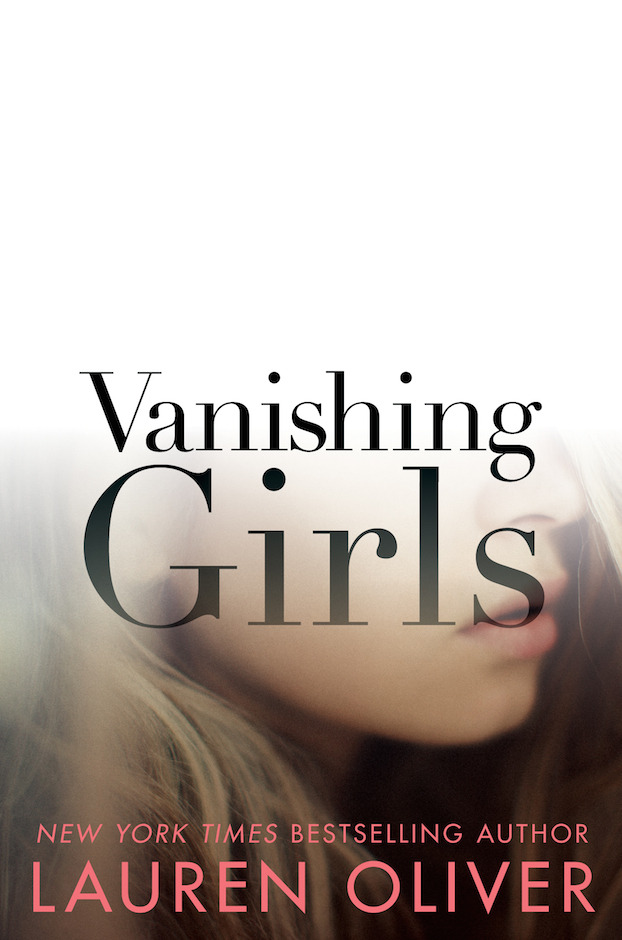
Vanishing Girls by Lauren Oliver

This almost seems like an unfair advantage, since Lauren Oliver was an author I had read and enjoyed before, so I had an idea of what to expect. Then again, if I had received Panic (the other book of hers I've read) instead, then I don't think I would have regarded it as highly. This book was simply so beautifully character driven. I could not put it down, because the characters felt so real they could have been my friends. It wasn't just the vivid characters, but the honesty of this book that really got me. It didn't shy away from tough topics, but more so it didn't try to sensationalize or demonize them. VG simply laid out the truth and let the reader form their own opinion on it, which was really refreshing. It reminded me of when I only wanted to be treated like an equal in my teenage days. This book doesn't talk down to its audience and doesn't try to instill a 'moral.' It respects its readers, which for some books isn't quite the case. 

A Review Too Harsh 
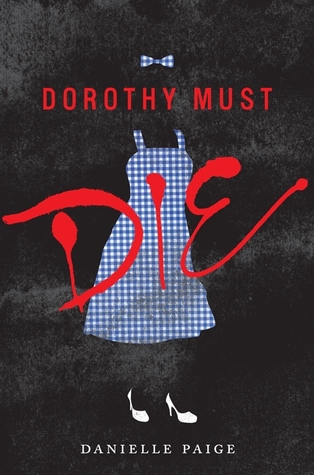
Dorothy Must Die by Danielle Paige

Yes, I really hated Dorothy Must Die. I'm not going to deny that. It was filled with enough troupes and cliches to make your eyes bleed. Still, I feel like my hatred for those troupes colored my impression some, and made it harder for me to find redeemable qualities in the rest of the story. I did manage to read it till the end, mind you, and that was because there were aspects there that appealed to me, such as the re-imagined 'monsters' of Dorothy and her friends. And perhaps that's what spurred such a scathing review; I love creative world building, and like Zodiac, I wanted the story to be good so bad because of the world. When that didn't come to be it ended up making me hate it more than if it had only been a boring book. My little heart is broken so easily, and then usually turns pretty cold. 
Most Bad Assery 
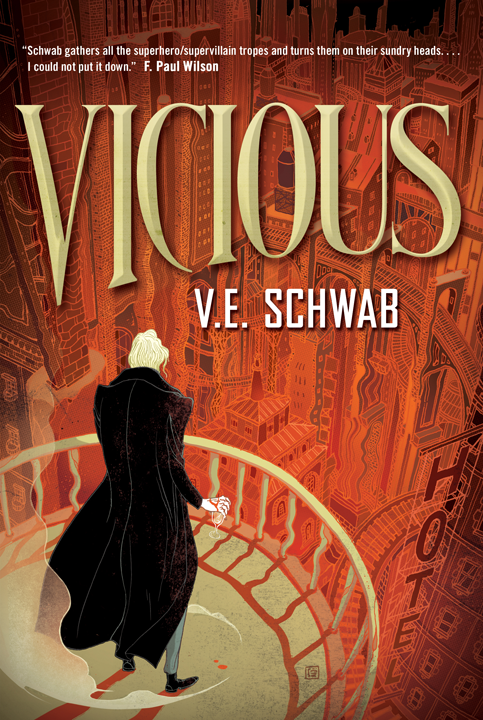
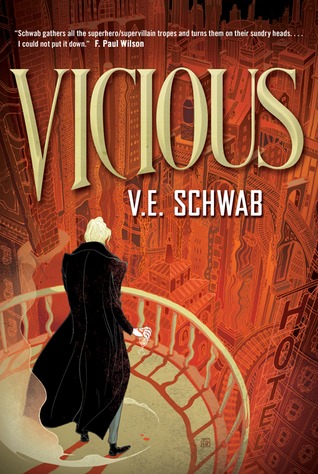
Viscious by VE Schwab

Gah. Holy balls, guys. This book. Yes, Schwab has made it onto this list twice, and with good reason. I'm pretty sure she spins word gold. This book had everything I've ever really wanted in a book. It was so good it made me want to cry. More so, it was something that I would have loved to write, which is strange. It's rare for me to find a book that I could have written myself. The best friends turned enemy relationship, the moral ambiguity of heroes and villains, and the incredibly realistic explanation of superpowers. Gah. Even now it leaves me speechless in its awesomeness. If you weren't protected by a computer screen I would smack you in the face with my copy and make you read it. Believe me. I did that to my reading buddy. Don't worry, she thanked me for it later. 

A Review Too Soft 
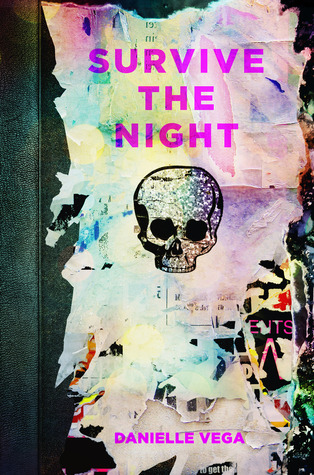
Survive the Night by Danielle Vega 

From the cover to the content, I really wanted to like this book. I was excited to see drug culture being tackled in YA. When it came down to it though, the book just fell short. It fell short with character motivations, with its attempt at an unreliable narrator, and its attempt at horror. Though I admit to projecting what I wanted onto the book in the review, I was still too soft on this book because of what I wanted it to be. I shoved on beer goggles and convinced myself this was the book I wanted, or was at least passable, but when I sobered up the next morning (figuratively), there was no denying that it just wasn't as good as I wanted it to be. At the end of the day this book had a lot of potential, but potential is not the same as actually following through on it.

Ending With a Bang 
Shades of Grey by Jasper Fforde 

The first book I read this year still riles me up as much as it did when I first read it when I think about the ending. Perhaps what makes it so enjoyable for me is that I'm horrible for flipping to the last page and reading the last line. Well, when I did it with Shades of Grey, the scene involved a very happy ending at a train station. Only when I reached the end of the book did I understand the context of what was going on, and realized it was anything BUT a happily ever after kind of ending. It was such a smack in the face as a cheater reader like me, but I adored it. It completely threw me and my expectations on its head, which is exactly why I read. Not to mention the book was such an incredible delight the entire way through, and so the ending still has a big impact on me. The books that stay with me for years always end up being those I treasure most. 

Monday, December 21, 2015

Interview with Cornelia Funke


I'm very excited to have Cornelia Funke, author of the Mirrorworld series and founder of Breathing Books, on the blog today. She is an awesome lady who creates some astoundingly magical worlds. I hope you'll all join me in giving her a warm welcome and a big thank you. I hope you'll check out her website here (which is so super cool!), as well as the webpage for Breathing Books


1) What was the most challenging part of writing The Golden Yarn?

To weave all the storylines into one pattern. This world by now delivers so many – which is of course the greatest gift for a storyteller and at the same time it asks for cruel choices. I am currently exploring which characters I’ll follow in Book 4 and which ones have to wait until I write their story separately. But- I love this feeling of a world opening in all directions especially as this one is so close to ours in so many ways.


2) When do you write? Do you have any rituals or routines?

Yes, but they changed vastly over the years. When my children still lived at home I mostly wrote only when they were at school or busy with their friends. As I was the bread winner that was only possible because my husband stayed at home and helped with everything, from cooking and driving the kids to school to lay outing my illustrations and discussing plots with me. Now that my son and daughter more or less live their own independent lives, I enjoy it very much that I can be more flexible. I still organize my work quite strictly nevertheless, as I love to work on several projects at the same time by now. I have a small paper calendar, where stickers name my tasks of the day: ch 9 edit Griffin’s Feather, research Japanese Fairy Tales, cover sketch advent calendar book, ch 10 Color of Revenge, short story Stockholm….these are only a few examples of what they can say. If I don’t get them done I put the sticker on the next page :) But this way makes it very easy for me to have my mind always in just one story, although I wrote more than three at times.

O yes – I always write my first drafts by hand, in A 4 notebooks. I prepare those books for each story, creating a cover from images and sketches. By now I have three fire proof boxes filled with them (after all I live in California) :)


3) How does it feel to read your stories in German versus in English (or any other language for that matter)? Do you feel something is lost or gained with each language?

That’s a very precise description. Yes, they both loose and gain. I especially experience that when I do readings back to back in German and then in English. It is of course still the same story, but it wears different clothes. And it tastes slightly different on the tongue when I read it aloud.


4) Where do you draw your inspiration for your characters? Do you have any suggestions for character building?

I am suspicious of patterns and rules for stories and their characters. I believe that every writer should find his or her unique voice, rhythm, colors….and characters. Otherwise our books may be as predictable as our movie plots one day! Some characters are clear from the very first moment we name them. Others hide and pretend to be someone else. I love to find out more about them with every draft – and I do up to 15 drafts before I hand a story to my editor. Some reveal themselves so late that you have to revise dozens of chapters, but I believe that to allow that makes them come alive in far more organic ways than building corsets for them and their stories which they are not allowed to escape from. The writer’s greatest challenge are the clichés we all work from. We owe our readers to escape them and that mostly is not possible by planning ahead.

One tool though I find very helpful when creating characters. I search for faces on paintings or photographs to have a more multi-layered approach to my characters. Images often say so much more than words. I pin them on my writing house walls, collect them in notebooks and sketch them while writing. My manuscript notebooks are by now filled with such sketches and very often they make me see a character much earlier and quite differently from what I expected him or her to be. A real face says so much more than an abstract description. It doesn’t have to fully match the image in our imagination. But it will always enrichen it. There is such a strange hostility towards illustration and visuals, when it comes to books. So often I hear: doesn’t that cripple our imagination? But books were illustrated on every page in the 19th century and I think it can help our imagination to play – and to see.


5) What do you feel your greatest success has been as a writer? Biggest failure?


I don’t really think in such terms. Especially Success is such a strange and over used word. It measures life and its tasks in such a questionable way. Apart from the fact that it is mostly understood in terms of material gain or celebrity status, instead of creative achievement. For me the most important and meaningful decisions of my creative life were often made against such ‘success’ and ‘failure’ definitions. When I wrote The Thieflord – the book that made my world career – my editor didn’t like it at all and wanted me to change it in ways that I didn’t agree with. I therefore edited it myself – quite a scary step to take :) - but this decision made me into the writer I am. I had a similar challenge with Reckless. My readers and publishers hated me for leaving Inkworld and trying something new. But I decided that this is the world I have to explore and I worked for eight years against the wishes of my readers (and my publishers :) Now many readers love the Mirrors more than any other of my books and once again I grew as a writer. One could say: failure gave birth to success:) I think it often does. We have to dare to fail to grow. If I would use the word success I’d say it was my Mirrorworld App. Creating it opened so many channels in my creativity that I would need six arms and three heads by now to get it all on paper :) Suddenly my worlds were shown in museums and I became much more of an illustrator again – which was quite a surprise!


6) To publish The Golden Yarn, you started your own publishing house, Breathing Books. What transpired with your previous publishing house that made all this come about?

I came back from quite a magical tour in Germany, from readings in huge theatres filled with Mirrorworlders, brilliant reviews and the feeling that I was Sir Edmund Hillary who had climbed Mount Everest by writing these books for eight years. But – at home I found an email from my US and UK publishers asking me to change the beginning and the ending of The Golden Yarn, although it had been published to such passionate reader reactions in Europe. I would never change a published text, unless I feel I can make it better, so …I said No. And when my publishers didn’t accept that I had only one choice – to publish myself. If I had sold the rights to other publishers it would have taken far too long to get The Golden Yarn to my readers. I was tired of the age boxes, publishing works in by now, its merciless commercial thinking and all the tailoring for the markets.


7) What was the greatest difficulty in starting your own company? Your biggest success?

It would have been quite easy to just publish as EBook, but books have to be also on paper for me. So we had to face the challenge of translation editing, printing, binding and delivering in little more than six months. Not easy even for a small print run. But…it was all worth it when I unpacked the boxes! And so far Breathing Books gave me back the feeling to be connected to my readers, to book sellers, bloggers, librarians and all those other bookophiles, that make my work so magical.


8) How do you think starting your own house will affect you as a writer?

It will give me the freedom to try adventurous things – like publishing The Color of Revenge, my Inkworld sequel, in three installments ( inspired by the publishing ways of the 19th century) I will publish my first picture book written in English and illustrated myself in spring, as things move so much faster, when you do it yourself. I will publish the other two Mirrorworld books with a design I love and with my illustrations in summer and I plan a book of short stories and artwork based on the Mirrorworld App. Additionally I will print small numbers of all my books that are out of print in the US- quite a few- and I will publish some never published in English.


9) What are your goals with Breathing Books? What would you like to see your publishing house achieve?

We want to explore ways to include more illustration, weave art and word together. We’ll continue with what we tried with the Mirrorworld App and keep all my books alive, although they may not sell big numbers. We’ll try to think less of numbers and more about creative adventure.


10) What’s the best feedback you’ve received from your readers? Got any stories?

Oh there is so much! At a reading in Germany I just received a small envelope filled with Golden Yarn – spun by the reader herself. I received letters from the parents of dying children, telling me that my story helped both their child and them. Or from a soldier who told me she survived the desert thanks to Inkdeath. I hear so often that my stories grant shelter from the storm. It is each time a reminder that the responsibility of a storyteller is to catch the beauty and the terror of this world and life in words – for the others.

Friday, December 18, 2015

Book Review: The Golden Yarn


Book Review: The Golden Yarn by Cornelia Funke

Goodreads Description: Jacob Reckless continues to travel the portal in his father's abandoned study. His name has continued to be famous on the other side of the mirror, as a finder of enchanted items and buried secrets. His family and friends, from his brother, Will to the shape-shifting vixen, Fox, are on a collision course as the two worlds become connected. Who is driving these two worlds together and why is he always a step ahead?

This new force isn’t limiting its influence to just Jacob’s efforts – it has broadened the horizon within MirrorWorld. Jacob, Will and Fox travel east and into the Russian folklore, to the land of the Baba Yaga, pursued by a new type of being that knows our world all to well.

My Review: I was given an advanced reader's copy of The Golden Yarn from Goldberg McDuffie Communications and the author, Cornelia Funke, but my opinions are entirely my own.

The Golden Yarn is the third installment of the Mirrorworld series, a deep fantasy tale of love, treasure hunters, and magic. As I've done with previous reviews, I went into the book blind, hoping that the strength of the story would keep me from being out of the loop. Immediately, the story lunges into the action with the birth of the skinless prince to Kami'en, King of the Goyle, and the dollface human, Amalie. I was instantly enamored with the lyrical writing and a world that was both familiar and brand new. Funke's world beyond the mirror is based on many fairy tales, and despite the depth of the story, as well as the amount of characters in play, Funke's control of pacing kept the story moving. At no point did I feel bogged down by excess explanations. Instead, the narrative only lingered on past events or worldbuilding long enough to give the reader a taste for it. And it only made me hungry for more.

Though I have a general idea of what transpired in the previous two books, I still could not tell you how the story played out. At times when I read a sequel without reading the previous book, I no longer have to. The story is so thoroughly explained in the sequel, or the events are so linear that I would feel bored just reiterating what I already know. This wasn't the case at all with The Golden Yarn. I'm clamoring for the first two books, not only because I want to know more than just the little tastes I've been given, but because I know the first two are bound to be as complex as this one. Though some might be disoriented by shifting characters and titles used more often than names, I found the many characters and their layered inner conflicts so delightful. I loved seeing how these characters all intersected and then went their own ways. As well, each character had rich inner conflicts that influenced their actions. The Dark Fairy, of course, being the most obvious, especially after she sought to end the love she felt for Kami'en. I especially enjoyed Will's conflicts as well, how he was the "canvas others painted on," and how he came to deal with that.

I will say that Will's sort of "betrayal" of Clara by the end of the book (at least how I saw it) felt a little off, especially since his entire motivation for going to the Mirrorworld is to save her. And because of the high fantasy and so many shifting POVs and varying storylines, the tension can seem to lag a bit and it can be easy to be pulled out of it, at least in my opinion.

The ending worked everything together well, which I was primarily concerned with, as it can be hard to create so many "beginnings" and "endings" in the course of a series, but everything tied together in a way that felt like closure with the room for more story to be explored. There was only one plot thread, the subplot of the skinless prince, that didn't get properly resolved. I realize that it will no doubt be carried on in the next book, but it would have made such a more satisfying read if that one last plot thread could be tied back into the central story with its own little sense of "closure."

All in all, I really adored this book. I was really happy to get the chance to read it and I can't wait to look into the others in the series. If you love high fantasy, or want to love high fantasy but have a hard time with heavy writing, pick up the story of Jacob Reckless, and I assure you, you won't be disappointed.

TL;DR: 4/5 stars. A lyrically written fantasy that tugs at the golden heartstrings.

Book Review: Dorothy Must Die


Book Review: Dorothy Must Die by Danielle Paige


Goodreads Description: I didn't ask for any of this. I didn't ask to be some kind of hero.
But when your whole life gets swept up by a tornado - taking you with it - you have no choice but to go along, you know?

Sure, I've read the books. I've seen the movies. I know the song about the rainbow and the happy little bluebirds. But I never expected Oz to look like this. To be a place where Good Witches can't be trusted, Wicked Witches may just be the good guys, and winged monkeys can be executed for acts of rebellion. There's still a yellow brick road - but even that's crumbling.

What happened? Dorothy.

They say she found a way to come back to Oz. They say she seized power and the power went to her head. And now no one is safe.

My name is Amy Gumm - and I'm the other girl from Kansas.

I've been recruited by the Revolutionary Order of the Wicked.

I've been trained to fight.

And I have a mission.


My Review: I'm not going to lie, I definitely considered not even reviewing this book. I found nothing redeemable about it, and why should I spread word about a book I despised? Ultimately, I decided to write this review for the same reason that I chose to read Dorothy Must Die to the end-- in the hopes that I could learn something, AKA what not to do.

I was draw to DMD as soon as it came out, as it had a lovely cover and even a staff picks sticker at my local bookstore. Naturally, that boosted my confidence, and since I love re-tellings, I hoped it would be the thrilling adventure I'd been craving.

What I got, instead, was every possible cliche in the young adult handbook. I'm pretty sure the author just Google searched Most Overused Tropes in YA and then crammed all of them in. From the love triangle between the 'sweet' boy and the 'troubled' one, to our main character being ghosted away from her home to be the "chosen one" and the "only one who can stop Dorothy." After Amy, our main character, is dumped into this twisted version of Oz, she trots along and gets herself arrested and thrown in Dorothy's prison despite the numerous warnings and red flags around her that insist it wasn't so smart. She might as well have walked down the middle of the road and then acted surprised when a car hit her. As Amy orients herself into this new world, she learns little by little about the world and what happened since she heard the story of Oz and Dorothy. And I mean, LITTLE by LITTLE. Because every flipping character has to give her the same roundabout "I can't tell you that/I'll tell you later/You shouldn't have to know things" bull that comes up far too often. I read a great post recently about tension that summed up the failures of this book perfectly: When an author withholds important information in an attempt to generate "tension," it means they have no faith that the story and its plot will generate tension on its own. Sadly, if the author didn't spend so much of the book pussyfooting around and actually got to the point, the book would not only be more enjoyable, but the tension would be stronger. When withholding information from your reader that the characters know or should know, you are treating your readers like toddlers. Instead of building a story, it leaves the reader frustrated and in the dark. They're reading your book because they want to know what happens. Don't hold back from that.

Tension aside, each character within this book made me want to beat my head against a desk. Amy is possibly the only character with some small bit of development and personality, and that's only because we get to look into her history, her mom, how she deals and copes with it all. But because this had no effect whatsoever on her story (not even affecting her choices in OZ, for example) the whole thing felt out of place. Aside from this, every other character was about as flat as a pancake, the most pathetic of which included the love interests, specifically Nox. The entire romance between them was so, so painfully forced. There was NO chemistry between the characters, there was barely even an attempt. The adult characters pushed Nox and Amy together like they were trying to play matchmaker. There was nothing there to draw them together, especially since their relationship starts off rocky (of course), and the only thing that made Amy slightly like him was that he said she wasn't useless. I'm sorry, but Amy needs some way better standards. A kiss eventually comes too, but like I said, the forced romance coupled with zero chemistry left me rolling my eyes and moving on.

The only redeemable thing about this book has to be the re-imagined characters of Oz. I really enjoyed how the author reinvented each one, but that's where the enjoyment ends. Though they were creatively recaptured, their characters were just as flat, if not more so than any of the others. They were often defined by a single thing -- the Tinman's love for Dorothy, the Scarecrow being creepy -- and didn't ever expand or build on that. Moreso, Dorothy's character had been completely flipped to be a promiscuous, drunk, cruel little princess. The author touched briefly on some of Amy's fears-- will she end up just like Dorothy?-- but didn't go deep enough. Why was Dorothy like this? What about the magic drove her to be this way? And more importantly, how easily could Amy slip down the same road?

At the end of the day, this felt, aside from the copious swear words that again, seemed out of place, like it should have been a middle grade novel. The thought processes and ideas expressed were very black and white and didn't look any deeper than the surface, and I feel like it could have been re-tailored to a younger crowd and been more successful. As it was, the book itself felt like a little kid dressing in provocative clothing, swearing, and trying to insist they were all grown up, while its reliance on troupes and cliches left it really juvenile.

If you're looking for the same crap you could find in any fanfiction on the internet, if you find comfort in simple concepts and cardboard characters, then by all means take a gander. The only thing this book is good for is guilty pleasures. Or maybe a fire starter.

TL;DR: .5/5 stars. Goddamn this one made me embarrassed to write YA.

Monday, October 19, 2015

Book Review: Vicious


Book Review: Vicious by VE Schwab


Goodreads Description: Victor and Eli started out as college roommates—brilliant, arrogant, lonely boys who recognized the same sharpness and ambition in each other. In their senior year, a shared research interest in adrenaline, near-death experiences, and seemingly supernatural events reveals an intriguing possibility: that under the right conditions, someone could develop extraordinary abilities. But when their thesis moves from the academic to the experimental, things go horribly wrong. Ten years later, Victor breaks out of prison, determined to catch up to his old friend (now foe), aided by a young girl whose reserved nature obscures a stunning ability. Meanwhile, Eli is on a mission to eradicate every other super-powered person that he can find—aside from his sidekick, an enigmatic woman with an unbreakable will. Armed with terrible power on both sides, driven by the memory of betrayal and loss, the archnemeses have set a course for revenge—but who will be left alive at the end?


My Review: I've come to a place in my reading and reviewing of Victoria Schwab's books where I just want to smash my face into the keyboard like an overexcited puppy shouting, "SO GOOD. BOOK SO AWESOME. YOU WILL LOVE. BUY NOW. NAO." But somehow I don't think that gets my full point across, so I will try to put my OMFG into words. 

Vicious is everything I wanted in a superhero/villain story wrapped in beautiful prose. Though the story jumps around a lot in time, the narrative is clear and flows so smoothly that readers won't get confused and wonder where the hell they've jumped to next. The first part of the book focuses heavily on the characters' backstories, particularly Victor and Eli's "origin" story. The science and reasoning behind it left the book feeling very realistic, even with people summoning crazy powers. Because of the flip-flops in time, the pacing feels rather slow. But not for a moment did it drag, as the incredible characterization and the tension between finding out what happened as well as what will happen made me want to soak in every word.

And the characters, oh, the characters. I like to think that if I can predict how a character will react to or do in a situation, the character is fully developed. If I know enough about the character to know how they would act, then the author has done their job. Schwab's characters were so well developed that I could see how their beliefs and motivations converged to make them into the people they were, which was delightful. Another breath of fresh air is that few of the main characters were actually good people. They all did horrible things, but it's the devil in the details that determines why you side with Victor over Eli.

Overall, the way the story and plot came together left me unbelievably happy, especially the way the tension built over Victor's countdown to midnight. It did feel a tad Dues ex Machina when Dominic comes into the picture, as his ability lets Victor access and do things that would have otherwise been impossible. I was able to forgive this a tad in the sense that everything else about the book was marvelous. However, there is one part that truly sticks with me, but as it is spoiler-filled, I want to give a warning to skip the next paragraph if you're afraid of spoilers.

The only part that truly bothered me was after Victor's death, Dominic steals his body away. That scene ends on a solid note, however, the next scene with them has Sydney and Mitch digging up Victor's grave in order to revive him. If they already took back his body, probably to revive him anyway, why would they bury him to dig it up? So his 'corpse' could be used against Eli in trial? In which case, why did they take the body?

Alright, you're in the safe zone again. All in all, Vicious was incredible. It's another reason to love Victoria Schwab. If you consider yourself a fan of superheroes--or great writing in general-- be sure to get your hands on this.


TL;DR: Droolworthy. 5/5 stars.

Saturday, October 17, 2015

A Culture of Labels: Mental Health and Violence

Growing up in Canada, any kid in the ‘90s or early 00s could tell you about the commercials put out by Concerned Children’s Advertisers, a non-profit organization that puts out public service announcements aimed at kids to teach about bullying, drug use, self-esteem, etc. Even today when I turn on the kid’s channels, I may catch a newer version of one of these commercials. But the ones I watched when I was younger still ring in my head, sticking with me for reasons I never quite understood as a kid.

One in particular featured a young teenage girl on a track field, ready to leap into a sprint. And as she did, tiny labels were ripped off of her by the wind, words like whore, emo, lazy, stupid, all fell away, until it was just her, no labels holding her back.

I remember being confused by the message at the end: “Don’t Label Yourself.” What did that even mean? Surely labelling oneself had its benefits. How else did you know where you belonged? How else did you know who you were? In my young mind, things were better labelled and categorized, people were better labelled and categorized, so you knew what to expect when interacting with them.

(One of the CCA's commcericls. Their stuff is really good if you want to check it out.)

And it seems that other young people have thought this way as well. I saw the culture of labelling emerging as I was a young person not long ago, but it seems to have exploded in the years since then. Especially when it comes to mental health.

Just saying those words, mental health, people think Schizophrenia, bipolar disorder, depression, anxiety, etc. They think of the diagnoses, the illnesses in which people are classified as. And it seems these days that everyone wants to be labelled. Kids that come into our mental health treatment facility don’t want treatment, they want a diagnosis. They want a name to slap onto the crazy they feel, a name that comes with a list of dos and don’ts, or as it’s seen, list of what they can or can’t do. They’ve spent so long with all this buzzing energy within them and they want someone else to acknowledge, Yes, what you feel is legitimate. Here’s what we call it.

So, naturally, when people talk about mental health in connection to extreme acts of violence such as a school shooting, a lot of people, including those who work with mental health, are quick to say: But this isn’t a proper reflection of people with mental illness! Not everyone with a mental illness will become violent! Stop comparing mentally ill people to murderers!!

Ugh, hold up here. Are you people serious?

When someone becomes a danger to themselves or others, they are considered ‘mentally unwell.’ A person can become suicidal without needing to be diagnosed with depression. A person can go out of their way to hurt someone without qualifying for a diagnosis of ‘psychotic’ or ‘delusional.’ Just because these people aren’t diagnosed with something, DOES NOT MEAN THEY ARE MENTALLY WELL.

Mental health =/= mental illness.

Everyone has a state of mental wellness that they uphold. Some people have their wellness disrupted by mental illnesses that develop, i.e., someone finds it harder and harder to function in day-to-day life as they develop depression, exhibit symptoms, and that is the main reason they are unable to function. The reason we even have a diagnosis of “depression” is simply to say “When these symptoms line up, here are the steps to treatment we’ve found that works.” All the diagnosis of “depression” means then, is the cue to use a certain vein of treatment for that individual.


But what happens when something starts affecting a person’s ability to function, but they still don’t qualify for a mental illness? I had a psychiatrist, who has been working with youth with mental health issues for a long time now, come into my office and let out a deep sigh once. When I asked him what was wrong, he said that he couldn’t get a doctor to diagnose his client with bipolar disorder because she didn’t fit the guidelines of it, and he couldn’t access much help (like medication) for her unless he had that diagnosis. He said to me, “The thing is, she doesn’t meet enough of the qualifications to be diagnosed with bipolar disorder, but those mood swings are still there. They’re having a huge effect on her.” Because she didn’t fit the label, professionals all around her were pretending that the symptoms she had didn’t matter. When really, her symptoms and behaviours were severe enough to land her in an agency with Children’s Services.

So then what happens when we as a society decide, mental health discussions shouldn’t take place anywhere near discussions of violence or school shootings? What happens when we conveniently ignore the symptoms and behaviours of violent people because it doesn’t fit into our idea of what a mental illness should look like? I can tell you exactly what happens, because sadly I see it often in my line of work: the person and their issues are pushed to the back burner until they explode and do something that can no longer be ignored.

Do all violent people have mental illnesses? Of course not. But their mental state is jeopardized, where they don’t see the logic of how hurting others and themselves is extremely detrimental to their well-being. Many get wound up in these ideologies of “glory” and “fame” through violence, but where does that need for glory and violence come from? It stems from many places, but often builds up from feelings of hopelessness, feeling alone and isolated, projecting their anger onto other people and convincing themselves they are the cause of their problems. All are behaviours that anyone could exhibit. After all, haven’t we all wanted to blame someone else when we were angry, too emotional to see our own errors in judgement? But when those small things are left to fester within us, grow to a place where suddenly all we think are those negative thoughts, where our day-to-day functioning is impacted, then we are no longer in a state of mental wellness. We wouldn’t qualify for a diagnosis, but the condition of your thoughts doesn’t allow you to reach your full potential. You are mentally unwell and, in a lot of cases, are in need of help.

Mental health or gun control? What will keep our children safe? There’s no easy answer, but it definitely isn’t in turning a blind eye to mental health. Because we ALL have a mental health, we all contribute to it every day—weighing yourself down with stresses and taking the load off with exercise and time to reflect. It’s never a bad thing to seek help when things get out of control—or even when things are just tough, to keep things from getting out of control. After all, most people who fall into toxic thinking don’t even realize or acknowledge that they’re unhappy. They use that anger and bitterness to convince themselves they are happy, or that they’re above or smarter than the rest of the population for the way they see things.


Don’t underestimate the power of a walk outside on your mental well-being. Never underestimate how truly damaging stress can be. We deal with our mental health every day and so often we don’t even think about it, often letting our worldview fall into a “normal” and “crazy” spectrum, where we’re either one or the other. When really it’s a compounded interest of everything we think, do, and experience. It can seem far-fetched that something as simple as “toxic thoughts” could lead someone to walking into a school and killing as many innocent people as they could before taking their own life. After all, everyone has toxic thoughts from time to time. But the fact of the matter is those people who commit these horrific acts are often not mentally ill (since a lot of mentally ill people, the illnesses people think of as “the crazies,” wouldn’t even function well enough to follow through with a scheme of that scale). They are normal people whose toxic thinking led them to a place where they are very mentally unwell, often to a point they don’t realize it.

And I think that’s what frightens people the most. That’s why they use words like “crazy,” and “mentally ill,” and “psychotic,” when we refer to these people. Because we don’t want to think for even a second that those monsters could be anything like us.


Saturday, October 3, 2015

Book Review: Survive the Night


Book Review: Survive the Night by Danielle Vega 

Goodreads Description: We're all gonna die down here. . . .

Julie lies dead and disemboweled in a dank, black subway tunnel, red-eyed rats nibbling at her fingers. Her friends think she’s just off with some guy—no one could hear her getting torn apart over the sound of pulsing music.

In a tunnel nearby, Casey regrets coming to Survive the Night, the all-night underground rave in the New York City subway. Her best friend Shana talked her into it, even though Casey just got out of rehab. Alone and lost in the dark, creepy tunnels, Casey doesn’t think Survive the Night could get any worse . . .

. . . until she comes across Julie’s body, and the party turns deadly.

Desperate for help, Casey and her friends find themselves running through the putrid subway system, searching for a way out. But every manhole is sealed shut, and every noise echoes eerily in the dark, reminding them they’re not alone.

They’re being hunted.

My Review: Survive the Night has a strong opening hook, but afterwards it kind of trickles along slowly, taking a while to get to the rave itself, let alone any of the more severe conflicts taking place. Despite this, there's a lot of character interaction and mini tensions thrown in to keep your interest until the main event begins taking place. This helps to establish the characters before they're reduced to running, screaming balls of terror. It also allowed for me to connect with Julie much more before she is killed off. This, however, is where I was a little disappointed. I wish I didn't know which of her friends would die first going in-- as was spoiled in the back jacket I read before picking it up. It made it seem like Julie would die much sooner and also left me studying her character through the lens of "this character will be killed off." Which took away from the surprise and question of it all.

What initially interested me about the book was the talk of drug and rave culture, which is something not often talked about in YA. It was exciting to see the topics taken head on, but there were quite a few ways where it fell short. The main character, Casey, is a good girl dragged into the world of drugs by an eccentric friend. This is perfectly understandable, but I feel like Casey spent too much time establishing that she was "better now" since being to rehab. If Casey was to the point that she had been put into rehab (and Shana wasn't???), which also was shown as plausible through her dependence on her pain killers, she wouldn't be able to walk away from rehab with a smile and a skip in her step. Addiction is often a lifelong struggle, which was glossed over a little too much. This was probably in an attempt to make Casey more "relateable" or to show that drugs are super bad, mmkay.

If Casey was too much of a "good girl," then Shana was too much of a wild card. Yes, her behaviours seemed in line with some of the out of control kids I see at my work with at risk kids and teens. But she needed more explanation for her behaviours. There is a moment near the end where she tries to make Casey understand why she did what she did, but there wasn't enough of that. Why did Shana feel she needed to be out of control? Why did she go out of her way to put herself and friends in danger for a good time? It didn't go into her motivation for what she did besides "fun," which was really lacking. Even the most crazy and whacked out kids I see at work have a reason for doing what they do, even if it's as (unfortunately) trite as the excuse of "My parents beat me/I had to deal with x trauma" etc. But there's an emotional motivation for their desire to do these dangerous things. The beginnings of that was there, but there needed to be more of it.

Without going into the real thoughts and feelings behind their addiction, the whole rehab/drug subplot didn't have the full impact it could. In that same vein, the author attempted to use the effects of the drugs to create an unreliable narrator. Is she really seeing her friend dead in the subway? Or is she just tripping balls? It seemed like the author could have taken that vein straight through to the end, and it would have been interesting to leave it as a "was all that real?" kind of ending. (Which it kind of seemed like it tried, but the way it was laid out made it impossible.)

In the end, what really got me about the book was the thing that ended up hunting them. It was something I didn't really expect, especially because of how the book began, but I actually enjoyed it. Again, I wish more had been done with it, a bit more of an explanation, as well as something at the end that gave closure to its existence, even if it is an open-ended "It's always just below their feet," kind of ending. As it was, I looked at the final scene in the hospital and much of the end of the book as a metaphor for Casey and her addiction. The struggle in the hospital at the end, really, made me think of it as Casey finally putting an end to her dependence once and for all. Unfortunately, this was more of my interpenetration and a bit of a stretch, and I don't think a lot of readers would see it that way. Which is a shame.

In the end, it had the start of a lot of good ideas, and is definitely reminiscent of old slasher movies, but didn't quite measure up to what it could have been.

TL;DR: 3/5 stars. So much promise, not enough payoff.