Sunday, January 28, 2018

Cover Reveal: DARK EMBRACE


Hey all, I'm excited today, in partnership with Rockstar Book Tours, to bring you the cover reveal for Elle Boon's DARK EMBRACE, a paranormal romance that releases on February 8. Check out the gorgeous new cover as well as an excerpt from the book, then enter to win an Amazon gift card for $10. Covers, sneak peaks, and free treats. Talk about a win, win, win. 

On to the reveal! 


Title: DARK EMBRACE (The Dark Legacy Series, #1)
Author: Elle Boon
Pub. Date: February 8, 2018
Publisher: Elle Boon
Formats: eBook
Pages: ?
Find it:  Goodreads, iBooks, B&N, Kobo  

A DARK LEGACY where only the strong survive and those who are Goddess touched can complete the warriors who fight to protect the world from the creatures that go bump in the night.


DARK EMBRACE

Jennaveve, the Fey chosen by the Goddess to be the queen of her people for the past few millennium, is tired and wishes for a break, but hadn’t counted on being reduced to almost mortal thanks to a dark stranger. They say you should be careful what you wish for. The last time she’d taken a break, her Fey had left their realm, resulting in shifters on Earth known as the Mystic and Iron Wolves and even more she was still searching for.


Damien and Lucas Cordell knew they’d share a Hearts Love when the time came. As the twin sons of the Vampire King who’d mated a shifter, they were the first of their kind. When they’d thought their mate was finally within their reach and was a shifter like their mother only to realize she wasn’t theirs, they’d almost lost their lives to the alpha of the Iron Wolves, Kellen Styles. Instead, the error led them to the being that was…the Fey Queen Jennaveve. Only she was even more elusive than the wind.


Time and patience was something Damien and Lucas had in spades, until the female they’d already laid claim to, even if she hadn’t accepted them yet, was taken by an enemy. Saving Jenna became their one and only focus. As time and realms slip between them, their fear for her had them forgetting about patience and made claiming Jenna as their Hearts Love, hoping she accepted their Dark Embrace.


Will the Cordell Twins be able to rescue Jenna from the evil who has taken her? Will Jenna get her powers back? Who is the dark presence and how will they defeat a being who is strong enough to bring the Fey Queen down to her knees?


Lyric’s Accidental Mate, Iron Wolves Book 1 is a crossover series with the first book being FREE http://amzn.to/1NOzmVF


Exclusive Excerpt!

They both turned as one toward the door as a commotion swirled into the room.

“What have you done?” Raina asked.

Lucas looked at the tall man who followed behind their sister, waiting to see what Creed, the son of Satan, had to say. Hellboy himself would be a good one to have on their side. “Shit, how’d you get in?” he asked as realization dawned.

Damien flashed to his sister. “Where did you come from?” He held her by the arms, giving her a little shake.

A deep rumble came from Creed. “Boy, I suggest you unhand my Eros, or I’ll remove your arms from your body.”

Lucas came to stand next to his brother. “Our Hearts Love is missing along with our father. We’ve been locked into this fucking castle and you two just strolled in like it’s nothing. We just want to know if you can get us out.” The last was yelled at a decibel that bordered on a roar, but Lucas was at the zero fucks giving point.

“You got two seconds before I start dismembering your brother. Tell him to get his fingers, palms, and any other body part off my Raina if he wants to keep them.” Creed’s voice had become the deep tone of his demon side.

“Damien, you might want to take a step back before we have to rumble with our brother-in-law in front of baby sis here. Raina, please answer the damn question while our brother is letting you go. Now, Damien, release her.” He put as much order behind the last part, hoping to reach his twin, but he’d never seen his twin’s eyes turn such a dark obsidian like their father’s.

Raina wrapped her arms around their brother, stilling Creed from going killer beast. “Damien, calm down. We popped in like we always do. I felt mama’s distress and told Creed I needed to visit. He of course insisted he come with. When we got here I couldn’t find her, so I followed you two morons’ scents. There’s another, not quite the same, but familiar smell here too.” Her voice shook, the slight tremor more an indication of her rising worry. She released Damien and went to the same corner. “It’s like dad but toned down.”

“Can you track him?” Damien asked.

“No,” Creed growled.

“He took Jennaveve and our father went after him, alone. He’s our…brother,” Damien said in a barely there whisper.

Raina spun to face them, her hand going to her throat. “What?”

Creed flashed to her side. “She will not be your sniffing dog.”

“Our father has another son. Goddess, its messed up to even say that. He’s the one who hurt Jenna. He nearly killed her the last time he had his hands on her. Somehow that…bastard traced her back here and took her out from under our noses. Now, our father is tracking them alone while we stand here arguing. We can’t breach these walls, but you two can. You can sense him, Raina. Please.” Lucas held his hand out, holding the pillow with Jenna’s scent still on it.

“That’s why mother is hurting.” She moved forward, a tear slipping down her cheek. “Creed, I can’t stand here and do nothing when my family is falling apart.”

“Damn it, I knew this family stuff was going to be a pain in my ass.” Creed jerked the fabric out of Lucas’s hand. “It’s the Fey Queen. I can scent her as well. We go together, all of us on one condition.”

Lucas and Damian nodded, waiting.

“I’m in charge and Raina is not to be harmed.”

“Hellboy, you can call all the shots as long as we find our Love.” There was nothing he wouldn’t 
agree to in order to find Jenna.

“I’m so going to regret this.” Creed dropped his chin to his chest.

Raina turned to face Creed.

Damien pointed at the two. “No making out with our sister in front of us. Save it for the bedroom. Let’s go people, times a wasting.” He changed into all black clothing, and although his words were teasing, the hardness behind the tone was anything but.

“Can I eat them?” Creed asked.

Raina shook her head. “You promised to be nice to my family.”

“Can I let Liv eat them?”

Their sister snorted. “No, you told her she couldn’t do that either. Come on, boys. Let’s get this party started.”

Lucas focused on Jenna’s sweet smile and promised himself they’d have her tucked between them soon. When he opened his eyes, his brother was staring with that same single minded intent on his face. “We’ll get her back and make sure she can’t escape without one of us always knowing where she’s at.”

Raina snorted. “You two will learn, a woman like Jenna won’t take to being caged or coddled.”

He met Creed’s dark stare. “How’s that working for you, Hellboy?”

Creed lifted his middle finger. “You still wanting a way out of here, or we gonna sling insults back and forth? Believe me, your little nickname is nothing compared to the things I’ve been through and trust me, boy, I’ve definitely had much bigger beings say much nastier things than that to me.”

Instant regret punched him in the gut. “Damn it, I’m sorry man. You’re right. Hellboy isn’t meant to be a…bad thing. Shit! I like you and I think you’re great for our sister.”

His sister’s mate tilted his head and nodded. “Good enough. Let’s go. One big circle like…well, one big happy family.”

Damien groaned. “Son of a bitch, not you, too.”

Their sister clapped like she was proud to be part of the crazy, wrapping one arm around Creed and held the other out. He moved forward, slipping his hand in hers, waiting for Damien to grab onto his other one.

Once they formed a circle, Creed’s lips formed a straight line. “Here we go boys and my girl.”

Darkness came quickly. The opulent bedroom replaced by a forest that had gone eerily quiet. Creed moved next to Raina, waving his hand around her, changing the sexy dress she’d had on into all black, making her resemble a character from the movie Underworld. He didn’t have time to question the man as they all seemed to notice the unnatural quietness.

“Anyone know exactly where we are?” Damien’s voice echoed around them.

Creed closed his eyes, then opened them quickly. “We’re still on Earth. Something is unnatural here, but it’s not demon born.”

Dark Embrace
Playlist

1. You don’t know by Katelynn Turner
2. Sorry by Halsey
3. The Feeling by Justin Bieber and Halsey
4. I’m Gonna Show You Crazy by Bebe Rexa
5. Sway by Danielle Bradberry
6. Tennessee Whiskey by Justin Timberlake and Chris Stapelton
7. Tell Me You Love Me by Demi Levato
8. Faking by Calvin Harris Kehlani and Lil Yachty
9. Praying by Kesha
10. Bad at Love by Halsey
11. Dusk till Dawn by Zayn
12. Issues by Julia Michaels
13. Heavy by Linkn Park
14. At my Best by Machine Gun Kelly ft. Haily Steinfield
15. Scars to Your Beautiful by Alessia Cara
16. Glorious by Mackelmore and Skylar Grey
17. Perfect by Ed Sheeran
18. I Like Me Better by Lauv
19. Filthy by Justin Timberlake
20. There’s Nothing Holding Me Back by Shawn Mendez

About Elle: 

Elle Boon lives in Middle-Merica as she likes to say…with her husband, two kids, and a black lab who is more like a small pony. She’d never planned to be a writer, but when life threw her a curve, she swerved with it, since she’s athletically challenged. She’s known for saying “Bless Your Heart” and dropping lots of F-bombs, but she loves where this new journey has taken her.

She writes what she loves to read, and that is romance, whether it’s erotic, Navy SEALs, or paranormal, as long as there is a happily ever after. Her biggest hope is that after readers have read one of her stories, they fall in love with her characters as much as she did. She loves creating new worlds, and has more stories just waiting to be written. Elle believes in happily ever afters, and can guarantee you will always get one with her stories.

Connect with Elle online, she loves to hear from you:
Giveaway Details:
1 winner will receive a signed finished copy of DARK LOVERS & a $10 Gift Card to the book retailer of their choice, International.


a Rafflecopter giveaway

Monday, January 1, 2018

Reviews in Review 2017


It's that time of year again! New Years is probably one of my favorite holidays, and not because of the partying that comes with it (I'm the lightest lightweight you'll meet, trust me). I love all the resolutions, the self-reflection, and looking back on accomplishments and celebrating them, or on failures and learning from them. It's like a holiday all about growth, rebirth and second chances, and who wouldn't love that?

Every year I like to do my Reviews in Review where I reflect on all the books I've read, see if feelings have changed on any of them, as well as pick the stand out books of the year. 2017 wasn't the greatest reading year for me. I managed to read 15 out of my goal of 25. My goal has been to read 25 books a year for the last few years, and though I haven't quite made it there yet, I still believe I can do it. I did better this year than my first year with this goal, where I only managed 14 books, but worse than last year when I got 19 under my belt. I think all us creatives have suffered under the first year of Trump in office, so I'm hoping next year I'll finally be able to meet my goal of 25. I've got high hopes for 2018, though that may just be the optimism of the season taking hold. Either way, I'm stoked to see what the new year has in store. For now, let's look back at the stand outs of last year.


Outstanding in the Field 
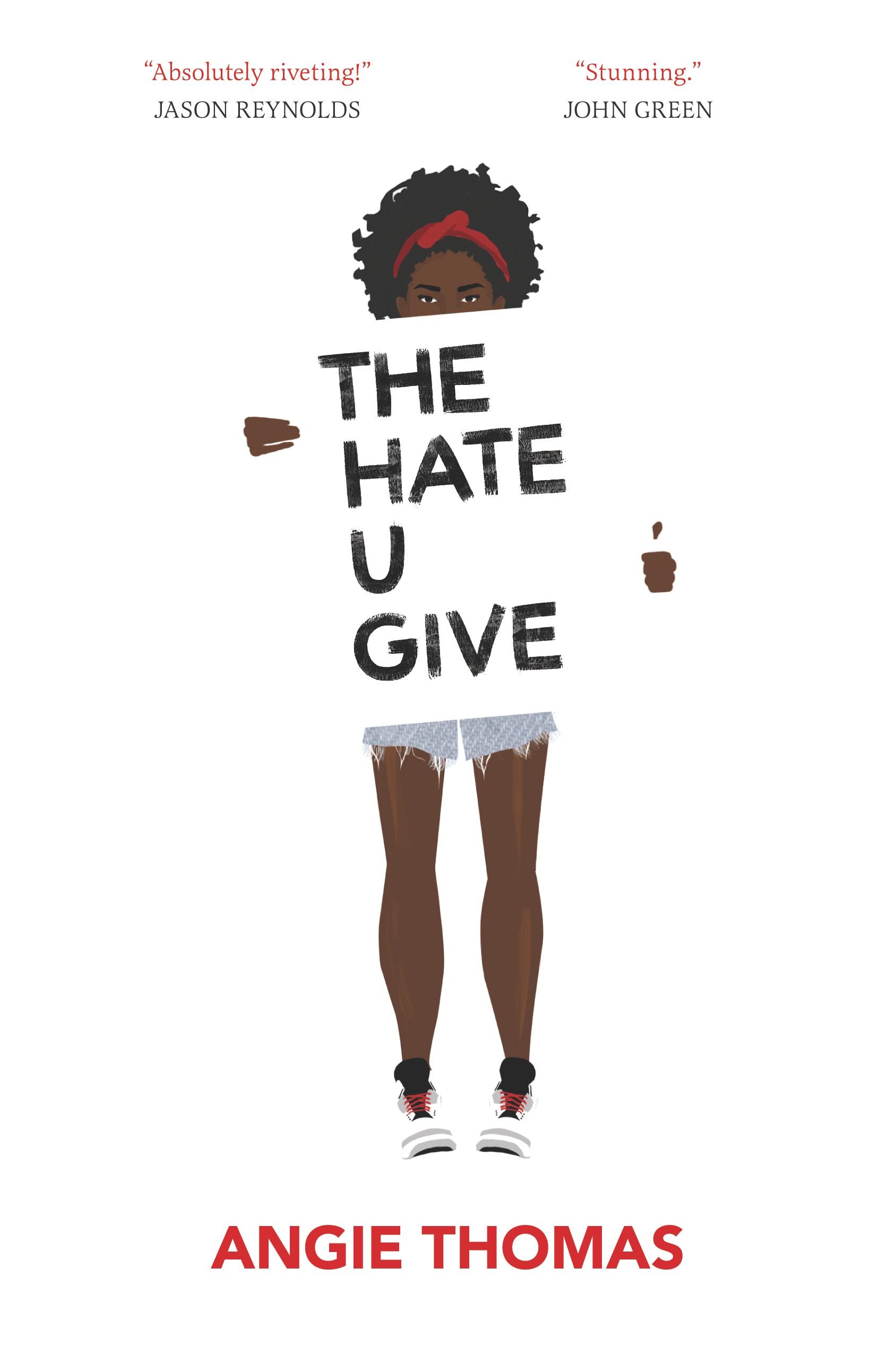
The Hate U Give by Angie Thomas 

My first contact with this book was the Publisher's Marketplace deal announcement. Right from that little paragraph I knew there was something magical in this manuscript. When teaser releases became available, it only made me want this book more. This is the first book that I've ever watched go from deal announcement, to teaser marketing, to release day where I greedily grabbed the second last copy on the shelf. The book didn't disappoint, either. The question, I wondered, was would it stand up to the test of time? The answer was obvious, and with a slam dunk yes, this is one of the books I still think about often. I think about how many Starrs are out there right now, living eerily similar lives, and trying to find their voice in this world. And every day I'm grateful for the industry reps that championed this book, plucked Thomas out of the slush pile, and gave all those Starrs the representation they so deserved. It is the perfect example of writers using our craft to fight back and say something about the state of our world. For all these reasons and more, I can't help but name this one the real stand out of this year. 


Problematic AF 
I Am J by Cris Beam 

So, this book. If you want to be offended, then feel free to pick this one up. The main character was horribly mean throughout the whole book, even to people who openly cared about him. There was homophobia, biphobia, sexism, J degrades a sexual assault victim, and on, and on. I was enraged for my entire read through, and if anything that rage has only solidified over time. The biphobic comment especially still gets me really angry, as there was no need for it. It was just a hurtful comment the author wanted to throw in which added nothing to the story whatsoever, unless its purpose was to reinforce how awful J was, then it succeeded wonderfully. For the whole book, it was like the author hid their MC behind the transgender tag to get away with them being utterly despicable. Unfortunately, the writing style was just as bad, leaving this to be a particularly painful read to get through. A shame, since I'd had this one on my shelf for years and really connected with the premise. This book perfectly shows that writing is all in the execution. 


Best Romance 
Lies We Tell Ourselves by Robin Talley

Hands down, the prize for best romance, het or LGBTQ2S, goes to Lies We Tell Ourselves by Robin Talley. I heard good things about the book and was longing for a good lesbian love story, and wasn't disappointed when I dove straight in. This book is a romance with a rich period setting steeped in segregation issues. I can still perfectly picture that back room where the girls did their schoolwork, where romantic tensions ran high among race debates. The tensions of the time set a high-stakes backdrop for the characters, who overcome prejudice to let love win. The tensions were so beautifully balanced in this book, and the romance had that edge-of-your-seat quality that made the book difficult to put down. The romantic tension blew all the books with straight couples right out of the water. Just thinking of this book warms my heart.  


Biggest Disappointment  
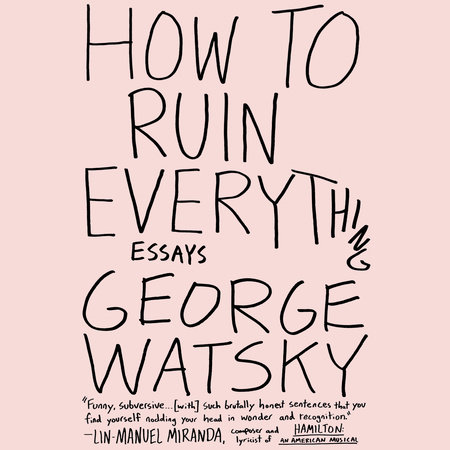
How to Ruin Everything by George Watsky

I was looking forward to this book as I'm a huge fan of Watsky's rap and spoken word career. He is a very talented poet and so getting a more in-depth look at his life was definitely appealing to me. And in some ways, the book was great. Each essay individually was beautiful and well-written, but they seemed lost when grouped all together. The book on a whole lacked that thematic connection that showed how to really ruin everything, which was disappointing as I feel the book could have been so much better with a thematic through line that helped loop each essay into a bigger picture. 


CSTAB Award - Can't Stop Talking About (this) Book 
More Happy Than Not by Adam Silvera

There are those books you read that just turn you into a chatterbox. You can't help talking about the book to everyone you meet, and for me, the book for that this year was More Happy Than Not. I was blabbing about it to everyone-- my roommates, friends, coworkers, even people at the gym. It's a premise that's captivating in its controversy, with an emotional plot that makes you extremely invested in the characters' lives. The book made me cry, it made me laugh, and it left me feeling a little bit empty and searching for answers from the world-- in a way that only a good book can. Adam Silvera is not afraid to rip your heart out and gift it back to you, which is probably what makes it so easy to talk about. Misery does love company, after all. 


Honorary Mention: The Resonator 
Tribe: On Homecoming and Belonging by Sebastian Junger

This book came to me at just the right time. The writing itself was easy and pleasant to get through, but it also opened my eyes to a lot of new ideals while piecing together things I had already learned and believed. Especially when our world is in a state of disunity and turmoil, this book helped me to realize how I'm going to resist and help my communities grow to a better place. At the end of the day, humans are social creatures, and when we commit to supporting one another and doing our part for the group, we can create amazing societies. This book really resonated with me and I'm often thinking about a certain part of the book where the author talks about the Siege of Sarajevo, how people banded together to survive, huddled together in basements while bombs flew through the city. One quote from the book that I loved was something a survivor of the siege, Nidzara Ahmetasevic, said about the experience: "We didn't believe in heroes. We were punk rockers. Our biggest hero was David Bowie." 

Saturday, December 30, 2017

Too Sensitive for Sensitivity Readers

Quote from Kira Hawke


'Twas the day before Christmas, and all the writers on twitter,
Were snuggled in their jammies, filled with wine and baked fritters.
When a post appeared online that arose such a clatter,
and had writers yelling, "Sensitivity readers matter!"

The New York Times is known for ruffling feathers in the YA community and kid lit with tone-deaf articles based in sensationalism rather than the full picture. Just in time of the holidays, they've gifted us with a new piece called, In An Era of Online Outrage, Do Sensitivity Readers Result in Better Books or Censorship? in which NYT picked and chose their words in a way we might call censorship to make it seem like the white authors who've used sensitivity readers were victims of an oppressive scheme to destroy art. I hate to give articles like this any extra hits but I think it's important to read the other side of the story (hah). Plus, I like knowing the opposing viewpoint, so I figured you would to.

So What Are Sensitivity Readers Anyway?

When an author finishes writing a book, it's not actually finished. Not if that writer has plans to publish it in any way. As said in many acknowledgement sections in books, "writing is a solitary art, but publishing is a group project." When someone writes a story, it is a wholly personal thing, a reflection of what's in their heart, and a testament to their experience. But once that person shares their story with others, it's no longer theirs. Readers are affected by it, and they ascribe their own interpretations and meaning that can change the message actually being conveyed, which makes the whole writing-publishing process a bit trickier. At the end of the day, you are trying to convey a message or story, and you want to do that as clearly as possible without inadvertently having your narrative say something you didn't mean to, such as reinforcing racism. This is where sensitivity readers come into play.

Sensitivity readers are a part of a book's editing stage, and are similar to beta readers. What makes them different is they are specifically looking for how a minority group is portrayed on the page, looking for accuracy, and to get rid of things that might be offensive. When writers write outside their cultural experience, they can sometimes get it wrong. No matter how much research one does-- and writers often have to research non-stop while writing-- when writing about a different way of life, tiny inaccuracies can pull readers out of books, can cause readers to put it down, or just plain offend someone. (Think of the marine biologist getting so worked up over Jaws inaccuracies, then imagine POC and minorities feel that except x100000). Sensitivity readers are people with the same experience or background as the characters, who can (hopefully) pick out the things that would be culturally insensitive or inaccurate. That way we could avoid the whole cycle of people getting mad on the internet and poorly worded apologies and conveniently trying to forget that book is a thing.

Notes from sensitivity readers hold no more power than a beta reader or your mom's opinion ("Oh sweetie, your characters shouldn't use so many naughty words") and though major publishing houses are starting to hire them, most sensitivity readers are unpaid, unofficial, and just trying to help out their fellow writers. Though some people's reactions have been harsh, sensitivity reads are a voluntary thing for writers, and many do seek them out. Because at the end of the day, this is a craft issue. Characterization is a major component of good writing and this is just another side to writing characters. For decades, publishing has, and most media as well, assumed the only experience out there is white, able-bodied, straight, with westernized views and a Christian background. That any other experience is considered 'niche,' 'specialized,' and in a 'significant minority,' and most people have the same experience in life. Slowly, we're realizing the opposite is true. Each of our experience is so varied and our culture hugely affects how systems and people react to us, that we can't paint all people in one brush. That even the experience of walking down the street is hugely different if you're white, compared to black or Muslim. Now that we're realizing that, we are striving to make each character's experience wholly accurate, and sensitivity readers, or input from people in the same shoes as your character, is vastly helping writers improve their craft. We're taking characterization to a new, better level. We're bringing our literature to eye level with reality, so we can more accurately express what it's like to be alive in this world.

The NYT article really said it best in the article with: "Like fact checkers or copy editors, sensitivity readers can provide a quality-control backstop to avoid embarrassing mistakes, but they specialize in the more fraught and subjective realm of guarding against potentially offensive portrayals of minority groups, in everything from picture books to science fiction and fantasy novels."

Oh yeah, fact checkers handling some seriously subjective subject matter. Which is probably why things are getting a little explosive.

The "Outrage"

I hate how the word "outrage" has been used lately. It's thrown out as a demeaning phrase used to devalue legitimate concerns, often raised by people of colour. Adding "online" seems to knock it down another peg, insinuating that because it's done online it has less merit somehow. It's not people marching in the streets, so it must not matter. Which is utterly ridiculous.

Minorities and people of colour have for decades felt this level of outrage for misrepresentation in
Black people protesting Birth of a Nation in 1915
media. Sometimes, before the days of the internet, they took to the streets to express their disgust at the level of harmful misrepresentation. Now that we have the internet, there is a public platform for minorities and POC to voice their concerns-- allowing publishers to easily see it and respond. Which makes it so much harder on the part of publishers, producers, creators, everyone, not to take responsibility for these things. If you know better, you do better. Or isn't that what we expect of each other? Publishing is beginning to listen to these concerns and is responding with sensitivity readers, especially children's publishers. As they publish content for the most vulnerable and impressionable, they need to ensure their representation is accurate. More than just making POC kids feel bad about themselves, books with stereotyped characters and cultures can indoctrinate white kids (or those unfamiliar with that culture) with inaccurate and harmful information, which perpetuates the racist and white supremacist systems in our society.

For most writers, this all seems pretty simple. Writing about a major medical incident? Get a doctor to read over your manuscript. Writing about Victorian London? Consult a historian. Writing about Navajos living on the reserve? Maybe you should talk to a Navajo living on the reserve.

One of the examples from the article really hit home the importance of sensitivity readers, especially for me, as someone who works with kids in foster care and who are in adoption processes. Kate Milford received feedback from sensitivity readers for her middle grade novel Ghosts of Greenglass House, who, like her character, were also adopted internationally by white American families. "In one small but meaningful change that a sensitivity reader suggested, she stopped referring to Milo’s mother and father as his adoptive parents, and simply called them his parents." This, to an adopted child, is a huge change they would've definitely noticed. They are often highly sensitive to the concept of "real" families and belonging. So reading this book, it may be a trigger for them to see a distinction between "my adoptive mom" and just "my mom" normalized in a published book. That word sticking out there reaffirms that they're outside the norm which can have damaging effects to their self-esteem over the long run.

So where's the problem? Sensitivity reading seems to do a lot of good. But the article, as well as some writers, seem to suggest this is all censorship.

Censorship? 

Cries of censorship echo all across the writing world, flying hand-in-hand with sensitivity readers. Yet I have trouble seeing the issue, especially when the process of sensitivity reading is the same as beta reading but with a different focus, and we didn't see cries of censorship there. Some writers (primarily white) are feeling afraid in this climate to "write outside their lane" as they fear getting it wrong and the inevitable backlash. Some are even claiming that they don't feel they can write about people of other backgrounds anymore, which doesn't make any sense to me. The whole point of sensitivity readers is to allow writers (primarily white) to write outside their own lane and do it successfully. The NYT article claims this is leading us to more homogeneous literature, when really the scrutiny towards accurate representation will allow us to write wider and write better. Instead of relying on internalized stereotypes and assumptions, we can get the inside scoop to allow writers to improve their craft and connect better with readers. Some critics are claiming that sensitivity readers are only one voice of a minority, and one black person can't speak to how all black people will feel. And while I agree wholeheartedly, it is still better to get the opinion of a few black people rather than none, is it not?

Criticism hurts at any point. It sucks to be told that the writing you've poured your heart into is bad, but that's all part of the process. If you want to improve, you have to take a hard look at your faults. If you want to publish, you have to be aware of your impact.
Shades of Magic series

Real censorship is awful, but criticism isn't censorship. Censorship is what happened to author VE Schwab. Her fantasy series, Shades of Magic, contains a gay relationship which was redacted from the Russian publication of the series without her permission. The contract stipulated that the plotline would remain, but the Russian publisher breached the contract to keep in line with the Russian "gay propaganda" law. Censorship comes without your knowledge or your consent. Censorship is the suppression or elimination of information. Sensitivity reading is the improvement of your content so you can tell the story you want. Sounds like the opposite of censorship to me.

People who take up arms against sensitivity reading don't have a lot of answers to the concerns POC raise about the lack of diversity in publishing. Nor do they really care. The way publishing Has Always Been benefits and suits them, and it can be difficult to engage people who can't see problems outside their own experience. So they claim that those who "don't like what's being published" should go off and "start their own" publishing houses/imprints/magazines/etc/etc. Aside from how difficult that is for people who don't come from rich backgrounds, POC have been starting their own houses/imprints/magazines/etc/etc for decades now. They've put in the work, building everything from the ground up just to publish works with accurate representation, and are still outpaced by big publishing houses who continue to publish books with harmful representation. Segregating publishing does nothing to address the problematic books being published all across the board.

The Core of It

Why is all of this such a big deal? Why should we even have to bother with sensitivity readers? At the end of the day, the need for sensitivity readers reflects the lack of diversity in the publishing industry. Where are the black editors? The Muslim agents? The Asian-American immigrant book reviewers for major publications? The more diversity we have within the industry itself, the less we'll have to reach out to sensitivity readers working unappreciated on the fringes. We're already asking for these people's input, and it's about time we put them in places where they can use their input to influence publishing. Not only will that open the door to more unique voices, but it will help to build sensitivity reading into the foundations of publishing itself, which is something we're long overdue for.

As it stands now, most of the gatekeepers within the publishing industry are of that white, straight, able-bodied, westernized, Christian background, and so don't have the experience to culturally vet so widely. That is also why we have more of a focus on white experiences. This is also why it's so much easier for white people to publish books about POC than for POC to publish books about POC. The expectation is (because the industry is mostly white) that the audience will also be mostly white. So even when books on POC are published, it needs to be through the viewpoint of a white person to make it more appealing to the "general" audience. And once that "Book about POC" slot is filled on a house's list (and because the assumption is the audience majority is white, there usually is only one or two slots a year for books about POC), most other submissions are shit outta luck until next year. So even when publishing about POC, white people still have the advantage to get those coveted spots of POC books to be published that year.

At the end of the day, sensitivity is nothing to be afraid of. If you want to write about black people, don't you want to get it right? If you're publishing anything at all, don't you want to make sure you put your best work forward?

And if your major concern is that there's too much focus on diversity, and we need less of it? Well then you can go fuck right off. Because we all deserve a voice. And it's about time we all learned to share the spotlight.

Tuesday, December 5, 2017

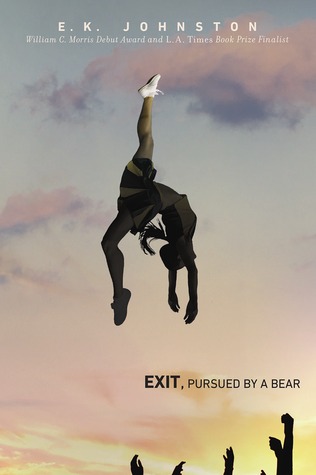
Book Review: Exit, Pursued by a Bear


Book Review: Exit, Pursued by a Bear by EK Johnston


Goodreads Description: Hermione Winters is captain of her cheerleading team, and in tiny Palermo Heights, this doesn’t mean what you think it means. At PHHS, the cheerleaders don't cheer for the sports teams; they are the sports team—the pride and joy of a tiny town. The team's summer training camp is Hermione's last and marks the beginning of the end of… she’s not sure what. She does know this season could make her a legend. But during a camp party, someone slips something in her drink. And it all goes black.

In every class, there's a star cheerleader and a pariah pregnant girl. They're never supposed to be the same person. Hermione struggles to regain the control she's always had and faces a wrenching decision about how to move on. The assault wasn't the beginning of Hermione Winter's story and she's not going to let it be the end. She won’t be anyone’s cautionary tale.


My Review: Senior year promised Hermione Winters a lot of changes and a lot of endings. Cheerleading, one of the pillars of her life, will come to an end at graduation, and she'll be moving on to college without her best friend, Polly, and possibly without her boyfriend, Leo. But she's ready for those changes, and is determined to make her senior year all it can be. Until the night of the dance at cheer camp, when someone drugs her drink, rapes her, and leaves her limp and bleeding in the lake. Though Hermione can't remember the incident, she's confronted with the brutal truths of her new reality: that rumors fly faster and farther than truth, that her boyfriend thinks she brought it on herself, and that Polly is the strongest person she knows.

One of the best things about Exit, Pursued by a Bear is how it begins by establishing Hermione, Polly, Leo, and the world well before the trauma. We get to see the Before, which allows us to understand how things are so fundamentally changed by the rape. The characters themselves are all really wonderfully done; each with strong internal motivations that makes their reactions so realistic. Hermione is a sympathetic character that wonderfully breaks the cheerleader stereotype. The trope of the snobby cheerleader is so overwrought that it's annoying more than boring, so this book was a wonderfully refreshing take. As well, Polly is such a champion throughout the whole book. I wish I had a Polly; hell, I wish everyone had a Polly. Having that kind of ride or die friend helps Hermione through the tough moments, but the nice thing is she doesn't completely lean on Polly either. Hermione has got her head in the right place and would've been find without her, which is nice as well. It's not a story of dependency, it's a story of friendship.

And, as you can tell by the description, this book tackles some pretty heavy things. Not only is Hermione attacked and brutalized, but she goes through a lot of the issues that women do when they're sexually assaulted. Her boyfriend implies that she wouldn't have been raped if she had been with him, where she was "supposed" to be. A teammate spreads some rumors about her having condoms at camp, which was taken out of context. A reporter asks her if she has advice for other girls on how to avoid rape. But on the other side of the coin, she has a lot of support from places that some real rape victims don't, like the police, parents, and the rest of the team. It's a really nice balance that made this a story unique to Hermione instead of just a series of awful things that happen to rape victims.

From the first page, the book engages the reader and makes you care. This book isn't dramatic, and it's a calmer, quieter tension that carries the reader through the book. It's also more realistic in a lot of ways. It's not a revenge fantasy or a tragedy, but a story of a girl going through a big trauma without defining herself by it. Because of that, the ending feels a little out of place and almost wish-fulfillment. It felt a tad rushed since everything happened within the last chapter and then it ends abruptly, with our characters shooting that metaphorical basket on the way out. If there had been a little bit more to ground the reader after that abrupt pivot, it might've been a better, at least in my opinion.

The only other concern I had is, and I'll be the first to admit it's petty, the title is a Shakespearean reference, as reinforced by the other Shakespeare quotes before each part. Yet the story itself had no reference to Shakespeare, which made it feel out of place to me. Although the title did tie in at the end when Polly and Hermione exit the field, as the "bears" (their team mascot) pursing the rapist. Still, it set me up to expect some sort of Shakespearean influence, so that kind of threw me.


TL;DR: All in all, 4/5 stars. A brave book about a girl refusing to be defined by her assault.

Monday, November 27, 2017

Book Review: More Happy Than Not


Book Review: More Happy Than Not by Adam Silvera 


Goodreads Description: Part Eternal Sunshine of the Spotless Mind, part Aristotle and Dante Discover the Secrets of the Universe, Adam Silvera's extraordinary debut confronts race, class, and sexuality during one charged near-future summer in the Bronx.

The Leteo Institute's revolutionary memory-relief procedure seems too good to be true to Aaron Soto - miracle cure-alls don't tend to pop up in the Bronx projects. But Aaron can't forget how he's grown up poor or how his friends aren't always there for him. Like after his father committed suicide in their one bedroom apartment. Aaron has the support of his patient girlfriend, if not necessarily his distant brother and overworked mother, but it's not enough.

Then Thomas shows up. He has a sweet movie-watching setup on his roof, and he doesn't mind Aaron's obsession with a popular fantasy series. There are nicknames, inside jokes. Most importantly, Thomas doesn't mind talking about Aaron's past. But Aaron's newfound happiness isn't welcome on his block. Since he's can't stay away from Thomas or suddenly stop being gay, Aaron must turn to Leteo to straighten himself out, even if it means forgetting who he is.


My Review: "Now we know the procedure is 100 percent real and 0 percent bullshit because one of our own has gone through it." 

Explaining books like More Happy Than Not can seem like a Herculean task. It's a book about everything and nothing, about the complexities and chaos of humanity interwoven with the daily banality that drives boredom into your skull like rail spikes. Somewhere between chatting with his mom and games of manhunt with the guys lies this beautiful picture of firsts, from first love to first kiss to first discovering who you really are, which all folds together to paint us a picture of Aaron Soto's life.

After his father's suicide, Aaron is left adrift. He has Genevieve, his girlfriend, who has stuck by him through the struggle, his Mom, who means well, and his brother, who never looks up from his video games, but at least he's there. Then Aaron meets Thomas, a kid from the next block over who sees things in a way Aaron never considered. As they grow closer, Aaron must come to face truths about himself: that he doesn't miss his girlfriend of over a year like he misses Thomas, that he can't stop staring when Thomas takes off his shirt, and that he's hopelessly in love with his new best friend. Being gay would disrupt everything he's tried so hard to build up since his father's suicide, so he turns to the Leteo Institute, which can help him forget his sexuality. But can erasing parts of himself really work in the long run? Or will the procedure threaten to tear Aaron's life-- and his mind-- apart?

After finishing this book, the only metaphor I could think of to describe it was a roller coaster with only one drop. The anticipation builds as you settle into the seat and it slowly starts the ascension. The view is beautiful. This is how the book begins. We see Aaron, living in poverty but happy nonetheless, still reeling from his father's suicide, with a girlfriend at his side and a gaggle of neighborhood friends. Then Thomas enters the picture, and the view just gets better. The budding romance, the slow realization of sexuality, and the feelings of real love blooming all flows as expected and loops the reader into a false sense of security. We think we know how the rest of the book will play out. Then before we know it, the roller coaster drops and we head down, down, and the rush is amazing but there's the realization that you're not coming back up, and the book heads down, down, down, until you crash at the bottom into a beautiful emotional wreckage.

Plot? Characters? Tension? Writing? Give them all a ten out of ten. The writing is so well-done that it's sometimes hard to stay objective as a reviewer and not get completely absorbed into the story. Silvera especially has a flair for foreshadowing, which comes into play all throughout the book. It's used throughout in small and big ways and leaves the reader constantly looking back, reevaluating the dual meanings in every line. I was particularly taken with one of the first lines, the one at the beginning of this review, which takes on a whole new meaning about half-way through.

Too often in books, characters can have their negative traits washed away to appear "good" in an attempt to create a character that is likable and sympathetic. Silvera didn't hesitate to risk "likability" for raw relatability, which sounds similar, though likability tends to be sugar coated while relatability tends to show us our flaws as well as our strengths reflected in a character. There are several instances of characters "behaving badly" throughout the book; Aaron cheats on his girlfriend, a love interest cheats on his girlfriend, Aaron obsessively denies Thomas's sexuality and assumes he knows what others are feeling. I was initially a little turned off by the cheating, especially as I started the book very aware that Aaron had a long term girlfriend and the potential for cheating was rife. I've been burned hard before by books that have a character cheating on their SO while it's portrayed as okay because of "true love" or because the SO was a dick once. I was disappointed to see Aaron cheating, but the way it was presented made this an opportunity for character growth as opposed to excusing poor behaviour. Both through dialogue of other characters and through Aaron's narrative, it's asserted that the cheating was completely wrong and fully Aaron's fault. What's nice is there's no speech from Mom to explain why cheating is bad, instead we get glimpses that allows the reader to come to that conclusion on their own. That's what really makes these negative characteristics shine: Silvera shows the reality of how and why we act that way, and then layers in the slow realization of the consequences from it. We're not told that cheating is bad, instead we see how it affects those Aaron cares about. Plus it allows the reader to draw their own conclusions, which is crucial, especially for YA fiction.

Throughout the book, Aaron stresses in his narrative that he knows Thomas' sexuality, that he knows Thomas is "acting straight," and will come to his senses eventually, allowing them to be together. It was a little jarring at first, especially because making this assumption is pretty unflattering for Aaron. As the book goes on, he continues to stress that he knows what Thomas likes, despite being provided with evidence of the contrary. By the end of the book, he comes to accept the reality, and by doing so comes to accept himself, for Aaron's assumptions about Thomas' sexuality are really just him projecting his issues onto Thomas. He can be certain about Thomas' sexuality because he's so uncertain about his own. Deep down, he knows he's 100% gay, but because of his circumstances he cannot consciously admit it. It's why, just before he admits it within narrative, he tries to rationalize in ways that become ridiculous in their attempt to avoid the obvious. He literally does anything he can to avoid the truth, to the point that when he does admit his sexuality, he immediately begins to project everything onto Thomas, seeing him as the one whose gay but straight passing. By projecting his situation onto Thomas, he can safely analyze the situation and think about what he should do (stop hiding his homosexuality and just be true to himself). As well, this rings so true to the experiences many LGBT kids have growing up: that forceful wishing that the person you loved would realize they were gay too (or just returned your feelings) so you could both have that Happily Ever After. It's something real and tragic and seeing it on page brought me right back to being 13 years old again.

The book perfectly captures the pain and hope of adolescence. It literally made me feel like a teenager again because of how incredibly well-crafted the narrative was. As mentioned above, Aaron makes assumptions about Thomas' sexuality, uses his girlfriend as a cover, falls in love with his best friend, hopes when there's no reason left to hope that his crush might love him back, and when things don't fall into a fairy tale, he struggles to find his happiness with people who can't give him the whole of what he needs. All of this done with an unapologetic teenage thought-process that mirrored exactly how I thought as a teenager. Aaron Soto actually thinks like a teenager, not an adult pretending to be a teenager. The cherry on top of that realistic teen experiences were things like Gen and Thomas hanging out together, the way Collin just isn't who Aaron needs him to be, and the empty spaces where no one asks what's wrong, which really brought home that isolating teenager experience. Life isn't Disney as a teen, and boy, does this book remind us of that.

The book can come across as heavy, especially because a major part of the book involves Aaron wanting to erase the part of his brain that's gay. It's a risky topic to play with, but Silvera handles it perfectly, and without having Aaron sit down and say, "I'm okay with me!" the narrative manages to show that being true to yourself is the key that opens the door to happiness. One of the hallmark's of this book is its ability to say something without outright saying it, which is a true testament to Silvera's incredible writing skills. Bring on the books, Silvera! This is one author you'll want to watch.


TL;DR: 5/5 stars. A beautiful tale of firsts, of a boy coming to grips with who he is, of finding happiness through the shards of tragedy.

Sunday, November 26, 2017

Guest Post: My Writing Journey by Kari Lynn West

K: Hey all, I am so pleased to welcome Kari Lynn West, author of The Secrets of Islayne, to the blog today. My review for her book can be found here, and if you'd like to connect more with Kari, you can reach her at her website, here. I hope you'll join me in welcoming Kari to The Underground.

~~~~~~~~~~~~~~~~~~~~~~~~~~~~~~~~~~~~~~~~~~~~~~~~

Hi there,

First off, thank you Katie for hosting me on your blog today! I appreciate the chance to introduce myself and talk a bit about my novel with all of your lovely readers J

To all those lovely readers, my name is Kari Lynn West, and I recently released my debut YA fantasy, The Secrets of Islayne. You should also know that I love coffee much more than is probably good for me. One of my favorite things to do is to curl up on the couch with a cup of strong coffee and a good story.

At some point in the past few days, I hope you've also had the chance to do just that.

Speaking of stories, I'd like to share a short tale with you about my writing journey and how my debut novel, The Secrets of Islayne, came to be. If you want, feel free to brew some good coffee first and find that favorite spot on your couch. I don't mind waiting.

...All set? Let's begin. :)

A Young Story Fanatic

It was a dark and stormy night...

Kidding, everyone, kidding.

Let's start that again:

Books have long been my obsession. As a kid, I could spend an entire Saturday curled up on the couch with the latest Little House on the Prairie, Redwall, or Dear America novel. The adventure, friendship, and fun I found between the pages opened up my imagination and sparked a never-ending search for my next favorite story. 

In college, I majored in English so no one could fault me for reading so much. One summer, I worked weekends at a tiny, mostly-forgotten used bookstore where they paid me in books (which served as my inspiration for where Ronan finds himself working at the beginning of The Secrets of Islayne). There is a kind of magic in well-penned words that I’ve been drawn to my whole life. For me, the desire to write novels was just a natural extension of my love of reading.

The Glimmer and the Grind

Have you ever had an idea that you just can't get out of your head?

Years before I put pen to paper (or more accurately, fingers to keyboard), I watched a news story about a woman who could remember each moment of her life as clearly as if it had just happened to her. For months after I saw that news feature, I couldn't stop thinking about what it would be like to remember your life that clearly. The concept was utterly fascinating to me (in part because I have a terrible memory). 

The seed for The Secrets of Islayne was planted in that moment, but it didn't come to fruition for quite a while. Like a lot of would-be writers, I had big dreams but little self-discipline when it came to my craft. It took several years for me to consistently sit down at my computer each day and add to my word count. But slowly, I learned the art of faithful creativity in the midst of the craziness of life (aka working my day job, having two kids, and moving twice).

Fast forward a few years. After several drafts, a lot of helpful feedback from trusted, story-smart readers, hundreds of hours spent re-writing and editing—and an embarrassing amount of time banging my head against a wall, crying that I would never get the story right—I finally had a novel worth sharing. 

Happy Readers, Happy Life

But I'm the author of the story, so I may be a little biased (nobody's perfect). If you'd like to know what a few other readers had to say, feel free to read the quotes below or check out the reviews on Amazon and Goodreads.

"It's one of those books where 'just one more page' turns into you reading the entire chapter. The Secrets of Islayne is full of unexpected turns and whimsical writing that will pull you in from the first page. Highly recommend it!"

"...a wonderful tale filled with adventure, romance, intrigue, and beauty that you won't be able to put down!"

"A must read for anyone with an appetite for suspense, humor, young love, and just great storytelling!"

Want to Join the Fun?

You can grab a copy of The Secrets of Islayne today to see for yourself how the adventure unfolds. You can get your paperback book on Amazon, or download your ebook on Amazon, Barnes & Noble, Kobo, or iBooks.

If I were you, I'd be sure to read it in that same comfy spot on the couch, with a fresh cup of coffee in hand.

Happy reading,

Kari


P.S. If you’d like to stay in touch and get some free preview chapters of my story, I’d love to have you join my readers’ group! http://bit.ly/2qPQqkU

Wednesday, November 15, 2017

Book Review: The Secrets of Islayne


Book Review: The Secrets of Islayne by Kari Lynn West 


Goodreads Description: For centuries, the island of Islayne has given certain residents the ability to revive other people’s memories. These gifted individuals are known as luminators, and sixteen-year-old Ronan Saunders desperately desires to join their illustrious ranks. As he struggles against the prejudice of the old, powerful families who have an iron grip on the trade, Ronan falls under the tutelage of a reclusive luminator, rumored to be insane.

Just when his long-desired future is within reach, Ronan and his three friends discover a deadly secret on the island. As they delve deeper into the mystery, what they find forces them to question their loyalties, doubt long-held beliefs, and wrestle with the dire consequences of revealing the truth. Ronan finds himself torn between everything he loves and the only future he’s ever wanted. The entire fate of the lumination trade hangs in the balance of his decision.


My Review: I was given a review copy of The Secrets of Islayne by the author, Kari Lynn West, in exchange for an honest review. 

A beautiful island off the coast of Scotland, Islayne has nurtured luminators for centuries. Its very land has gifted those born there with a special power-- to revive another's memories. Ronan, born to non-luminator parents, would give anything to join the ranks among the best, even as his parents try to steer him away from the idea. They don't understand how precious the memories are to Ronan, or the pain of denying his gift and feeling it wither inside him. When Ronan and his friends discover a book that could destroy the lumination trade, he doesn't know whether to expose it and risk his chance as a luminator or ignore it and pretend someone isn't committing the unthinkable. There's a luminator on the island destroying memories instead of reviving them. And if Ronan doesn't catch them first, he could end up as one of the rogue luminator's targets. 

Oh man, you guys. The first thing to really jump out at me while reading Secrets was the world building. I'm such a huge, huge fan of world building and so this book was an instant win with me. The lumination trade, the gift, and all the ins and outs from the academy, to the bureaucracy of the trade, to details like the recovery tea after sessions, all added depth to the trade and the world. The book touched on some poignant observations about memory and how it makes us human, which helped to tie the reader back to the heart and weight of the situation. The only complaint I would have about the world building is that I wanted more-- give me more details, show me how luminators function in this culture. Which is usually a good complaint to have. 

My second favorite thing about this book was Ronan. I'm a sucker for YA books with boys as the main POV character, but Ronan was such a raw and innocent guy that it's hard not to fall for him. Ronan earnestly loves lumination and the feeling of bringing a memory back, and coupled with his idealistic perspective, he comes across as adorably naive. That nativity is challenged later in the book as he comes to terms with the realities of his trade, which was such a great contrast. He, as well as a couple others in his friend group, face inner conflict throughout the book which really strengthened the characters. It was especially awesome to see Ronan, as well as Cassie, change and grow throughout the book. By the end they're all a little bit more mature, more 'sobered' by the realities they had to face throughout the book. 

The plot was well done and thought out. Though the beginning of the book appears to feature Ronan with his tutor and then Ronan hanging with friends, the two worlds slowly intersect and things from one world start to affect the other. The climax was more than just good guys toppling the bad guy, and the complex consequences of doing the right thing made it a really solid read. 

Walking away from the book, the only drawback had to do with the writing. The technical writing skills-- good flow, word choice, prose-- all worked well, but other issues held the story back. The author does a lot of heavy telling and infodumping, which really slows down the story and even became repetitive at times. Scenes that should have been powerful barely had an impact because the narrative explained the characters' emotions and situation beforehand. Some of the information contained in the infodumps was interesting and important to the plot, but it could have been shown to the readers instead of just explaining it to them. 

As well, the book contained some lazy tropes of YA fiction that dulled the originality of the book. The Absent Parent stereotype reigned hard, as well as a predictable romance that followed a framework of I-have-a-crush-on-you-so-I-want-to-get-to-know-you instead of I-got-to-know-you-and-fell-for-you. It makes things feel forced, right down to the romantic climax where Ronan pretty much says, "So are we gonna do this or what?" As well, there was a lot of POV switching throughout the book, some that was beneficial to the story, and some that...wasn't. It would've been a stronger story if we stayed with Ronan's POV throughout and learned things about the other characters through him. Some of the subplots with his friends became a bit distracting at times and took away from the main plot. 

All in all, the Secrets of Islyane was a delightful read with an adorable main character and a lovingly-built world. The author has so much potential, not just with this series but with their writing in general, that I'm really looking forward to future books. 

TL;DR: 3/5 stars. A solid story with an adorable main character and a creative approach to memory manipulation.