Saturday, July 30, 2022

Book Review and Giveaway: Coming Up Cuban


I've got a good one for you today, folks. I'm thrilled to be a part of the the COMING UP CUBAN by Sonia Manzano Blog Tour hosted by Rockstar Book Tours. Check out my review below and make sure to enter the giveaway!


About The Book:

Title: COMING UP CUBAN: Rising Past Castro’s Shadow

Author: Sonia Manzano

Pub. Date: August 2, 2022

Publisher: Scholastic Press

Formats: Hardcover, Paperback, eBook, Audiobook

Pages: 320

Find it: GoodreadsAmazon, Kindle, Audible, B&NiBooks, KoboTBD, Bookshop.org

From Pura Belpré Honoree and Emmy-award winning actor Sonia Manzano--best known as "Maria" from Sesame Street--comes the expansive and timeless story of four children who must carve out a path for themselves in the wake of Fidel Castro's rise to power.

Fifteen-time Emmy Award winner and Pura Belpre honoree Sonia Manzano examines the impact of the 1959 Cuban Revolution on four children from very different walks of life. In the wake of a new regime in Cuba, Ana, Miguel, Zulema, and Juan learn to find a place for themselves in a world forever changed. In a tumultuous moment of history, we see the lasting effects of a revolution in Havana, the countryside, Miami, and New York. Through these snapshot stories, we are reminded that regardless of any tumultuous times, we are all forever connected in our humanity.


My Review: Coming Up Cuban takes a look at Fidel Castro's rise to power through the eyes of four young Cubans and their families. Through multiple novellas, each centering on a different protagonist, Sonia Manzano offers various perspectives on a turbulent political uprising, allowing her to highlight the nuances of the situation while also breaking down complex ideas for middle grade readers. Filled with love, both for Cuba as well as its resilient peoples, Coming Up Cuban is a story full of joy and heartache that celebrates the vibrancy of Caribbean culture while educating readers on a crucial historical moment.

Coming Up Cuban keeps its politics centered on its target audience -- 9-12 year olds. Through their eyes, we see Cuba's transformation, demonstrating how political upheavals can effect every corner of a country. In this way, the book doesn't focus on fighting and war, but the aftereffects -- refugees scrambling to leave the country, schools closing, forced surrendering of property, new government initiatives, etc. The book also features a cast of characters from differing backgrounds -- poor to upper middle class -- that offer various perspectives on Castro's takeover -- from those who hate Castro and his changes (which seems to be the dominant opinion), to people who praise him, to people that agree with parts of his revolution but not all, etc. In this way, most perspectives are held on equal ground, with few "right" or "wrong" perspectives pushed to the forefront, allowing readers to form their own opinions on Castro's rule. This equalization of perspectives did have a limit. Every character seemed to hold America in high regard, as a land to escape to, full of compassionate people who were alluded to be outright saviors a few times. The only 'negative' opinion of the US came from older characters who did not want to immigrate, mostly due to a love of Cuba and an unwillingness to change. This felt a little propagandist to me, as the US was a long-term colonizer of Cuba after Spain and largely controlled the country until the revolution, so it feels disingenuous to paint the US only as saviour, when their involvement was just as nuanced as Fidel's. Considering the book has no problem showing multiple perspectives on the politics within Cuba, it would have been easy to add some diversity on the perspective toward America as well.

The book features four novellas, each focusing on a different character at different points during Fidel's early reign. The characters all know each other and so their stories overlap, thus building an overarching narrative while also allowing the story to branch in very different directions. Each novella focuses on a different aspect of Fidel's reign to educate readers while entertaining - Ana's section focuses on the revolution and sets the story, Migeul's section focuses on refugee and immigration struggles, Zulema's section focuses on literacy, and Juan's section focuses on radicalization. The novellas use simple but striking interpersonal conflicts to hook readers in and keep them emotionally invested in each novella. 

Manzano's writing style is simple but elegant; no word is wasted. Everything given page space enhances the themes, plot, or characterization very deliberately, creating a satisfying read for those who wish to analyze the text on a deeper level. Yet the writing style is also incredibly accessible for its target audience. Manzano carefully utilizes simple language without simplifying the concepts explored, which shows her mastery of communication. The book balances darkness with some levity by injecting childlike silliness into the mix of uncertainty, giving the book an endearing quality at its core. The silliness also helps hooks young readers into the larger political story by promising some fun along the way. 

All in all, 5/5 stars. Coming Up Cuban is a silly and heartfelt story filled with hope that pushes young readers to think, learn and empathize. Definitely worth adding to your shelves and sharing with your young ones. I chuckled, teared up, and enjoyed every moment of this Caribbean adventure intended for readers a third my age. 


About Sonia Manzano:

SONIA MANZANO is a groundbreaking Latina educator, executive television producer,  and award-winning children's book author. A first-generation mainland Puerto Rican, she  has affected the lives of millions of parents and children since she was offered the  opportunity to play “Maria” on Sesame Street (which she continued to do for 44 years,  from 1971-2015). Manzano has received 15 Emmys for writing television scripts, the  Congressional Hispanic Caucus Award, the Hispanic Heritage Award for Education, and a  Lifetime Achievement Award from the Academy of Arts and Sciences. People magazine  named Sonia one of America's most influential Hispanics. Her critically acclaimed  children's books include The Revolution of Evelyn Serrano, which won a Pura Belpré  Honor Award, and the stunning young adult memoir Becoming Maria: Love and Chaos in  the South Bronx. Currently she is working on Alma's Way, an animated series with Fred  Rogers Productions that will air on PBS. Manzano resides in New York City with her  husband Richard Reagan, whom she married in 1986, and their daughter Gabriela.

Website | Twitter | Facebook | Instagram | Goodreads | Amazon


Giveaway Details:

1 winner will receive a finished copy of COMING UP CUBAN, US Only.

Ends August 9th midnight EST.

a Rafflecopter giveaway

Tour Schedule:

Week One:

7/18/2022

The Clever Reader

Excerpt/IG Post

7/19/2022

What A Nerd Girl Says

Excerpt/IG Post

7/20/2022

brittreadsalattebooks

IG Post

7/21/2022

Kait Plus Books

Excerpt/IG Post

7/22/2022

Ya Books Central

Excerpt/IG Post

7/23/2022

BookHounds YA

Excerpt/IG Post

Week Two:

7/24/2022

Author Z. Knight’s Guild

Excerpt

7/25/2022

Lady Hawkeye

Excerpt/IG Post

7/26/2022

hodophile_z

IG Review

7/27/2022

Lisa Loves Literature

Review/IG Post

7/28/2022

FictionalFey

IG Review

7/29/2022

Midnightbooklover

IG Post

7/30/2022

The Underground

Review

Week Three:

7/31/2022

One More Exclamation

Review/IG Post

8/1/2022

Two Points of Interest

Review

8/2/2022

The Momma Spot

Review/IG Post

8/3/2022

Rajiv's Reviews

Review/IG Post

8/4/2022

Books and Zebras

Review/IG Post

8/5/2022

Lifestyle of Me

Review/IG Post


Tuesday, July 26, 2022

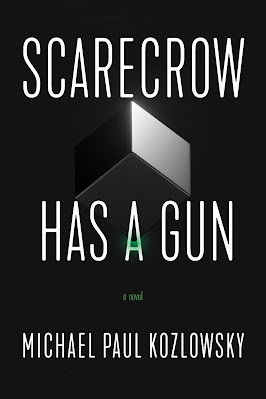
Spotlight and Giveaway: Scarecrow Has a Gun


Today, I'm stoked to be hosting a spotlight for the SCARECROW HAS A GUN by Michael Paul Kozlowsky Blog Tour hosted by Rockstar Book Tours. This one looks mighty tense, so check it out and make sure to enter the giveaway for your chance to read it for free. 


About The Book:

Title: SCARECROW HAS A GUN

Author: Michael Paul Kozlowsky

Pub. Date: August 2, 2022

Publisher: Imbrifex Books

Formats: Hardcover, Paperback, eBook, Audiobook

Pages: 266

Find it: GoodreadsAmazon, Kindle, Audible, B&NiBooks, KoboTBD, Bookshop.org

Never trust other people's memories, and watch out for your own

Sean Whittlesea was there when his wife was murdered. He saw the light leave her eyes. He held her dead body in his arms.  He knows he wept, but he cannot recollect a single other detail. Tormented by the tragedy, Sean relives the horror over and over again. As he struggles to recall what really happened, his imagination serves up an endless chain of scenarios. The truth, however, remains hidden in the vault of his memory, and the key is nowhere to be found.   

Nearly two decades later, Sean, now remarried and a father of two, wins a bizarre contest hosted by his eccentric boss. The prize is the Memory Palace, a state-of-the-art black box that purportedly allows its possessor to relive every moment he has ever experienced, playing out all the memories on a screen.

While the small machine at first appears to be the answer to the mystery surrounding the death of his wife, it instead upends Sean’s life. He pushes his family further and further away as the Memory Palace forces him to confront harsh realities and difficult questions that he lacks the strength to face or answer. Spiraling downward, Sean encounters increasingly harrowing challenges that force him to realize that his memory is not the only thing at stake. To recover the truth about his past, Sean must fight for his very life.

Reviews:

"Suffused with an atmosphere that suggests J.G. Ballard and Paolo Coelho chained together in a basement while a carbon monoxide alarm goes off, Scarecrow Has a Gun is at once disquieting and illuminating, eerie and sincere.”—Martin Seay, award-winning author of The Mirror Thief

“Michael Paul Kozlowsky’s brutally eccentric Scarecrow Has a Gun is a masterclass in Cartesian storytelling—simultaneously evoking Christopher Nolan’s clockwork precision and JG Ballard’s ultra-modern sense of irony.”— Jeff Chon, author of Hashtag Good Guy With a Gun

“Scarecrow Has a Gun is a propulsive read that spirals deep into the intersections of memory, technology, and the shifting boundaries between the real and the unreal."— Nicholas Rombes, author of The Absolution of Roberto Acestes Laing and The Ramones’ Ramones

"A whodunit wrapped inside sci-fi story and blended with a compelling and clear-eyed examination of how memory works."— Brett Riley, author of Comanche, Lord of Order, and Freaks

"With writing that's both sharp and dense, Michael Paul Kozlowsky's Scarecrow Has A Gun is a labyrinthine mystery that feels as if David Cronenberg and Don DeLillo had collaborated on a Philip K. Dick adaptation. It's a gut-punch meditation on the way our brains process mediation, memory, trauma, and grief."—Tex Gresham, author of Sunflower, Heck, Texas, and This Is Strange June

"This engrossing and inventive novel entertains on multiple levels. It’s a mind-bending mystery, in which the pursuit of the truth about his wife’s murder threatens the main character’s trust in his powers of perception and his very sense of self. It’s a horror-show-worthy take on corporate ambition, overreach, and villainy."—Beth Castrodale, author of I Mean You No Harm, Marion Hatley and In This Ground

“What an original and captivating sci-fi read! I totally loved the real life references and often found myself so intrigued I had to then go search for confirmation and further information. Things really ramped up towards the end and I was glued to the text. I enjoyed the dark undercurrent and found the ending deeply satisfying as well as super clever.”—Caroline Lewis, Librarian at St. Jospeh’s College Mildura


About Michael Paul Kozlowsky:

Michael Paul Kozlowsky is a former high school English & film teacher, and, writing as M.P. Kozlowsky, the author of four children’s books — Frost, Juniper Berry, Rose Coffin, and The Dyerville Tales. He lives in New York with his wife, two daughters, and a rescue beagle named Huxley. When he’s not reading or playing chess, he continues to write everything from poetry and screenplays to short stories, articles, philosophical essays, and books for readers of all ages. SCARECROW HAS A GUN is his first novel for adults.


Website | Twitter | Instagram | Goodreads | BookBub


Giveaway Details:

1 winner will receive a finished copy of SCARECROW HAS A GUN, US Only.

Ends August 9th, midnight EST.

a Rafflecopter giveaway

Tour Schedule:

Week One:

7/25/2022

Rajiv's Reviews

Review/IG Post

7/26/2022

The Underground

Spotlight

7/27/2022

Jazzy Book Reviews

Review/IG Post

7/28/2022

@just_another_mother_with_books

IG Review

7/29/2022

One More Exclamation

Review/IG Post

 Week Two:

8/1/2022

Lifestyle of Me

Review

8/2/2022

The Momma Spot

Review

8/3/2022

BookHounds

Excerpt/IG Post

8/4/2022

GryffindorBookishNerd

IG Review

8/5/2022

Brandi Danielle Davis

Review/IG Post


Wednesday, July 13, 2022

Book Review: Dr. Edith Vane and the Hares of Crawley Hall


Book Review: Dr. Edith Vane and the Hares of Crawley Hall by Suzette Mayr 

Goodreads Description: Dr. Edith Vane, scholar of English literature, is contentedly ensconced at the University of Inivea. Her dissertation on pioneer housewife memoirist Beulah Crump-Withers is about to be published, and she's on track for tenure, if only she can fill out her AAO properly. She's a little anxious, but a new floral blouse and her therapist's repeated assurance that she is the architect of her own life should fix that. All should be well, really. Except for her broken washing machine, her fickle new girlfriend, her missing friend Coral, her backstabbing fellow professors, a cutthroat new dean—and the fact that the sentient and malevolent Crawley Hall has decided it wants them all out, and the hall and its hellish hares will stop at nothing to get rid of them.

My Review: Horror as a genre tends to lean towards the cartoonish -- madmen with axes, supernatural predators-- because the mundane horrors that fill an adult's everyday life are mostly intangible. Suzette Mayr leapt at that challenge like a cracked-up jackrabbit, using magical realism to bring the horrors of academia to life through a delightfully satirical perspective. As an academic herself, Mayr draws on her own experiences as an English professor when criticizing the institutional failings of universities that care more about profit and prestige than the well-being of their staff and students. 

The book follows Edith, an introverted English professor facing increasing pressure from her department heads to hurry up and publish her dissertation. Edith struggles to find balance between her professional and personal life, and as stress mounts, she throws herself further into her work, hoping to find salvation through external validation. Health struggles compound under the poor building maintenance, and soon Edith begins seeing strange things within the university - fellow professors going missing, a sinkhole opening up, and the devilish hares that are more than they appear. But is any of it actually real? Or is she hallucinating due to a budding stress disorder? Mayr's use of magical realism within the book treads the fine line between real and imaginary, allowing the reader to draw their own conclusions. Is Crawley Hall really alive, or is Edith spiraling into mental illness? 

Throughout the book, Edith refuses to acknowledge how systematic oppression/failures have harmed her and assumes personal responsibility for failing to keep up with impossible standards, driving her to figurative madness. The text almost feels Shakespearian at times due to Edith's inability to see how the system and environment she's in has pushed her to act against her best interest, while the audience can see the connection between her emotionally abusive upbringing, to her lack of a support system, to the predatory nature of the university. It feels like a modern iteration of a classic 'driven mad' Shakespeare narrative, but with a greater understanding of how various intersectionalities of identity (class, race, gender, upbringing, etc.) influence someone towards 'madness.' The magical elements really highlight and enhance this downwards spiral, as well as create a hauntingly creepy atmosphere to set the drama within. 

This novel is both a character study as well as a critique of academia. As such, the plot is slow and mostly focuses on Edith's daily ruminations and routines, which takes time to build into a solid mystery. Tension does build right from the start around the school, but as Edith's focus is on her work, little of the narrative is spent actually trying to 'solve' the mystery. While this approach felt fresh when compared with other narratives where characters drive straight towards the plot, it also gave the book a literary feel, complete with the stereotypical pros and cons that come with the genre. To support readers through the slower plot points, Mayr filled the book with gorgeous, lyrical language that is heavily layered with symbols, metaphors, and satirical commentary on all facets of life. 

The book's satire is deliciously absurd and yet freakishly real. The oppressive atmosphere mounts until it threatens to suffocate Edith by the finale, which beautifully illustrates how overwhelming stress and mental illness can become. Ultimately, my favourite part of the book is its finale, which (no spoilers) capitalizes on all the building horror and manages a twist that gave me chills in all the best ways. The ending satisfies by balancing Edith's wins and loses to create a catharsis for readers who enjoy it when both the hero and the villain get a few solid jabs in. 

TL;DR: 4/5 stars. A chilling and satirical perspective on the horrors of academia. 

Sunday, June 12, 2022

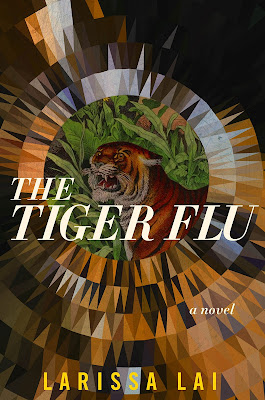
Book Review: The Tiger Flu


Book Review: The Tiger Flu by Larissa Lai 

Goodreads Description: Kirilow is a doctor apprentice whose lover Peristrophe is a "starfish," a woman who can regenerate her own limbs and organs, which she uses to help her clone sisters whose organs are failing. When a denizen from Salt Water City suffering from a mysterious flu comes into their midst, Peristrophe becomes infected and dies, prompting Kirilow to travel to Salt Water City, where the flu is now a pandemic, to find a new starfish who will help save her sisters. There, Kirilow meets Kora, a girl-woman desperate to save her family from the epidemic. Kora has everything Kirilow is looking for, except the will to abandon her own family. But before Kirilow can convince her, both are kidnapped by a group of powerful men to serve as test subjects for a new technology that can cure the mind of the body.

My Review: This book was probably the biggest disappointment in my recent reading history. There's so much to like about the world and characters, but unfortunately the writing style, coupled with the plot's handling, made for a huge let down within the last one hundred pages. 

And there's so much to like about this book! Sci-fi concepts ooze from these pages and fill the world with vibrant life: a village of parthenogenetic women, regrowing body parts, memory/knowledge in chips that can be plugged into the brain, cloning, uploading consciousness to a mainframe, etc, etc. It's set in a future ravaged by climate change, in the midst of a man-made pandemic, where patriarchy and greed poisons the land as well as the people. Our two protagonists, Kirilow and Kora, are both well-crafted characters that carry the story and its themes. The initial set up of the book is excellent: tension builds steadily, our characters push further into risky territory, until finally society springs closed around them. 

Something I found incredibly captivating about this book was the way Kora and Kiri's stories appeared to be individualistic in nature -- the hero's quest story, where a protagonist's agency and action shapes the world and plot around them. The Tiger Flu lulls you into believing that it will follow this same trajectory, and it's only when Kiri and Kora really assert themselves that they realize they are merely cogs in a giant machine. Much of the time, society, characters around them, villains, or even government figures have made choices that have pushed Kiri and Kora into the circumstance they're in. At first, Kiri's desire to go to Saltwater City appears to drive the plot, until it's revealed that the (seemingly innocuous) players around her have actually manipulated the her into thinking and behaving in ways that benefit them. In the end, the story reveals a more collectivist perspective. Yes, the plot is still driven by character agency and action, but it's revealed that individuals have less say over their success than they realize. Your successes are just as much determined by your allies and environment as your own actions. This book struck an interesting balance between individualist and collectivist perspectives, which raised some fascinating questions on how much control we have over our own lives. 

I also adored the contrast between Kora and Kiri's characters. Kora is younger by a few years, and filled with a compassion and gentleness for others that colours her every action. Even at the beginning of the book when a boy attempts to grope her, she fights him off and then chooses to help him when he nearly falls off a building. She's also much slower to aggression, which is contrasted by Kiri, who is so angry from the trauma she experienced that it threatens to destroy her. At one point, she becomes so consumed by the need for revenge that she's willing to abandon her goals and die like an animal. Kiri and Kora both learn to balance each other, as Kora's kindness can sometimes lead her into danger, while Kiri's anger blinds her to actionable solutions. I also just loved Kiri's journey to give up her quest for revenge and learn to quiet the hatred within her, and only wished that could have been expanded on further. 

All of this delicious build up led to an incredibly unsatisfying final 100 pages. As I mentioned earlier, I believe Lai's writing style heavily influenced this. Larissa Lai primarily writes poetry which is reflected in her beautiful use of diction, but it also shows when she's trying to get across plot concepts. When she introduces an idea to the reader (even something as simple as a worldbuilding piece or plot element), she starts out by describing it in very vague terms, or few words, which doesn't help the reader understand the role this object plays in the story, i.e., introducing the flu with "they've got it," which builds mystery and tension (got what?). This is often not enough information for the reader to figure out on their own, which drives them to keep reading. Not long after this, Lai will "explain" through an overuse of telling, often spelling things out to leave no room for misunderstanding. This jump from one extreme (too little info to solve on your own, but encourages you to puzzle over the info) to the other (too much blunt telling, taking away the promise of figuring out the mystery) leads to frustration and dissatisfaction. While the vagueness made it difficult for readers to figure it out on their own, I really enjoyed the mystery and tension that it built, only to have this excitement cut off at the knees when Lai overexplained what was happening. The climax concludes with over a page of As You Know, Bob infodumping that only seeks to explain what already happened, which made the scene drier than an overdone turkey with no gravy. Lai compounded all these incredible ideas and then couldn't explain their intersections without bouncing between vague poetic notions and infodumps. I almost wish Lai had left out the explanations all together and let readers piece together the fever dream on their own. 

Even with the low rating, I would suggest that others give this book a shot. Having such a solid start and then failing to deliver made this book a sore spot for me, but I know others may feel differently. If you aren't as put off by Lai's writing style, then you may enjoy the ending much more than I did, and honestly I hope you do. There are so many great elements to this book that I hope someone else can enjoy.

TL;DR: 2/5 stars. A captivating launch that fizzled into a disappointing ending. 

Wednesday, May 25, 2022

Identity Policing, Forced Outings, and my Thoughts on Coming Out in Publishing


Growing up as a queer kid in the 90s/00s in Canadian conservative country was, at the best of times, an incredibly isolating experience. There were no Gay Straight Alliances in my schools, many of my peers stayed in the closet longer for fear of rejection, and the bigoted jokes that played on loop across mainstream TV left the impression that I was a queer island in a sea of heteronormativity - separated from kin by thousands of miles. The only thing that helped bridge the seemingly endless distance was fiction - the few published books I could find featuring LGBTQ+ characters, as well as the budding online communities where queer folks could freely gather and share their stories.

I lived in those online queer spaces, but I kept going back to the bookstore, seeking out titles that maybe, just maybe, featured someone who felt like me. Whether the book was excellent or terrible, I found myself flipping to the author bios, searching for some evidence that the author was queer. I was always skeptical, and a little disappointed, when the author appeared to be straight and cis, or there was no indication as to their orientation. It felt like a sort of appropriation, and I was desperate to find the raw authenticity of queer stories told through an author's queer perspective. 

So I get it. I get the queer fans calling for writers to come out. I get the editors and agents who are seeking the security of marginalized authors who write in their lanes. With a limited number of books that can be published in a year, everyone with stock in the game wants to ensure the author they’re betting on is a safe gamble. Everyone wants authenticity. They wants to know: who are you to write this story? 

But do they have a right to know? 

When I entered the world of publishing in the late 2000s, young, bright-eyed and bushy-quilled, the

concept of author brands was gaining traction. As social media took hold, many in the industry quickly recognized the value in an author's "personal brand” and began pushing authors to develop loyal fanbases that would follow them from book to book. Today, this expectation is thrust on authors more than ever. Even when it’s not written directly in contracts, there’s an expectation that authors do a fair amount of their own promotion through social media, turning them into quasi-influencers. 

Over the last ten years, there's also been a growing cultural acceptance of and expectation for LGBTQ+ representation in media. As more queer kids grow up seeking queer stories, publishers quickly realized there was more money to be made appealing to the interests of queerdos than burying any mention of LGBTQ+ characters or themes under vague back jacket blurbs. All of this, in turn, changed how editors and agents evaluated potential clients and acquisitions. Industry professionals began looking for writers whose potential (or already constructed) author brand would align with the target audience's value system, reinforcing a parasocial relationship that would boost sales. #OwnVoices launched with the intention of supporting marginalized creators and connecting fans to the authenticity they were seeking, but was quickly co-opted by industry professionals into a catch-all branding term that identified more "marketable" clients. Fan and writer communities also weaponized the hashtag against marginalized creators to scrutinize their identities, histories, as well as gatekeep communities. (If you want to read more, BitchMedia wrote articles on the pressures on queer authors and authors being forcefully outed by the industry. R29 also wrote on the effects of #OwnVoices on books.)

Despite the retirement of #OwnVoices, this pattern of identity policing shows no signs of slowing down. On the one hand, readers aren't wrong to ask what an author's relationship is to the community they choose to write about. Young readers may do this as they attempt to find the same safety and solidarity from within the book in the real world, so it makes sense they would start with the author of the escapist fantasy that has already comforted them. On the other, the expectation that some of the most sensitive parts of our identity must be integrated into an author brand so we may be "allowed" to publish stories about marginalized communities feels ridiculously authoritarian. Not only does #OwnVoices not guarantee authenticity or credibility (as two people with the same identity may have vastly different experiences and perspectives), but the enforcement of authenticity above all harms and chases away marginalized creators, while limiting an author's career. An author’s consent in disclosing their identity should be prioritized above all, and silence should not be assumed to mean they don’t belong. I do hope more authors reveal more of who they are for the sake of representation, especially for YA and MG authors whose audience are likely looking up to them as role models, but no one should be pressured to build their entire brand—or identity—around a single diversity trait. Maybe by policing author brands, we'll catch the occasional con artist who seeks to insert themselves into marginalized communities to profit off them, but we'll harm a far greater numbers of allies, closeted people, and marginalized creators in the process. 

Cat Tax

As much as the idea of turning yourself into a 'product' still makes me uncomfy as all hell, I've seen a lot of value from building a brand that centers on you. I tend to be a bit of an oxymoron when it comes to self-disclosure. I don't like to talk about myself, but I wear everything on my sleeve, no secrets here. When considering my own brand, both as an author and a freelancer in the industry, I had to seriously consider how much of myself I wanted to place on the internet for public consideration. How to balance privacy and minority representation. How much I wanted to build a community centered around my LGBTQ+ identity vs other aspects of my personhood. How much of my career history I wanted to sacrifice to preserve my privacy. 

Some identities are easy to hide. Some aren't. Some minorities can walk into a room and blend, while others have it literally written on their skin. Being trans lets me exist in a strange reality where I'm both. At a certain point, I will pass enough that most people won't be able to tell that I'm from a minority group. Other times, it is painfully impossible to hide, and I have to put my safety in the hands of strangers in public spaces, hoping my identity doesn't upset those around me. But my personal brand grants me an opportunity: I could delete my blog, let go of my contacts and twitter, and essentially start my brand and business from scratch. It would completely disconnect me from my old name, gender, etc., yet I'd also sacrifice over ten years of work just to keep this part of myself hidden, while also surrendering a chance to provide representation for other transgender individuals. 

When put like that, the answer felt simple. At least for me.

So, hi. I'm Kyle, a transman. Nice to meet you. Come in, take a seat. I’ve got cookies around here

somewhere. 

I've been coming out slowly, tactically, in each new environment, like a solider behind enemy lines, and finally I've come to storm the online trenches. For me, being open about who I am and the changes I’m going through grants me the space to be a more authentic writer, which is why I’m choosing to publicize this change and my thoughts with this blog post, instead of quietly changing over my name and hoping no one notices. During my rebranding, I seriously considered whether I wanted a trans pride flag in my new banner, an easy way for other trans people to recognize the solidarity and connect, if they wanted to. Yet I hesitated, and ultimately chose not to include any identifiers in banners or bios, other than the vague title of "queerdo.” I know I’ll talk about it quite freely, so it will by no means be a secret, but I don’t want to advertise myself based on that feature and build an expectation with my audience that LGBTQ+ rights are a main focus of my art. Cause they are and they aren’t, and I don’t want to pigeon-hole myself artistically or have to publish under multiple pen-names, each with their own authorial branding. 

While coming out in this way works for me, the expectations of author transparency need to change. That disclosure of identity should be treated with respect – as the gift that it is, instead of something we’re entitled to. To help let go of this entitlement, the reigns need to be loosened on who "owns" what stories, and we need to let go of this desperate grab for an imaginary supreme authenticity. I believe very strongly in research, authenticity readers, and seeking to elevate representation of minority groups, but that can be achieved through criticizing the work, not the person. Somehow, in our push for more diversity, we expect marginalized individuals to act more alike than ever: conforming to single narratives about what it means to be gay, lesbian, Indigenous, an immigrant, etc. and labelling others as "bad rep" for not assimilating their own experiences into the dominant narrative. Author consent and autonomy needs to be central if we want to reverse the assimilation trajectory and get back to, you know, actually supporting and celebrating diversity. 

As Alanis Morissette would say, "Isn't it ironic..." 

Friday, March 11, 2022

Book Review: Indian Horse


Book Review: Indian Horse by Richard Wagamese 

Goodreads Description: Saul Indian Horse has hit bottom. His last binge almost killed him, and now he’s a reluctant resident in a treatment centre for alcoholics, surrounded by people he’s sure will never understand him. But Saul wants peace, and he grudgingly comes to see that he’ll find it only through telling his story. With him, readers embark on a journey back through the life he’s led as a northern Ojibway, with all its joys and sorrows.

My Review: There are some minor spoilers in this review. No details are given away, but I do name Saul's trauma experience. 

To summarize this novel in a single word: trauma. From its opening pages, Indian Horse makes it clear this story is about collective trauma and how it manifests in individuals. The novel attempts to illuminate the history of so many Indigenous people who have been chewed up and spit out by the Canadian state. 

Saul's story details his entire life, beginning in the 1960s when he lived with his family in the bush -- an attempt to stay hidden from the Indian Agents that hunted down Indigenous children and their families in order to put them into residential schools. Despite their best attempts, Saul's family is unable to survive during winter in the wild and he is shipped off to a residential school, where he's introduced to both horrific systematic abuse, as well as hockey as a coping response. Hockey becomes Saul's entire world and he does anything to be a part of the game, whether that's volunteering to care for the rink in the early morning or getting close with Father Leboutilier, the priest at the school that coaches the team. Eventually, Saul's hockey skills are recognized and he begins a career that brings him right up to the NHL -- until his trauma catches up to him. In order to heal, Saul has to stop hiding behind hockey and alcohol, and face the abuses that haunt him to this day. 

Wagamese drew on his own experiences when writing this novel, which feels obvious when reading. Much of the book is written with first hand experiential details that bring the story to life in a quiet but real way. The more upsetting subjects, such as physical and sexual abuse, were handled with care and weren't milked for drama or tension. Wagamese depicts the trauma and abuses with incredible compassion and care, and demonstrates how powerful forgiveness can be in shifting one's perspective. Saul doesn't hold any resentment towards his parents for their neglect, as he recognizes it's a result of their own trauma. This compassion towards his abusers continues all throughout the book and builds on themes of forgiveness and healing as a source of strength. 

Indian Horse expertly mirrors the experience of abuse survivors coming to terms with childhood trauma in their adult years. Throughout most of the novel, Saul doesn't directly address the worst abuses he faced, though some readers might pick up on the 'elephant in the room,' a subject not addressed but the presence of which can be felt in every scene. Trauma survivors have a tendency to downplay their experiences in an effort to cope, which is reflected in how Saul focuses on the pain of others while quietly downplaying his own experiences through vague language. This vagueness is stripped away at the end of the novel and direct words like 'rape' are finally attached to Saul's experience, forcing both the character and the reader to come to terms with what he's experienced. This flip from vague avoidance to direct language is reminiscent of how victims of childhood abuse come to understand what has happened to them -- a slow denial that ends with hard, unavoidable realizations. In order to survive, victims may identify with their abuser, or they may be too young to comprehend why a caregiver would harm them, and create justifications to explain it. During healing, these layers of repression are stripped away and the victim faces the truth of what happened to them in order to overcome it. Wagamese recreates this experience within the text and allows the reader to go through this realization alongside Saul to fully empathize with this experience. 

Indian Horse exists as one of those books that allows readers to empathize with a perspective they never would otherwise. This book sets itself against the multitude of stereotypes that divide Indigenous Canadians from other communities in Canada, tackling issues like identity, race, racism, systematic oppression, and intergenerational trauma. All this builds a picture for why some Indigenous people present and behave the way they do from a place of understanding and compassion. 

TL;DR: 4/5 stars. A beautifully empathetic character study of an Indigenous man living in a racist society.