Showing posts with label #blacklivesmatter. Show all posts

Tuesday, November 28, 2023

Book Review: The Narrows


Book Review: The Narrows by Ann Petry 

Goodreads Description: Link Williams is a handsome and brilliant Dartmouth graduate who tends bar for a lack of better opportunities for an African American man in a staid mid-century Connecticut town. The routine of Link’s life is interrupted when he intervenes to save a woman from a late-night attack. When they enter a bar together after the incident, “Camilo” discovers that her rescuer is African American and he that she is a wealthy, married, white woman who’s crossed the town’s racial divide to relieve her life’s tedium. Thus brought together by chance, Link and Camilo draw each other into furtive encounters against the rigid and uncompromising social codes of their town and times.

My Review: I really wanted to like this book. Over her life, Ann Petry worked as a social worker and a journalist, taught courses and wrote for the NAACP, and conducted sociological studies on the influence of segregation on children. This work gave her a very sociological perspective on the world and ultimately influenced the creation of The Narrows, which breaks down systematic racism to illustrate how many moving pieces intersect to justify the vilification and murder of black people. In Petry’s own words: “My aim is to show how simply and easily the environment can change the course of a person’s life.” When I step back and consider the book in whole, it’s so beautiful I could cry, because Petry demonstrates a nuanced understanding of how sociology and psychology shape oppression. However, the experience of reading this book is painful. Beyond that, when taking any of the book’s parts on their own, there’s almost nothing to like about them. It’s like throwing a bunch of garbage at a canvas, yet it somehow makes the Mona Lisa. 

Petry wrote the book with a reflective perspective, using repetition and flashbacks to show how the past continuously interjects into the present and influences our behaviour. It doesn’t matter that Othello was written over 500 years ago, the story of a successful black man marrying a white woman to the displeasure of white men still influences the world around us, shaping perspectives and stereotypes. Petry also uses this reflective structure to demonstrate how childhood trauma shapes us long into adulthood. This reflective style is the crux of my problem with this book, because on the one hand, it is utterly brilliant. It artfully (and accurately) represents how the brain processes memory, how our social environment builds our identity from the ground up, and how we fall back onto sociological programming in times of stress. Yet on the other hand, this writing style is frustrating and boring to read. At times, the repetition becomes so overwhelming that it borders on obnoxious, which robs it of its power. Some scenes took forever to get through simply because the story had to continuously stop to repeat mantras or plot points that we've already seen a dozen times already. If not for this reflective perspective, the book could have easily been half or a third its size. While I think there's something meaningful to be found in this style, it certainly could have been cut down. 

On top of the irritating writing style, every character is terrible. Not even in a “they have flaws” kind of way, but in a "they're a freaking monster" way that left little for me to relate to, attach to, or root for. Link, the main character, beats his love interest (though this is played off as romantic "lovers' quarrels," which... certainly says something about the author and the time period). Bill Hod, a quasi-father figure, beats Link as a child, Camilla betrays her love interest in a sickeningly anti-feminist way, and Abbie cares more about being an upstanding citizen of “the Race” than being a good mother. Even characters who don’t do anything overtly wrong are presented with a kind of sleaziness – from Mamie Powther who is presented as sexually devious, to Jubine the photographer who exposes injustices perpetuated by the rich, but is described as little more than a "greedy voyeur." While this is largely influenced by the POV character and often reveals more about the speaker than the subject (Abbie perceives Mamie as disgustingly sexual, for example), every character's perspective is coloured by this pessimism towards other people, and by the end of the book, all that negativity begins to weigh on the narrative. While the book attempts to present every character with duality, it leans too far into their flaws, leaving little good behind to appreciate. There’s lots of fascinating psychological angles to this story, but likeability is hard to come by. 

As you can see, this book is a frustrating one for me. On the whole, I think it brilliantly explores how historical sociological scripts intersect with an individual's trauma and environment to shape oppression, but I can’t point to a single character or scene that I actually like. The reading experience is so dreadful that I can't in good faith recommend it to anyone, unless you're a literary scholar that's more interested in meaning than your own enjoyment. It's a real shame, too, because I do believe this book is something special, if only reading it wasn't such a drag. 

TL;DR: 2/5 stars. A painfully dreadful read that culminates in an insightful deconstruction of systematic racism. 

Wednesday, November 22, 2023

Book Review: Romance in Marseille


Book Review: Romance in Marseille by Claude McKay 

Goodreads Description: Buried in the archive for almost ninety years, Claude McKay's Romance in Marseille traces the adventures of a rowdy troupe of dockworkers, prostitutes, and political organizers--collectively straight and queer, disabled and able-bodied, African, European, Caribbean, and American. Set largely in the culture-blending Vieux Port of Marseille at the height of the Jazz Age, the novel takes flight along with Lafala, an acutely disabled but abruptly wealthy West African sailor. While stowing away on a transatlantic freighter, Lafala is discovered and locked in a frigid closet. Badly frostbitten by the time the boat docks, the once-nimble dancer loses both of his lower legs, emerging from life-saving surgery as what he terms "an amputated man." Thanks to an improbably successful lawsuit against the shipping line, however, Lafala scores big in the litigious United States. Feeling flush after his legal payout, Lafala doubles back to Marseille and resumes his trans-African affair with Aslima, a Moroccan courtesan. With its scenes of black bodies fighting for pleasure and liberty even when stolen, shipped, and sold for parts, McKay's novel explores the heritage of slavery amid an unforgiving modern economy. This first-ever edition of Romance in Marseille includes an introduction by McKay scholars Gary Edward Holcomb and William J. Maxwell that places the novel within both the "stowaway era" of black cultural politics and McKay's challenging career as a star and skeptic of the Harlem Renaissance.

My Review: If I had to sum up Claude McKay’s Romance in Marseille in three words, it’d be: queer, punny, and unsatisfying. There’s a lot of elements to like: disability rep, a black man’s success against white society, gender play and fluid openness to sexuality, but the ending undermined a lot of the positives and left a bad taste in my mouth. 

Lafala is a young sailor who travels the world guided by his wit and whimsy, but while stowed away on an American ship, he ends up with frostbite that requires him to amputate both feet. In a twist of fate, Lafala meets a white lawyer while lying in recovery who helps him sue the shipping company for damages. After winning his case, Lafala skips town before the lawyer is able to scam him out of his share and returns to the port town Marseille to reconnect with old friends. Now a rich man, the people of Marseille clamor for Lafala's attention-- and his money-- but Lafala manages to stay one step ahead of his potential scammers at every turn. In this way, the novel is great. It's the story of a black man who, despite his hardships, outsmarts scammers and white oppressors to escape to paradise. Unfortunately, this feels muddied at the end, as his found family are also the people attempting to scam him, confusing their motivations and allegiances. This is what makes the book interesting to some, as they can analyze the characters from multiple perspectives, but to me it reads like a tragedy wherein greed wins over love, loyalty or friendship. The found family that’s established is sacrificed so Lafala remains the smartest man in the room, and the payoff doesn’t feel worth the sacrifice. 

The representation in this book is wonderful. While there’s not a lot of outwardly queer characters, there is heavy implication that certain characters are gay. Characters also question and play with gender, whether through clothing, joking around, or debating the nature of gender roles. As well, Lafala spends the entire book without legs and is never defined by his disability. There’s a nice balance between how it affects his life/mental health and how it doesn't make him less of a person. McKay’s writing is also delightfully punny. He plays with metaphor and symbols, twists language to suit his needs, and utilizes sharp-witted wordplay that is both funny and thought provoking. 

TL;DR: 3/5 stars. A sharp-witted queer tale with excellent disability rep and an unsatisfying finish. 


Friday, October 6, 2023

Book Review: Passing

Book Review: Passing by Nella Larsen 

Goodreads Description: Irene Redfield is a Black woman living an affluent, comfortable life with her husband and children in the thriving neighborhood of Harlem in the 1920s. When she reconnects with her childhood friend Clare Kendry, who is similarly light-skinned, Irene discovers that Clare has been passing for a white woman after severing ties to her past--even hiding the truth from her racist husband.

Clare finds herself drawn to Irene's sense of ease and security with her Black identity and longs for the community (and, increasingly, the woman) she lost. Irene is both riveted and repulsed by Clare and her dangerous secret, as Clare begins to insert herself--and her deception--into every part of Irene's stable existence. First published in 1929, Larsen's brilliant examination of the various ways in which we all seek to "pass," is as timely as ever. 

My Review: "It's funny about 'passing.' We disapprove of it and at the same time condone it. It excites our contempt and yet we rather admire it. We shy away from it with an odd kind of revulsion, but we protect it." 

Nella Larsen's Passing is a tour-de-force of character study and political commentary. As the title implies, it takes a closer look at the act of passing, where a minoritized person is able to pass as a member of the dominant group, and the resulting effects on one's psyche. 

The story follows Irene, a light-skinned black woman who has spent her life doing everything she's supposed to - she's a good wife and mother, a law-abiding citizen, and an upstanding member of "the race." Yet within the first few pages, we can see Irene's repressed desires lurking just below the surface. She wants to be a good representative of "the race," yet she wants freedom from that responsibility. She wants her husband to want her, yet she's so enamored with her beautiful friend, Claire, that it borders on homoerotic. Claire is a light-skinned black woman who has been living her life as a white person, passing even to her racist white husband. For some reason, Claire can have it all - life as a white person and confidence in her black identity, and it drives Irene mad. Envy becomes obsession, until Irene starts to feel threatened by Claire's challenge to her worldview, and decides she must defend herself. Though the book is a character study on the psychological effects of repression and racism on identity, Larsen never lets us get too close to Irene's thoughts, inviting an air of mystery. Does Irene hate Claire because she passes as white? Is she jealous? Does Claire actually threaten Irene's marriage, or was it all in her head? 

This book has so much longing slammed in its less than 100 pages - desire to be someone else, desire to be free, desire for a better life, desire to return home to your people, desire for queer love - and it's contrasted against intense repression and restraints - racism, segregation, heteronormativity, doing what's expected - making it a masterwork of tension. Irene wants so much, but the major thing holding her back is herself, which becomes very obvious once Claire re-enters her life. She is both victim and oppressor, having internalized society's messages about what she's expected to do to the point where she's sacrificed her own wants and happiness in exchange for security. This book is not a queer story, but it is heavily queer coded. Irene is very focused on Claire's beauty and irresistibility throughout the text. She insists to herself that she wants nothing to do with Claire, but as soon as Claire makes contact, Irene falls over herself to see her. She also expresses that she's powerless against Claire's influence, which gives the impression of a queer person struggling with their attraction. Irene's eventual vilification of Claire also speaks to Irene's attempt to distance herself from those feelings in order to retain the stability and safety that comes from her straight marriage. 

I really loved this book. As someone who can relate to the act of passing, it offers an incredibly interesting perspective on the practice. I also love diving into the minds of unreliable, flawed narrators, especially when they make you doubt if you're really getting the whole story. 

TL;DR: All in all, 5/5 stars. A high tension, psychological character study exploring the nuances of passing, deception, and repression. 

Sunday, August 27, 2023

Book Review: Their Eyes Were Watching God


Book Review: Their Eyes Were Watching God by Zora Neale Hurston 

Goodreads Description: Fair and long-legged, independent and articulate, Janie Crawford sets out to be her own person—no mean feat for a black woman in the '30s. Janie's quest for identity takes her through three marriages and into a journey back to her roots.

My Review: When it was originally released in 1937, Their Eyes Were Watching God drew considerable backlash for its depiction of "average" black Americans, especially from other prominent writers of the Harlem Renaissance. The authors of this movement used art to argue for social change by depicting black people as educated, artistic, and activist - bucking against long-held racist beliefs that black people were intellectually or culturally inferior. However, these authors were largely trapped within, and often conformed to, white standards of success in order to gain equality and approval in America. Zora Neale Hurtson's book took a completely different approach. Hurston worked as an anthropologist as well as a writer, and was more interested in examining what made black communities unique. She depicted "average" black Americans without judgement -- reveling in various accents and speaking habits, depicted communal storytelling and humour that some might consider Vaudeville-esque -- and even critiqued the educated black characters within her text for their condescension and arrogance. This drew a fair bit of backlash from other black writers who argued that the book resembled caricaturesque minstrel shows, however, this feels like a grave misunderstanding of the nuance within Hurston's book. When analyzed today, we can see how Hurston's book is a celebration of black culture in America, with its insistence to see these people fully realized, with all their jokes, language, and culture accepted as is. While respectability politics has had its uses throughout civil rights movements, Hurston's book reminds us that if people of colour only measure their success through white standards, it ultimately leaves them isolated from themselves and their community. In that way, Their Eyes feels ahead of its time, pushing for a radical acceptance of people as they are rather than purposing an ideal for what they should be. 

As you can tell from the short summary, it's difficult to pin down the exact plot of Their Eyes. This book is a lot of things. It's a love story, a coming-of-age tale, it's a feminist text, a story of self-actualization, it's an anthropologic and linguistic exploration of black culture, with a profoundly optimistic look on race relations. It focuses on Janie Crawford as she grows up through her three marriages, coming to understand the meaning of love, marriage, and agency. As many coming of age stories are, the book is slow paced, focusing on slow-burning character arcs and mundane plot events over dramatic twists. Over the course of the book, Janie subtly moves away from the expectations of white culture and finds self-actualization and agency through embracing "blackness." Janie's first husband unquestioningly follows white culture and heteronormativity, expecting Janie to fall into her "wifely" role. Despite living in a black community, her second husband pushes both himself and Janie towards classist elitism that pits "respectable blackness" against the "common folk," and ends up isolating Janie from her community and culture. Janie resists this influence, and through her third husband, connects with the black community and finds more happiness, passion, equality, and agency, despite living closer to poverty and instability. In this way, Hurston bucks against respectability politics and shows that if black people "behaved like whites wanted them to," it would leave them isolated from each other, their culture, and themselves. 

Hurston's novel also showcases a profound optimism when it comes to race relations - focusing very little on racism and instead showing black people living their lives, largely unhindered by oppression. She features the town of Eatonville as a major setting, which was a real town and the first self-governing all-black municipality in the United States (incorporated in 1887). Eatonville in the book faces no trouble from white people and exists unremarkably. Hurston doesn't fluff up the town's importance or incite any racist drama, it's just another setting. The book still features racism in pieces, such as when one of Janie's husbands is forced by the Red Cross to do manual labor and he has to run from gunfire to escape, but the book doesn't linger on these moments, giving it a strange sort of optimism and freedom, despite the time period it's set in. 

The book features a lot of heavy accents, phonetic spelling, and slang to really capture the "language" these communities spoke, and don't get me wrong, Hurston does an excellent job with these accents. She captures their mannerisms and culture in a way that feels rich, realistic, and nuanced, but every character speaks with a heavy accent. Every. One. Not to mention, this book is very dialogue heavy. There are whole pages where two or more characters are talking, wherein the conversation is lobbed between two speakers without much to break it up. Even white characters, when they appear, speak in their own heavy, difficult-to-read accents. While this dialogue is fascinating from an anthropological/sociological/linguistic point of view, I really hated reading it. Just trying to decode what characters are actually saying, with all the dropped letters, creative spelling, and phonetic sounds was a nightmare. I read this book at a snail's pace and all the decoding left little energy to actually enjoy the story. Many words had to be sounded out aloud, because they were spelled to recreate a sound, rather than a real word. "Ah" is used almost exclusively instead of "I," for example. Despite that, I have a hard time imagining this book without the accents. It feels like something would be lost without them, which reminds me of the saying, "it's not about the destination, it's about the journey." For these characters, it's not so much what they say, but how they say it. 

Aside from the heavily accented dialogue, the narrative is written in gorgeous prose that's littered with wise insights on the world, love, marriage, and growing up. Hurston especially has a lot to say about the intersection of race and gender (and to a lesser extent, class), commenting often on how oppression affects black men versus black women, while also exploring the power dynamics between married couples. The book culminates in a storm and legal trial that tests Janie's beliefs about love and marriage, both in personal and legal frameworks, and pushes her to establish agency and self-advocacy. The climax feels believable but dramatic. It fits in well with the humdrum normalcy of married life, but also instills the larger-than-life, once-in-a-lifetime type of conflict that elevates the text to the next level - pushing Janie to fully embody what she's learned about love, marriage, and agency in order to survive and thrive going forward. 

TL;DR: 3/5 stars. A fascinating text that analyzes the intersection of race, gender, and class from a black feminist perspective.

Saturday, August 5, 2023

Book Review: The Weary Blues


Book Review: The Weary Blues by Langston Hughes 

Goodreads Description: The Weary Blues is Langston Hughes's first published collection of poems, immediately celebrated as a tour de force upon its release. Over ninety years after its publication, it remains a critically acclaimed literary work and still evokes a fresh, contemporary feeling and offers a powerful reflection of the Black experience. From the title poem "The Weary Blues," echoing the sounds of the blues, to "Dream Variation," ringing with joyfulness, to the "Epilogue" that mimics Walt Whitman in its opening line, "I, too, sing America," Hughes writes clearly and colorfully, and his words remain prophetic and relevant today.

My Review: Nearly 100 years ago, Langston Hughes published his first poetry collection, The Weary Blues, a modern classic that propelled him to the top of the literary scene in Harlem in the 1930s. The Weary Blues takes us on a wide journey through various aspects of Hughes' life, introducing us to Harlem in its heyday, the impact of the Blues, and the beauty and strength of the black community. Hughes combines familiar contemporary language with classical poetry forms, structures, and allusions to give his poetry a sense of timelessness, which makes it accessible to a wide variety of readers. Hughes' collection constantly brings together opposing dichotomies on the page to demonstrate their ultimate similarity: ugliness and beauty, black and white, joy and suffering. In this way, The Weary Blues draws on multiple aspects of the human experience to create a rich image of life as a black man in 1920s America. 

Langston Hughes is known for his involvement with the Harlem Renaissance, a period of cultural revival for black art during the 1920-30s, which laid the groundwork for civil rights movements and the Black Arts Movement of the 1960-70s. Throughout his poems, Hughes plays with major ideas that shaped the Harlem Renaissance - such as art as propaganda to support black civil rights movements, and double consciousness - the idea that black people experience two separate 'consciousnesses': life as a black person and an American. Hughes utilizes his poems as a form of propaganda to fight back against white oppression by showcasing blackness and black people as divinely beautiful, while highlighting the suffering and disconnect that comes from systematic oppression. In that way, many of his works are extremely powerful, and when taking the collection in whole, it's hard not see the outpouring of love that Hughes has for his community, his heritage, his country, and ultimately himself. It's this self-love and self-respect that allows Hughes' art to advocate for his community while refusing to submit to a lesser station in society to earn acceptance. His poetry loudly states: we are beautiful, we are strong, and we are capable of greatness, so why don't we deserve a seat at the table? It's a message that never gets old. 

The influence of Blues music remains strong throughout the entire collection. Hughes had a deep understanding of rhythm and infused this into the bones of his poems. The titular poem, "The Weary Blues" does an excellent job at recreating the sound of a Blues song, but it's "The Cat and the Saxophone" that really captures this Blusey feeling for me. The poem feels a bit all over the place, with people talking over a Blues song, but the use of caps, line breaks, rhythms, and stresses expertly recreates the sound of a swinging trumpet and its long soulful notes. The parts of the collection that are less focused on music, such as the sailor arc, utilize different rhythms that emphasize silence (think calming ocean white noise) which sharply contrast with the Blues pieces. This is what makes the Blusey pieces really pop, as readers can hear the difference between the various rhythms. The collection utilizes classical poetry forms throughout, while also mixing in more expressive free verse poems that capture the lack of structure during certain parts of Hughes' life (his sea-faring poems are largely freeverse). This change of form and style gives a refreshing diversity to the pieces in this collection, however, Hughes largely sticks to simple page arrangements while constructing his poems, leaving little for the eye to feast on besides the meat of the stanzas themselves. Many of the poems are short, some even only three lines long, and while his short pieces are meaningful, it feels like a potential is missed out on by not experimenting more with the white space. This may be an unfair criticism, since concrete poetry and experiments in white space didn't really kick off until the 1950s, but I did find myself really missing the aesthetic arrangement, especially for those really short, powerful pieces. 

All in all, Langston Hughes' first poetry collection is filled with joy, pain, music, and wisdom, all packed within tight little stanzas. Even after 100 years, his astute observations and use of language resonates with readers of any background and makes The Weary Blues an excellent addition to any poetry collection. 

TL;DR: 3/5 stars. A modern classic that celebrates the beauty and majesty of the black community. 

Saturday, December 30, 2017

Too Sensitive for Sensitivity Readers

Quote from Kira Hawke


'Twas the day before Christmas, and all the writers on twitter,
Were snuggled in their jammies, filled with wine and baked fritters.
When a post appeared online that arose such a clatter,
and had writers yelling, "Sensitivity readers matter!"

The New York Times is known for ruffling feathers in the YA community and kid lit with tone-deaf articles based in sensationalism rather than the full picture. Just in time of the holidays, they've gifted us with a new piece called, In An Era of Online Outrage, Do Sensitivity Readers Result in Better Books or Censorship? in which NYT picked and chose their words in a way we might call censorship to make it seem like the white authors who've used sensitivity readers were victims of an oppressive scheme to destroy art. I hate to give articles like this any extra hits but I think it's important to read the other side of the story (hah). Plus, I like knowing the opposing viewpoint, so I figured you would to.

So What Are Sensitivity Readers Anyway?

When an author finishes writing a book, it's not actually finished. Not if that writer has plans to publish it in any way. As said in many acknowledgement sections in books, "writing is a solitary art, but publishing is a group project." When someone writes a story, it is a wholly personal thing, a reflection of what's in their heart, and a testament to their experience. But once that person shares their story with others, it's no longer theirs. Readers are affected by it, and they ascribe their own interpretations and meaning that can change the message actually being conveyed, which makes the whole writing-publishing process a bit trickier. At the end of the day, you are trying to convey a message or story, and you want to do that as clearly as possible without inadvertently having your narrative say something you didn't mean to, such as reinforcing racism. This is where sensitivity readers come into play.

Sensitivity readers are a part of a book's editing stage, and are similar to beta readers. What makes them different is they are specifically looking for how a minority group is portrayed on the page, looking for accuracy, and to get rid of things that might be offensive. When writers write outside their cultural experience, they can sometimes get it wrong. No matter how much research one does-- and writers often have to research non-stop while writing-- when writing about a different way of life, tiny inaccuracies can pull readers out of books, can cause readers to put it down, or just plain offend someone. (Think of the marine biologist getting so worked up over Jaws inaccuracies, then imagine POC and minorities feel that except x100000). Sensitivity readers are people with the same experience or background as the characters, who can (hopefully) pick out the things that would be culturally insensitive or inaccurate. That way we could avoid the whole cycle of people getting mad on the internet and poorly worded apologies and conveniently trying to forget that book is a thing.

Notes from sensitivity readers hold no more power than a beta reader or your mom's opinion ("Oh sweetie, your characters shouldn't use so many naughty words") and though major publishing houses are starting to hire them, most sensitivity readers are unpaid, unofficial, and just trying to help out their fellow writers. Though some people's reactions have been harsh, sensitivity reads are a voluntary thing for writers, and many do seek them out. Because at the end of the day, this is a craft issue. Characterization is a major component of good writing and this is just another side to writing characters. For decades, publishing has, and most media as well, assumed the only experience out there is white, able-bodied, straight, with westernized views and a Christian background. That any other experience is considered 'niche,' 'specialized,' and in a 'significant minority,' and most people have the same experience in life. Slowly, we're realizing the opposite is true. Each of our experience is so varied and our culture hugely affects how systems and people react to us, that we can't paint all people in one brush. That even the experience of walking down the street is hugely different if you're white, compared to black or Muslim. Now that we're realizing that, we are striving to make each character's experience wholly accurate, and sensitivity readers, or input from people in the same shoes as your character, is vastly helping writers improve their craft. We're taking characterization to a new, better level. We're bringing our literature to eye level with reality, so we can more accurately express what it's like to be alive in this world.

The NYT article really said it best in the article with: "Like fact checkers or copy editors, sensitivity readers can provide a quality-control backstop to avoid embarrassing mistakes, but they specialize in the more fraught and subjective realm of guarding against potentially offensive portrayals of minority groups, in everything from picture books to science fiction and fantasy novels."

Oh yeah, fact checkers handling some seriously subjective subject matter. Which is probably why things are getting a little explosive.

The "Outrage"

I hate how the word "outrage" has been used lately. It's thrown out as a demeaning phrase used to devalue legitimate concerns, often raised by people of colour. Adding "online" seems to knock it down another peg, insinuating that because it's done online it has less merit somehow. It's not people marching in the streets, so it must not matter. Which is utterly ridiculous.

Minorities and people of colour have for decades felt this level of outrage for misrepresentation in
Black people protesting Birth of a Nation in 1915
media. Sometimes, before the days of the internet, they took to the streets to express their disgust at the level of harmful misrepresentation. Now that we have the internet, there is a public platform for minorities and POC to voice their concerns-- allowing publishers to easily see it and respond. Which makes it so much harder on the part of publishers, producers, creators, everyone, not to take responsibility for these things. If you know better, you do better. Or isn't that what we expect of each other? Publishing is beginning to listen to these concerns and is responding with sensitivity readers, especially children's publishers. As they publish content for the most vulnerable and impressionable, they need to ensure their representation is accurate. More than just making POC kids feel bad about themselves, books with stereotyped characters and cultures can indoctrinate white kids (or those unfamiliar with that culture) with inaccurate and harmful information, which perpetuates the racist and white supremacist systems in our society.

For most writers, this all seems pretty simple. Writing about a major medical incident? Get a doctor to read over your manuscript. Writing about Victorian London? Consult a historian. Writing about Navajos living on the reserve? Maybe you should talk to a Navajo living on the reserve.

One of the examples from the article really hit home the importance of sensitivity readers, especially for me, as someone who works with kids in foster care and who are in adoption processes. Kate Milford received feedback from sensitivity readers for her middle grade novel Ghosts of Greenglass House, who, like her character, were also adopted internationally by white American families. "In one small but meaningful change that a sensitivity reader suggested, she stopped referring to Milo’s mother and father as his adoptive parents, and simply called them his parents." This, to an adopted child, is a huge change they would've definitely noticed. They are often highly sensitive to the concept of "real" families and belonging. So reading this book, it may be a trigger for them to see a distinction between "my adoptive mom" and just "my mom" normalized in a published book. That word sticking out there reaffirms that they're outside the norm which can have damaging effects to their self-esteem over the long run.

So where's the problem? Sensitivity reading seems to do a lot of good. But the article, as well as some writers, seem to suggest this is all censorship.

Censorship? 

Cries of censorship echo all across the writing world, flying hand-in-hand with sensitivity readers. Yet I have trouble seeing the issue, especially when the process of sensitivity reading is the same as beta reading but with a different focus, and we didn't see cries of censorship there. Some writers (primarily white) are feeling afraid in this climate to "write outside their lane" as they fear getting it wrong and the inevitable backlash. Some are even claiming that they don't feel they can write about people of other backgrounds anymore, which doesn't make any sense to me. The whole point of sensitivity readers is to allow writers (primarily white) to write outside their own lane and do it successfully. The NYT article claims this is leading us to more homogeneous literature, when really the scrutiny towards accurate representation will allow us to write wider and write better. Instead of relying on internalized stereotypes and assumptions, we can get the inside scoop to allow writers to improve their craft and connect better with readers. Some critics are claiming that sensitivity readers are only one voice of a minority, and one black person can't speak to how all black people will feel. And while I agree wholeheartedly, it is still better to get the opinion of a few black people rather than none, is it not?

Criticism hurts at any point. It sucks to be told that the writing you've poured your heart into is bad, but that's all part of the process. If you want to improve, you have to take a hard look at your faults. If you want to publish, you have to be aware of your impact.
Shades of Magic series

Real censorship is awful, but criticism isn't censorship. Censorship is what happened to author VE Schwab. Her fantasy series, Shades of Magic, contains a gay relationship which was redacted from the Russian publication of the series without her permission. The contract stipulated that the plotline would remain, but the Russian publisher breached the contract to keep in line with the Russian "gay propaganda" law. Censorship comes without your knowledge or your consent. Censorship is the suppression or elimination of information. Sensitivity reading is the improvement of your content so you can tell the story you want. Sounds like the opposite of censorship to me.

People who take up arms against sensitivity reading don't have a lot of answers to the concerns POC raise about the lack of diversity in publishing. Nor do they really care. The way publishing Has Always Been benefits and suits them, and it can be difficult to engage people who can't see problems outside their own experience. So they claim that those who "don't like what's being published" should go off and "start their own" publishing houses/imprints/magazines/etc/etc. Aside from how difficult that is for people who don't come from rich backgrounds, POC have been starting their own houses/imprints/magazines/etc/etc for decades now. They've put in the work, building everything from the ground up just to publish works with accurate representation, and are still outpaced by big publishing houses who continue to publish books with harmful representation. Segregating publishing does nothing to address the problematic books being published all across the board.

The Core of It

Why is all of this such a big deal? Why should we even have to bother with sensitivity readers? At the end of the day, the need for sensitivity readers reflects the lack of diversity in the publishing industry. Where are the black editors? The Muslim agents? The Asian-American immigrant book reviewers for major publications? The more diversity we have within the industry itself, the less we'll have to reach out to sensitivity readers working unappreciated on the fringes. We're already asking for these people's input, and it's about time we put them in places where they can use their input to influence publishing. Not only will that open the door to more unique voices, but it will help to build sensitivity reading into the foundations of publishing itself, which is something we're long overdue for.

As it stands now, most of the gatekeepers within the publishing industry are of that white, straight, able-bodied, westernized, Christian background, and so don't have the experience to culturally vet so widely. That is also why we have more of a focus on white experiences. This is also why it's so much easier for white people to publish books about POC than for POC to publish books about POC. The expectation is (because the industry is mostly white) that the audience will also be mostly white. So even when books on POC are published, it needs to be through the viewpoint of a white person to make it more appealing to the "general" audience. And once that "Book about POC" slot is filled on a house's list (and because the assumption is the audience majority is white, there usually is only one or two slots a year for books about POC), most other submissions are shit outta luck until next year. So even when publishing about POC, white people still have the advantage to get those coveted spots of POC books to be published that year.

At the end of the day, sensitivity is nothing to be afraid of. If you want to write about black people, don't you want to get it right? If you're publishing anything at all, don't you want to make sure you put your best work forward?

And if your major concern is that there's too much focus on diversity, and we need less of it? Well then you can go fuck right off. Because we all deserve a voice. And it's about time we all learned to share the spotlight.

Monday, April 10, 2017

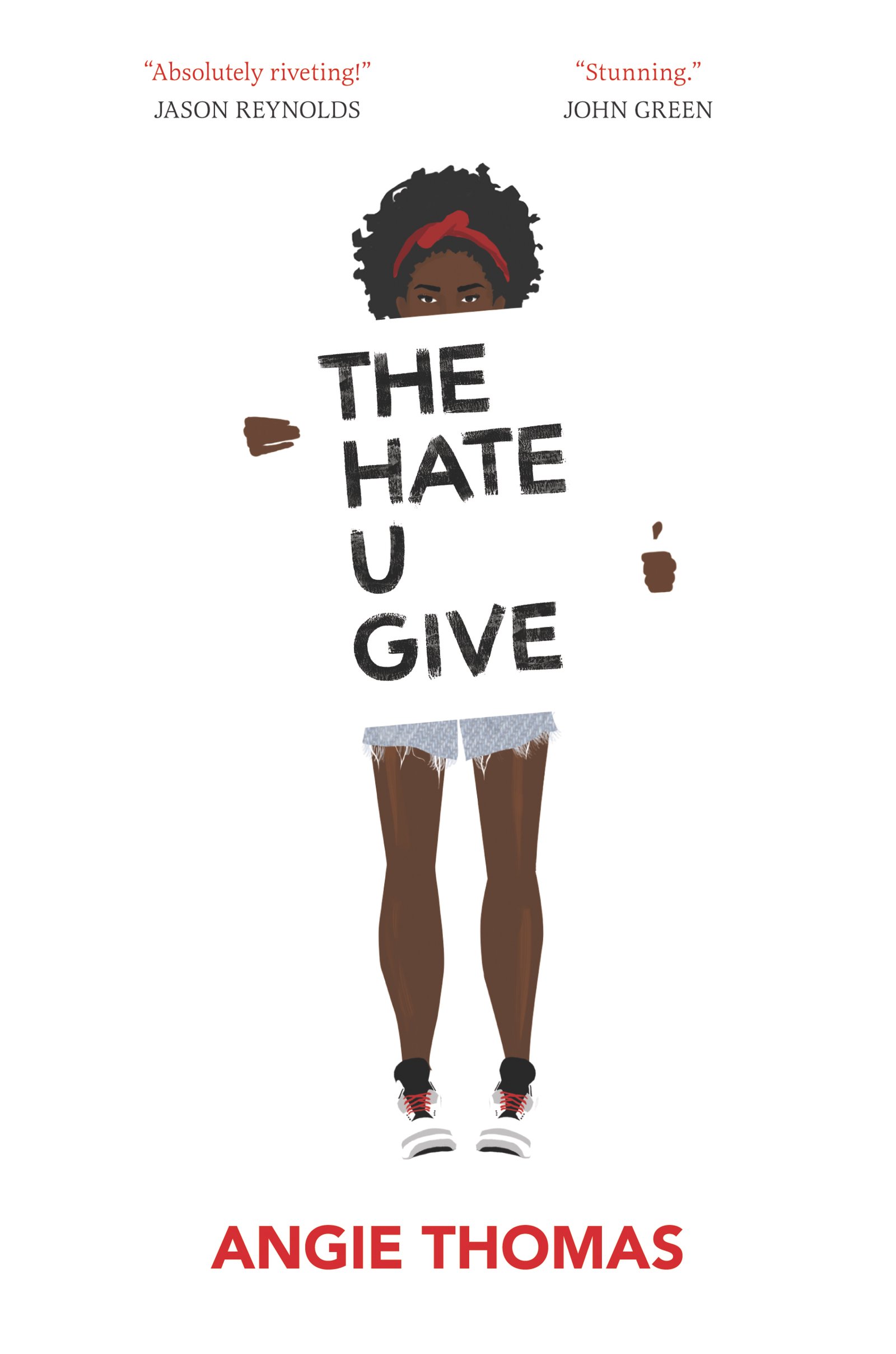
Book Review: The Hate U Give


Book Review: The Hate U Give by Angie Thomas

Goodreads Description: Sixteen-year-old Starr Carter moves between two worlds: the poor neighborhood where she lives and the fancy suburban prep school she attends. The uneasy balance between these worlds is shattered when Starr witnesses the fatal shooting of her childhood best friend Khalil at the hands of a police officer. Khalil was unarmed.

Soon afterward, his death is a national headline. Some are calling him a thug, maybe even a drug dealer and a gangbanger. Protesters are taking to the streets in Khalil's name. Some cops and the local drug lord try to intimidate Starr and her family. What everyone wants to know is: what really went down that night? And the only person alive who can answer that is Starr.

But what Starr does or does not say could upend her community. It could also endanger her life.


My Review: The Hate U Give is a once-in-a-lifetime book. It lives up to every bit of hype and has already wowed readers across North America. I remember way back to the Publisher's Marketplace announcement of this deal, and I thought to myself, "This one's going to be special." But this is more than just another good book. This is one of those cultural shakers. This is a book everyone needs to read. 

“I’ve seen it happen over and over again: a black person gets killed just for being black, and all hell breaks loose. I’ve Tweeted RIP hashtags, reblogged pictures on Tumblr, and signed every petition out there. I always said that if I saw it happen to somebody, I would have the loudest voice, making sure the world knew what went down.
Now I am that person, and I’m too afraid to speak.” 
-The Hate U Give

From the first page, we're immersed into Starr's world in Garden Heights. The author uses a perfect amount of description to set the scene, evoking all the senses to bring the reader into the moment. Starr's voice leaps off the page and brings the story up to another level. It is the perfect balance of slang and "accented" writing that not only reveals Starr's personality, but gives the book its own unique flavor. The book uses African American Vernacular English (AAVR) beautifully, and Starr even takes time to reflect on her use of it and how she switches to "proper English" at her white school in an attempt to avoid being seen as "hood." The writing doesn't waste time on flowery phrases, but hits hard with clever word play and to-the-point sincerity. The writing in this book just wraps you up from the first page and doesn't let go until the last. This book is also straight #ownvoices, as the author is black comes from a neighbourhood like Starr's. 

Writing aside, what makes this book so special is the story itself. It hits all the right notes, addresses all the right points, and explains things in a sincere way that helps to piece together the picture of black Americans and police violence. Even as something as simple as the feeling when a friend unfollows you on social media was explained with such an on-the-nose honesty. Not only does it address the varying sides of a complex issue, but it cuts straight to the point. It doesn't shy away from black on black violence. It's not a case of white-cops-vs-black-kids, as Starr's uncle is a cop and black cops take part in some sketchy and abuse-of-power situations. And it beautifully shows how situations can escalate into protests and riots, like what has taken place all over the United States. It also shows the white ignorance in several different forms, from the disconnect at Starr's school right up to some of her close friends, who simply just don't get it. This is not a biased look at the situation. It carefully analyzes all angles and presents a very nuanced look at the events that have launched #BlackLivesMatter. 

As I work in mental health services, I always look at books with an eye on mental health. THUG does an excellent job of portraying the post-traumatic stress that Starr experiences. She doesn't walk away from the shooting with just a few nightmares-- she cycles through the stages of grief, experiences anxiety that affects her day-to-day life, and copes with the difficult emotions that follow from grief and from the trial. Despite that, her trauma doesn't hold her back from speaking out for Khalil, and it shows why even the strongest people can be overwhelmed by traumatic events and may not react how they expect to in the moment. 

Yet under all the intense tackling of social issues, THUG is a heartfelt story of a girl caught between two worlds and the loving family that supports her through it all. I have a particular love of Starr's father, who is strong, outspoken, comes with a troubled past, and yet has such raw love for his family and community. Every character is beautifully balanced between good and bad traits, and the book plays around with themes of perception, not only in regards to Khalil and how the media portrays him, but how Starr portrays herself between her neighborhood and her school. The kids are so real and so fun that it really makes me sad to know they're only fiction. 

“Once upon a time there was a hazel-eyed boy with dimples. I called him Khalil. The world called him a thug.
He lived, but not nearly long enough, and for the rest of my life I'll remember how he died.
Fairy tale? No. But I'm not giving up on a better ending.” 
-The Hate U Give


I could talk about this book for days. If you read anything this year, this decade, or in your entire life, then make it this one. 

TL;DR: 5/5 stars. As John Green put it, "Stunning."