Showing posts with label fantasy. Show all posts

Monday, June 2, 2025

Book Review: Self-Portrait With Nothing


Self-Portrait With Nothing by Aimee Pokwatka 

Goodreads Description: Abandoned as an infant on the local veterinarian’s front porch, Pepper Rafferty was raised by two loving mothers, and now at thirty-six is married to the stable, supportive Ike. She’s never told anyone that at fifteen she discovered the identity of her biological mother.

That’s because her birth mother is Ula Frost, a reclusive painter famous for the outrageous claims that her portraits summon their subjects’ doppelgangers from parallel universes.

Researching the rumors, Pepper couldn’t help but wonder: Was there a parallel universe in which she was more confident, more accomplished, better able to accept love? A universe in which Ula decided she was worth keeping? A universe in which Ula’s rejection didn’t still hurt too much to share?

My Review: What a weird little book. 

If I had to sum up this book in a single word, it would be: contrived. Everything in this book is so forced that it was difficult to read at times. Characters often acted against their own established motivation in order to advance the plot. Pepper, the main character, acts on flimsy assumptions that turn out to be correct, making it feel like she's pulling answers out of thin air. She also comes across as a Mary-Sue in the sense that nearly every character falls over themselves to help her. Characters she's never met approach her with critical plot information because she "seems nice." Some even wait on her hand and foot, literally, like in the scene where a supporting character rubs Pepper's feet. Her boyfriend has no life outside her, people fall over themselves to help her for no reason-- after a certain point, it all started to feel a little narcissistic. Perhaps this story works as wish-fulfillment for people who dream of being the center of the universe, but it just reminded me that this was some writer's fantasy, which kept pulling me out of the story. 

It's a shame, too, because there's an interesting idea at the core of this story -- painted portraits as portals to parallel worlds-- but sadly Pokwatka doesn't do anything interesting with this concept. It ends up being a lame excuse to make clones, as Pepper soon finds herself overrun with multiple versions of her mother. This could have been an interesting analysis of motherhood -- how does each version respond to Pepper, and what does that say about her relationship with the mother from her own universe? Instead of exploring the concept with any depth, the book focuses on the 'wacky hijinks' of a bunch of clones who need to do a Serious Job™ yet can't stop fighting like the Three Stooges.

TL;DR: All in all, 2/5 stars. A great concept wasted through a horribly contrived execution.

Monday, May 26, 2025

Book Review: The Buried Giant


Book Review: The Buried Giant by Kazuo Ishiguro 
 
Goodreads Description: "You've long set your heart against it, Axl, I know. But it's time now to think on it anew. There's a journey we must go on, and no more delay..."

The Buried Giant begins as a couple set off across a troubled land of mist and rain in the hope of finding a son they have not seen in years.

Sometimes savage, often intensely moving, Kazuo Ishiguro's first novel in nearly a decade is about lost memories, love, revenge, and war.
 
My Review: Ugh. That's all that comes to mind when I think of this book. Just, ugh. I WISH before I'd picked it up that it was mentioned SOMEWHERE that this book is based on Arthurian folklore. I've never been a fan of Arthurian-style stories (the only exception being Monty Python) and would have never picked it up had I known this was the case. However, I did finish it, and while I was very unsatisfied on the whole, Ishiguro's writing style was enigmatic enough to keep my attention. I'd be interested in checking out more of Ishiguro's work just based on his use of language and atmosphere; I just wish this wasn't my first introduction to him.

A lot of the faults in this book could be attributed to its Arthurian style -- but perhaps that's my bias showing. The book is slow, it's boring. It fully embodies the traits of a mythical knight's tale, with plenty of armored men standing around, preaching about honour and chivalry. The characters felt less like people and more like archetypes serving a role, which made the story feel wooden. There are certainly some gems within the text, like the dynamic tension and intimacy between the married couple, but these small sparks are drowned out by the blandness surrounding it. I'd hoped that the ending and the reveal of the mystery -- why the mist made people forget-- would compensate for the boring journey to get there, but that sadly wasn't the case. Unfortunately, the book was utterly flavourless and not worth sinking my teeth into. 

TL;DR: All in all, 2/5 stars. A bland Arthurian journey story with a lackluster ending.

Sunday, August 4, 2024

Book Review: What Moves the Dead


Book Review: What Moves the Dead by T Kingfisher 

Goodreads Description: When Alex Easton, a retired soldier, receives word that their childhood friend Madeline Usher is dying, they race to the ancestral home of the Ushers in the remote countryside of Ruravia.

What they find there is a nightmare of fungal growths and possessed wildlife, surrounding a dark, pulsing lake. Madeline sleepwalks and speaks in strange voices at night, and her brother Roderick is consumed with a mysterious malady of the nerves.

Aided by a redoubtable British mycologist and a baffled American doctor, Alex must unravel the secret of the House of Usher before it consumes them all.

My Review: What a creepy, atmospheric read! Kingfisher reimagines Edgar Allen Poe's The Fall of the House of Usher with a fantastical twist: the rotting house of Usher, both the building and the family itself, have been infested with a fungus that makes the dead walk. The thematic rotting of the Usher House is made literal through Kingfisher's fungi, which behaves similarly to the real family of cordyceps mushrooms that make zombies out of their living hosts. This omnipresent infestation creates a tense and claustrophobic atmosphere that is so tangible it's almost another character. Even before readers know exactly what it is, there's a sense that the characters are constantly being watched by a predator waiting for its moment to strike. What Moves the Dead follows Poe's original story quite faithfully, with the added elements only serving to flesh out (heh) the original story. 

While Poe's story was not particularly queer, Kingfisher changes that up by playing with gender identity and neo-pronouns in her retelling. The novel features the made-up country of Gallacia, where gender and pronoun use differ from the rest of Europe. They draw from an expanded set of personal pronouns with individual pronouns for God, minors, and soldiers. The main character, Alex Easton, is also a transgender man or trans-masculine nonbinary, which was really cool to see representation-wise. Since Alex is a soldier, the book explores the 'soldier' gender category and how it manifests differently from masculinity. While the 'soldier' gender is presented as masculine, the way it is expressed is tied more closely to the role of a warrior than the typical 'male' role, i.e., more concerned with duty than domination. I really enjoyed how Kingfisher wove these ideas into the overall plot. While gender and pronoun use do have a role to play in the plot, it's not Alex's gender that comes under the microscope. It's refreshing to see gender feature as a main plot point without focusing on bigotry, coming out, or a crisis of identity. 

All in all, this was such a delightful read. The writing was gorgeously haunting. Kingfisher's ability to blend modern slang with the formal language of Poe's era added a musicality to her text that made it a true joy to read. Plus, at less than 200 pages, this novella reads quick but leaves a lasting impression. 

TL;DR: 5/5 stars. Freaky fungi, some queering of gender, and a whole lot of atmosphere. 

Saturday, April 20, 2024

Book Review: Dracula


Book Review: Dracula by Bram Stoker 

Goodreads Description: When Jonathan Harker visits Transylvania to help Count Dracula with the purchase of a London house, he makes a series of horrific discoveries about his client. Soon afterwards, various bizarre incidents unfold in England: an apparently unmanned ship is wrecked off the coast of Whitby; a young woman discovers strange puncture marks on her neck; and the inmate of a lunatic asylum raves about the 'Master' and his imminent arrival.

My Review: Every year from May to November, a substack newsletter called Dracula Daily sends out Bram Stoker's novel in bite-sized chunks to readers all over the world. Since Dracula is an epistolary novel with every entry dated, Dracula Daily is able to send each letter to you on the day it happens, making it seem like you've got a gaggle of eccentric, one-sided pen pals. This was how I got around to reading Dracula, and I highly recommend it for anyone who wants to sink their teeth into the daddy of all vampire stories. It breaks the novel down into digestible chunks, which makes reading a Classic™ far less intimidating, and gives readers a new way to get involved with the story. Plus, the building tension as days pass with no word from the characters does provide an extra little thrill. If you want to catch up on your classics, Book Riot compiled a list of substack newsletters you can subscribe to that were inspired by Dracula Daily. 

And now, for Dracula itself. Published near the end of the Victorian era, this book amalgamates many aspects of Victorian purity ideology in a way that's both fascinating and frustrating. It smacks you hard with female infantilization, back-hands you with virginal purity and promiscuous corruption, drowns you in white knight chivalry, and then spits a little extra xenophobia onto the plate for flavouring. Mina and Lucy are placed on pedestals, one lost to foreign corruption and sexuality while the other must be protected from it. It plays into a Christian heteronormative hierarchy that says while women are pure and good (and sometimes even smart and skilled, like Mina), they are still ultimately weaker than men and must be cared for like children. Despite Mina being a key player in the hunt for the Count, the men often leave her out of conversations or keep her in the dark for "her own protection," which can be irritating for modern readers. While those pieces may be annoying, Dracula also encapsulates this sexist, puritan ideology to such a perfect degree that it becomes fascinating to analyze. Count Dracula's foreign otherness, combined with his thirst for young, innocent girls, makes him an interesting caricature of what Victorians, and even some people today, think of as monstrous. 

Bram Stoker is a master of dread tension - the kind of creeping terror that defines the horror genre. It's the moment before the pounce, before the jump scare, where every hair is raised and something is screaming at you to RUN, even if there's no logical reason for it. The first quarter of the book, when Johnathan Harker travels to Count Dracula's castle, captures this feeling perfectly. Johnathan explores the castle and gets to know the count, all the while seeing strange sights and suffering from stranger afflictions. Despite numerous warnings, including a woman begging Johnathan to flee from the horrors to come, our naïve horror protagonist pushes on until it's far too late to turn back. The tension hovers at a perfect boiling point through much of the novel, though it does suffer later when vampire hunting devolves into paperwork and shipment tracking. To make a convoluted story short, Dracula hides in boxes of grave dirt and then ships himself out of the country, leaving our protagonists in a scramble to track down the box he's hiding in. While some complain that the Victorian bureaucracy grinds the narrative to a halt, Stoker manages to keep the stakes and tension high enough to carry readers through the duller bits. Plus, this aspect of the story places constraints on Dracula's power that makes his ultimate defeat feel reasonable. Dracula may be insanely powerful, but the 'rules' of his vampirism reduce him from a god-like figure into a mortal one. One can get the best of a vampire, so long as they know how. 

TL;DR: 4/5 stars. A dreadfully tense classic wrapped in Victorian puritan values. 

Friday, January 5, 2024

Book Review: Cinder


Book Review: Cinder by Marissa Meyer 

Goodreads Description: Humans and androids crowd the raucous streets of New Beijing. A deadly plague ravages the population. From space, a ruthless Lunar people watch, waiting to make their move. No one knows that Earth’s fate hinges on one girl. . . . Cinder, a gifted mechanic, is a cyborg.

She’s a second-class citizen with a mysterious past, reviled by her stepmother and blamed for her stepsister’s illness. But when her life becomes intertwined with the handsome Prince Kai’s, she suddenly finds herself at the center of an intergalactic struggle, and a forbidden attraction. Caught between duty and freedom, loyalty and betrayal, she must uncover secrets about her past in order to protect her world’s future.

My Review: I picked up Cinder about 10 years ago when the book released, so this review has been a long time coming. As the cover and title suggest, Cinder is a steampunk retelling of Cinderella, set in a futuristic New Beijing filled with cyborgs and robots. It expands the original story by introducing a deadly plague that's crippled the globe and tense intergalactic politics centered around a possible royal marriage. In the midst of all this lives Cinder, who works as a mechanic in a Tatooine-like market in order to buy herself a new ankle and car to escape her abusive family.

Let's start with the positives: Meyer's characterization is on point. The chemistry between Cinder and Prince Kai is POPPING. They're both strong, charismatic individuals with their own lives and motivations who end up crossing paths again and again until it leads to something more. It's a satisfying change from YA books where the love interest seems to have no life outside the main character. I was also pleasantly surprised by the political drama between the Lunar kingdom and the people of Earth/New Beijing. Meyer simplified world politics into a handful of state powers to create an us-vs-them structure between Earthlings and Lunars, while still showing how New Beijing is under pressure from other states to make peace with the aliens. This simplified political drama feels perfect for YA readers transitioning from younger fantasy stories towards adult "romantasy," with court drama, politics, and inter-cultural clashes. Despite that, the line between Earthlings and Lunars was depicted as very black and white. Meyer describes how Lunars are savage, totalitarian, and oppressive to their own peoples, committing genocides and using mind control without hesitation. While there is some evidence that "not all Lunars" are evil, the book doesn't do enough to show that good and evil are not tied to one's race. It's trying to play out a more adult political drama, yet falls back on a childish good guys and bad guys dichotomy that feels out of step with what the rest of the book is trying to do. 

While the book does make an effort to avoid the "love at first sight" trope, it steers headlong into "not like other girls." In the years since this book was written, a lot has been said about the "not like other girls" girl who presents herself as "one of the guys" while putting down girls with traditionally feminine interests. This trope ultimately perpetuates misogyny by pitting women against each other while arguing femininity is somehow inferior. Cinder uncritically leans into this trope -- she puts down other girls for wanting to go to the ball, she implies other girls are vapid while she's smart because she cares about mechanics, she resists Prince Kai's flirting and somehow this is supposed to make her cool, etc., etc. This book could have thoughtfully deconstructed and subverted the trope, as Cinder's condescension could have been seen as a defense mechanism for the insecurity she feels about her cyborg parts, but instead the book uncritically embraces the trope without any awareness for the misogyny being perpetuated. In the wake of feminism's sisterhood movement, this book feels both cringey and dated. 

As far as plot goes, I was disappointed by how predictable it was. The book is a retelling, so I expected a certain degree of predictability, but the new parts of the story that Meyer added-- the plague, the politics with a different state, the Lunar people's magic (or lack thereof) -- were so predictable that it was a struggle to stay focused. There was no attempt to subvert expectations - it was almost cliched in the way it did exactly what you thought it would, yet the narration ups the drama by trying to make these incredibly mundane plot twists seem shocking. Perhaps it's my years of reading that make this book so predictable, because Cinder isn't bad at what it does. If you want something that plays into your exact expectations for a teen princess story, then Cinder is it, but unfortunately, that's all it is. 

The final letdown for this book was its lackluster sense of setting. Despite being a steampunk world set in a futuristic Beijing, little effort was put into worldbuilding. We get some description of cramped alleyways, concrete, or tall skyscrapers, but other than that, the world is largely blank. Meyer relies on the droid characters and Cinder's cyborg parts to expand the steampunk elements, yet only utilizes them aesthetically and makes no effort to show how their addition influences the world. Steampunk cities are often infused with so much personality that they become characters themselves, yet New Beijing is almost entirely flavourless. Sadly, this is probably Cinder's biggest missed opportunity.

Despite my complaints, Cinder is an incredibly solid story with some decent writing, great characterization, and decent political drama. While I found the book a little boring and Cinder's Alt Girl routine tiresome, the book never became a drag to read. It would likely be a hit for teen girls who are graduating from books like Anna and the French Kiss and moving towards Strange the Dreamer or A Court of Thorns and Roses. 

TL;DR: 3/5 stars. A solid steampunk Cinderella retelling that errs on the side of predictable and anti-feminist. 

Sunday, December 24, 2023

Book Review: Every Heart a Doorway


Book Review: Every Heart a Doorway by Seanan McGuire 

Goodreads Description: Children have always disappeared under the right conditions; slipping through the shadows under a bed or at the back of a wardrobe, tumbling down rabbit holes and into old wells, and emerging somewhere... else.

But magical lands have little need for used-up miracle children.

Nancy tumbled once, but now she’s back. The things she’s experienced... they change a person. The children under Miss West’s care understand all too well. And each of them is seeking a way back to their own fantasy world.

But Nancy’s arrival marks a change at the Home. There’s a darkness just around each corner, and when tragedy strikes, it’s up to Nancy and her new-found schoolmates to get to the heart of the matter.

No matter the cost.

My Review: Portal fantasies have a long history in children's fiction, but what happens when the portals close and we have to head on home? How do you go back to ordinary after experiencing the extraordinary? Seanan McGuire explores these questions by looking at the psychological effects of losing the one place we really belong. 

When teenagers return from their portal worlds, they’re often confused, lost, and desperate to return to their fantasy worlds, leading parents and friends to think they’ve gone mad. That’s where Eleanor West comes in. A left behind herself, Eleanor has opened a home for children who have walked between worlds to save them from mental institutions or abuse at the hands of their families. Funnily enough, the school Eleanor constructs functions much like a residential treatment facility. The kids live there, they go to school, but they also attend therapy-like sessions where they discuss the worlds they came from, process their experiences, and attempt to move on. While the story doesn't focus on this therapy aspect (as there's a murder mystery afoot), it was refreshing to see therapy represented in a positive light, especially with the fantasy elements layered in. Many writers vilify the therapy process for cheap drama (the One Flew Over the Cuckoo's nest effect), but Eleanor's home is represented as a safe space, possibly the only one available to them in our world. The teachers/counsellors are gentle and supportive, the environment facilitates healing, and characters are able to self-actualize by being true to themselves, rather than forcing themselves to fit a world that doesn't accept them. It would’ve been cool to see more of this, but there is a murder to solve, so I can’t fault the book from moving on. 

The book also focuses a lot on family – both the found families characters discover within the school, and the original families that may love but never truly understand or accept them. The way the story represents letting go of original and abusive families in order to find love and acceptance in a found family is quite queer. Of course, the book is very queer just based on representation – it has trans, asexual, and gender non-conforming characters – it pretty much covers the whole rainbow, but the approach to otherness and belonging takes on a very queer perspective that many will find comforting. The promise of a world that unconditionally accepts and loves you for who you are is a very tempting premise to queer kids growing up in a world that tells them they're inherently wrong, weird, and disgusting. 

The main character, Nancy, has some of the typical traits of plain or invisible YA protagonists. Some YA protags are Bella Swan clones, with little to no personality (aside from being 'nice') so they can be used as blank slates for readers to project themselves onto. While Nancy does fall into this category of boring, blank main characters, McGuire changes things up by creating relevant plot and character reasons for why Nancy is such a wall flower. Nancy's perfect portal world was the land of the dead, where she spent a lot of time impersonating a statue and aspiring to be unmoving and unfeeling. When she arrives back in the real world, she finds it difficult to reconnect to her body and emotions, triggering catatonic-like behaviours. McGuire's interpretation of the "bland wall flower" is a fascinating deconstruction of a writing trend, but ultimately I still found myself bored and annoyed with Nancy's lack of motivation or personality. I wish she had been a secondary character and allowed someone with more agency to take on the main role. 

All in all, this was a beautiful story with many fascinating aspects that I could probably blather on about for another few paragraphs. I'm not usually a fan of school stories anymore, since they often feel formulaic to me, but the heart at the center of this story -- that queer nonsense about belonging and otherness-- hits the nail so hard on the head that it's an instant win. This book has a way of seeing the unseen, acknowledging that deep desire for love and acceptance, and promising that it's out there, just waiting for you, if you're brave enough to go out and look for it.  

TL;DR: All in all, 4/5 stars. A beautifully queer story that centers around a tense murder mystery.  

Friday, June 16, 2023

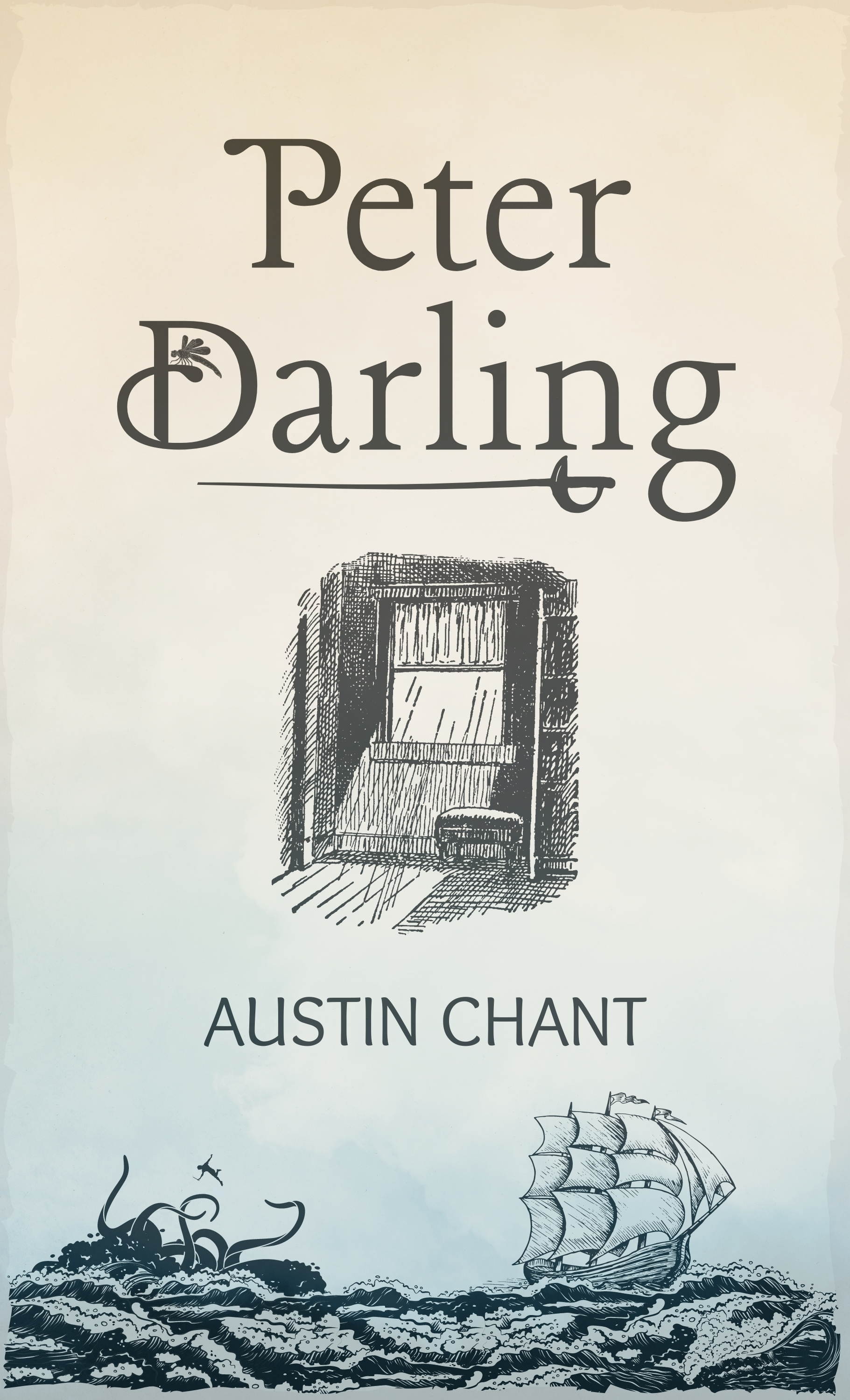
Book Review: Peter Darling


Book Review: Peter Darling by Austin Chant 

Goodreads Description: The Lost Boys say that Peter Pan went back to England because of Wendy Darling, but Wendy is just an old life he left behind. Neverland is his real home. So when Peter returns to it after ten years in the real world, he’s surprised to find a Neverland that no longer seems to need him.

The only person who truly missed Peter is Captain James Hook, who is delighted to have his old rival back. But when a new war ignites between the Lost Boys and Hook’s pirates, the ensuing bloodshed becomes all too real – and Peter’s rivalry with Hook starts to blur into something far more complicated, sensual, and deadly.


My Review: This review contains minor spoilers. 

Peter Darling is an interesting blend of contradictions. I first stumbled across the book while killing time on trans subreddits, where fans were raving about its trans and mlm representation. The book has apparently found its online niche-- its Goodreads page has over 8k ratings and 2k reviews, with over 70% of those ratings at either 4 or 5 stars, and fans are singing its praises across online networks. If this book had come to me about 15 years ago, I'd likely be another diehard fan hailing it as a triumph, because the book does have some solid emotionally-resonate moments of representation. Yet on the whole, it fails to achieve a cohesive narrative due to inconsistent character motivations, poor characterization, and enough head-hopping to make someone motion sick. 

Let's start with the positives. This book won the 2017 Rainbow Award for Best Cover, Best Debut Transgender Book, and Best Transgender Sci-fi/Fantasy, and was a runner up for Best Transgender Book, mainly for its female-to-male trans representation. I can see why this book was on the radar, as it does more than present a trans man's circumstances -- rather it pierces right into the heart of what it feels like to be a trans man. Capturing some of the emotionality of what it means to be trans is what gives this book its power. As well, Chant builds solid tension through the slow reveal of Peter's "secret" by blending it into Neverland lore - why did Peter disappear to for so long? Why did he come back? And who really is Peter 'Pan', anyway? This evolving tension connects well with the setting (Neverland as an escapist fantasy from a transphobic world), the themes of the text (forging identity through story), and Peter and James' struggles to assert themselves against the world. 

Most of the book is the 'trapped together' trope, which may not be to everyone's taste, but for those who do enjoy it, the story fully embraces the trope without edging too far into sappy territory. Chant's writing is also quite beautiful at times. There were many lines that I highlighted for their lyrical composition as well as their wisdom. As demonstrated in the prologue, Chant can set a decent atmosphere that draws in reader interest, but sadly underutilizes atmosphere and scene-setting throughout the rest of the book. 

The author is obviously familiar with JM Barrie's original Peter and Wendy novel, as many characters and references from Barrie's text pop up in Peter Darling. While these references were a great addition to fill out Chant's story, they also draw a direct connection to Barrie's work, which made the shortcomings of Peter Darling all the more obvious. Barrie's original text idealized childhood as a time of wonder and wildness, as different but on equal footing with adult experiences. Through Peter Pan, Barrie represents childhood as a Romantic would nature - beautiful, powerful, chaotic, illogical, yet also whole, idyllic, life-giving, unknowable, and awe-inspiring. Barrie represented children as holding a unique perspective and wisdom towards the world that is lost once we transition to adulthood. Chant's text doesn't engage with this conception of childhood and instead reduces Peter's violence and illogical reasoning to something 'childish' that is lesser than the 'adult' treaties and peace negotiations that have taken place across Neverland since his departure. Chant even differentiates adult and child war, implying that people die in adult wars and thus they are far more serious, something Barrie never did. It strikes me as strange for Chant to disregard childhood as somehow lesser when Barrie went out of his way to idealize childhood - warts and all - and put it on equal footing with adult experiences, which is what made the untamable image of Peter Pan so enticing. 

Overall, my main struggles with Peter Darling were the inconsistent characterizations and motivations that made it difficult to understand why anyone did anything. Peter begins the book with a vague, ill-defined memory loss that is never explained. He quickly regains his memories, but his morals and perspective are so unclear that his actions often come across as contradictory. It's clear that Peter is supposed to act more like Barrie's iteration in the beginning - irrational, violent, uncaring of people around him - slowly realize his 'childish' ways are selfish and hurting people, and ultimately grow up into a more compassionate individual. However, Peter's motivation before and after the change are not clearly communicated, so it's hard to understand why he makes those changes, or why he was attached to his original perspective in the first place. Even when these changes happen, they're half-assed in a way that makes it unclear if any change has actually occurred. Even after Peter sees the Lost Boys as more than just disposable soldiers, the narrative undermines this by revealing that everyone except himself and Hook are imaginary, and thus not worth caring about as 'real' people. This gives Peter permission to go back to being a compassionless jerk and ignore the found family he was trying to build relationships with so he can focus on his own selfish romantic pursuits. This inconsistent motivation translated to other characters - mostly Hook, as he's the only other 'real' character for much of the book. Hook's motivation for pirating and being Captain Hook are largely unexplored outside of his drive for treasure. We could assume he doesn't need motivation for being a pirate outside of treasure and joy for the lifestyle, yet when Peter returns and challenges him to war games (as they had done before his disappearance), Hook rejects him and then chides Peter for his childish desire for violence. Because of that, it's hard to understand how this Captain Hook is the same one from Barrie's story, who reveled in violence and piracy, yet we also get no explanation for why he's changed. Chant appears to want his cake and eat it too -- he flip flops between honouring Barrie's characters and criticizing them without any clear statement or conclusion, leading to a jumbled mess of characterization. 

It's a real shame, because there's a lot to like about this book. If you're looking for a simple mlm romance with great trans representation that builds off long-loved fanfiction tropes, then this is the book for you. However, the inconsistent motivations did disrupt my enjoyment on even that factor, so if you do choose to dive in, make sure to turn your brain all the way off for full enjoyment. 

TL;DR: 2/5 stars. A trans retelling of Peter Pan with great prose but aggravating characterization. 

Friday, May 12, 2023

Book Review: The Hidden Oracle


Book Review: The Hidden Oracle by Rick Riordan 

Goodreads Description: How do you punish an immortal?

By making him human.

After angering his father Zeus, the god Apollo is cast down from Olympus. Weak and disorientated, he lands in New York City as a regular teenage boy. Now, without his godly powers, the four-thousand-year-old deity must learn to survive in the modern world until he can somehow find a way to regain Zeus's favour.

But Apollo has many enemies—gods, monsters and mortals who would love to see the former Olympian permanently destroyed. Apollo needs help, and he can think of only one place to go... an enclave of modern demigods known as Camp Half-Blood.

My Review: Spoilers ahead for the book's main twist. Proceed with caution. 

Here we are again, back with another Riordan book. I was expecting the usual delightful romp through the Percy Jackson universe, but was surprised to find The Hidden Oracle has a completely different vibe than previous installments, both in good and bad ways. 

As punishment for indirectly aiding Gaea and the giants in their war against the Gods in the previous series, Apollo is cast down to Earth in mortal form and must reclaim the five Oracles that have gone mysteriously silent. Due to his circumstances, Apollo is not the jovial or wide-eyed protagonist that usually appears in the Riordanverse: he's irritable, arrogant, cowardly, and most importantly, an adult. While his memories are hazy enough that "Lester" is able to embody a somewhat juvenile perspective on the world, Apollo's characterization still feels like a bored adult being forced to endure this magical childlike adventure, and his cynicism at times brought me out of the fun of the story. It's hard to say if it's me, or Riordan, or his choice of protagonist (perhaps all of the above), but this book felt like it was bored of its own formula. It constantly tries to buck against its universe's well-cemented formula with differing levels of effectiveness, with Apollo's characterization being the most difficult change to climatize to. He does transform over the book, as well as the series, and his more grating traits are sanded down as he learns and grows. I have read the third book in this series (you can find my review for it here) and Apollo's arrogance, cowardice, and his negative attitude towards the quest are toned down to a much more tolerable degree by that point in the series. In this book, though, it can be a bit much. However, there's still a lot to like about this protagonist. Apollo, as a lover-not-a-fighter God, often tries to avoid solving conflicts with force, like previous demigod protagonists, and is often using music to overwhelm his enemies or advance his quest. As much as Apollo's attitude can be somewhat grating, it was refreshing to follow a pacifist character who will wander off in hilarious directions to avoid a fist fight, and whose creative approach to problem solving breathes new life into a series that has largely solved problems through finding different flavours of how to hit someone. 

Apollo's characterization is far from the biggest formula shake-up. Historically, Riordanverse villains have been large, mythical beasts and creatures, and while The Trials of Apollo still features the existentialist monsters we know and love from Greek myth, the new series features a host of "god-emperors" to join the cast of baddies - real historical figures that have ascended to legend status due to their stories being told again and again. While previous Riordan books have featured humans or demigods working alongside the primordial baddies, the god-emperors from this series are "bosses" while previous humans and even demigods like Luke were treated and behaved more like disposable "peons" or "soldiers." These god-emperors are not only part of the problem, they are leading the problem, and this creates room to question the goodness of humans, the evil within monsters, and everything in between. 

The book raises questions about the capacity of good and evil not only in its villains, but also in its protagonists. Meg, daughter of Demeter, is presented like no other demigod up until this point. Her story doesn't follow the typical pipeline of discovering powers-traveling to Camp Half-Blood-being claimed-establish self at camp-define oneself through questing. When Apollo meets her early on in the book, she already knows how to fight of monsters, has some conception of her powers and origin, and is content to survive in the urban jungles on her own than journey to a camp to be trained like a traditional hero. Meg presents as neurodivergent throughout the novel, from her antisocial tendencies, her lack of concern for hygiene, poor social skills, and odd behaviour, including behaviours that could be considered "stimming." Because she isn't a high-functioning charismatic attractive teenager, Apollo clearly doesn't like her and is even grossed out by her, but as time passes he grows to see past her presentation and comes to care for her compassion, tenacity, and resilience. Because she presents so differently than most other characters, Meg gives readers who may be neurodivergent themselves, or who may feel like the 'weird outcast,' a character they can really connect to. Many of Riordan's character, like Percy himself, are larger than life - a little too charismatic, a little too friendly and patient, a little too eloquent, a little too perfect. While these characters can be excellent aspiration models, it can be intimidating to compare your messy human self to a character so perfect. Meg's imperfections felt like a release of tension in comparison. It also creates a bit of mystery, as Meg doesn't always communicate her thoughts with Apollo or the reader, opening space to question her motivations by the time she comes to betray Apollo to Nero, one of the god-emperors. It's revealed that Meg was actually working alongside Nero throughout the entire book and her betrayal leaves the ending uncertain, a sort of cliff hanger that allows readers to wonder in what capacity Meg will return -- as a villain, as someone who needs rescuing, or as someone who need redemption? Only time, and pages, will tell. 

All in all, I enjoyed The Hidden Oracle for what it was. I enjoyed the change-ups to the formula, and the honest attempt to scratch at good and evil while staying within the bounds of a middle grade formulaic novel, but these change ups both helped and hurt in many ways. Ultimately, it was Apollo's negativity and bitterness that dragged the vibe down and made it hard to enjoy the mythical romp. 

TL;DR: 3/5 stars. A solid Riordan romp that changes up the formula to open up conversations on villains and heroes, good and evil. 


Thursday, January 5, 2023

Book Review: The Last Unicorn


Book Review: The Last Unicorn by Peter S Beagle 

Goodreads Description: The unicorn discovers that she is the last unicorn in the world, and sets off to find the others. She meets Schmendrick the Magician—whose magic seldom works, and never as he intended—when he rescues her from Mommy Fortuna's Midnight Carnival, where only some of the mythical beasts displayed are illusions. They are joined by Molly Grue, who believes in legends despite her experiences with a Robin Hood wannabe and his unmerry men. Ahead wait King Haggard and his Red Bull, who banished unicorns from the land.


My Review: When it comes to classics, The Last Unicorn is the quintessential fairy tale. Beagle is thrown up there with other classic heavyweights like Tolkien, Lewis Carrol, or EB White, and it's clear why. Beagle crafted a world rich with wisdom, where fact and fiction twist until they call into question the objectivity of perception. 

The Last Unicorn features a typical fantasy setting modelled after medieval Europe - full of kings and knights, peasant villages, and royal courts. Yet the familiar mythical beasts of classic fantasy are oddly lacking - the colour feels zapped out of the world, much like the unicorn's coat fading from sea-green to a snow white. Magic has been drawn to the edges of the map, leaving some to question its existence at all, yet the unicorn, the harpy of the Midnight Carnival, even Schmendrick's magic, as underwhelming as it may be at times, points to the existence of something greater. The text makes a convincing argument for the existence of magic in our own world, as some characters, even when faced with magic and myth, are unable to see it. Sometimes this is due to magical interference, but usually it's the characters' closed-mindedness that prevents them from seeing outside of their own perception, leading them to see only what they expect to. The entire book plays with themes of reality and illusions, myth and fact, all funneled through an individual's ultimately malleable perception. Since this book was published in 1968, it's highly likely that Beagle shaped modern fantasy with this concept of magic existing just outside our periphery, and it's exciting to see this concept executed so well and thoughtfully. The Last Unicorn doesn't just throw in some cheap "veil" explanation, but dives deep into concepts of seeing and recognition that will make you re-evaluate what might be lurking in the corner of your own vision.

The book is written as a fable, like the ones Molly Grue is so enamored with, and while this approach allows for an easy dispense of wisdom, it keeps the reader at a distance and doesn't allow for easy self-insertion. Many times while reading, I wondered what was really going on with Schmendrick and if his intentions were actually what they seemed. Beagle achieves this through an omniscient narrator that gives us glimpses into each character's head before pulling back out again. The audience therefore never fully knows each character, making it difficult for readers to identify with them. This likely led to my lower rating, as I love identifying with characters while reading as a form of escapism, though I acknowledge this would have dealt a blow to the fable atmosphere and prevented the characters from reaching a more 'legend-esque' status. 

The writing throughout the book is breathtaking and creates many quotable lines heavy with meaning. While Beagle's world stands on its own, there are many allusions to real life plays, poetry, books, and more that connects The Last Unicorn to a sense of 'real' life and history. This connection to our world, combined with the way the text harmonizes various ideas of what a 'traditional fantasy fable' constitutes, creates a seamless mythical story that feels far older than it is, since it resonates with so many intangible cultural conceptions of medieval fantasy. It's filled with whimsy that feels directionless at first, but hums with thematic meaning. The lyrical language alone carries readers into a world of wonder and draws together the fable-like aspects, soft magic system, and distant characters to create a fairy tale truly deserving of the name. 

You can't go wrong with this classic. It feels like the wellspring from which much of modern fantasy has erupted from. 

TL;DR: 3/5 stars. A classic modern fairy tale employing all the wit and whimsy language has to offer. 

Wednesday, September 28, 2022

Book Review: Magical Boy


Book Review: Magical Boy by The Kao

Goodreads Description: Although he was assigned female at birth, Max is your average trans man trying to get through high school as himself. But on top of classes, crushes, and coming out, Max's life is turned upside down when his mom reveals an eons old family secret: he's descended from a long line of Magical Girls tasked with defending humanity from a dark, ancient evil! With a sassy feline sidekick and loyal gang of friends by his side, can Max take on his destiny, save the world, and become the next Magical Boy? A hilarious and heartfelt riff on the magical girl genre made popular by teen manga series, Magical Boy is a one-of-a-kind fantasy series that comic readers of all ages will love.


My Review: This will be another review in my series of, "I don't usually review this genre, but..." Magical Boy is a beautifully drawn, full colour graphic novel with an anime inspired art style. The story originally debuted on the comic website Tapas, which is where I first stumbled upon it. I was thrilled to see it was picked up for print publication by Graphix, an imprint of Scholastic. This story holds a special place in my heart, so I'm thrilled for the opportunity to share my thoughts and help connect it to more readers. 

To begin, the art! This book is drop-dead gorgeous. The cover gives you a glimpse of what's in store, but the art inside takes it a step further, from small intimate panels to gorgeously detailed fight scenes that convey a tremendous sense of movement and action. The colours pop, backgrounds are detailed, the linework is clean, and the art blends an eastern and western comic style that is refreshingly original. Traditional anime/manga facial expressions and expressive reactions are mixed with a western action style of large, detailed panels and classic comic sound effects, like 'whoosh, pow, smack.' Unfortunately, the panels were originally drawn for a vertical setup on a webpage, where readers could scroll infinitely, so at times, the panel spacing on the page is cramped and the flow is disjointed. While the panels and speech bubbles are usually arranged in a way that takes your eye smoothly through the scene, some pages failed to achieve a flow and became messy and confusing. Even though I had already read the comic, I struggled on some pages to figure out in what order some panels and speech bubbles were supposed to be read. This confusion was overall minor and didn't take away from the story. 

As for the story, have you ever been bouncing around the internet and stumbled across a story prompt idea that you would die to see happen? Magical Boy is one of those. The world we live in is incredibly gendered, though many cis people fail to realize how deep the gendered expectations go, as many have never resisted or took issue with them. Magical girl stories are often hyper-feminine, and when you toss a transman into the mix, who is trying to assert his own masculinity through stereotypically masculine behaviours, you've got an excellent environment to play with and parody gendered expectations in western society. The magic that gives Max his feminine battle outfit also works as an excellent metaphor for cisnormative expectations - as he attempts to transition, the magic pushes Max towards a femme presentation, until he's able to assert his will and the magic adapts to an outfit that matches his identity. One major change I noticed from the online version was Max's deadname has been censored in dialogue, but left untouched if it's part of the background/scene. This sort of bothered me, as I felt it was silly to censor the name when the book tackles some of the realities of transitioning, which includes misgendering and deadnaming. I understand that the target audience, however, is younger and probably far more sensitive about seeing beloved characters misgendered than my old, jaded soul, so I can understand why the change was made. 

At times, the story can be a bit cheesy, but more in a wholesome way than overtly cringy. Then again, I do enjoy a nice helping of cheese now again, it keeps my soul from becoming too black and crispy. The story is mostly focused on Max, his transition, and trying to get his mom to accept and understand him, so some part of the narrative can fall a little flat. The villains were very one-dimensional, as if they were trying to hit every square on the Classic and Stereotypical Villain Bingo card, but as the fantasy is mere metaphorical dressing for the interpersonal drama, it didn't take away from the story that much. However, if the antagonists and magic system had more depth put into them, it could have reinforced the interpersonal themes and scaffolded this story up into something really cool. Max's friends also come across as a little one-dimensional, as they don't seem to have lives outside of Max and focus entirely on him and his issues. While this turns them into a wholesome cheerleading squad, it constricts the story into something small and simple, which has its own set of pros and cons. 

All in all, Magical Boy is an adorable, heartwarming, gorgeously drawn trans story that makes a great addition to any child's library. I can't wait to get my hands on volume 2, the finale, if only so I can flip through and admire all the beautiful artwork. 

TL;DR: 4/5 stars. A hyperbolic trans metaphor using the magical girl trope to highlight the absurdities of gender. 

Sunday, September 4, 2022

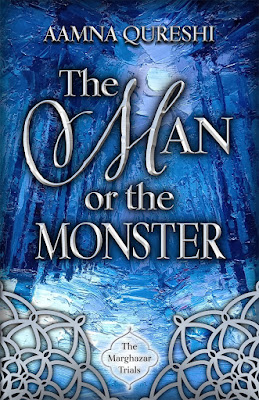
Sneak Peak: The Man or the Monster

Today, I've got a sneak peak at Aamna Qureshi's THE MAN OR THE MONSTER, provided by Rockstar Book Tours. This is the sequel to Qureshi's THE LADY OR THE LION, and features the continuation of Durkhanai's epic fantasy tale. 


About The Book:

Title: THE MAN OR THE MONSTER (The Marghazar Trials #2)

Author: Aamna Qureshi

Pub. Date: August 30, 2022

Publisher: CamCat Books

Formats: Hardcover, Paperback, eBook, Audiobook

Pages: 320

Find it: Goodreads, Amazon, Kindle, Audible, B&N, iBooks, Kobo, TBD, Bookshop.org

Order a signed copy directly from Aamna!

She made her decision. Now she has to live with it.

Durkhanai Miangul sealed her lover’s fate when she sent him through a door where either a lady or a lion awaited him. But her decision was only the beginning of her troubles. Durkhanai worries that she might not be the queen her people need or deserve when conflict threatens her kingdom.

Her presumed-dead father comes back with a vengeance and wishes she join him in his cause. But her family’s denial of his revenge forces Durkhanai to take matters into her own hands and she must decide whether to follow the traditions of her forefathers or forge a new path on her own.

Excerpt from THE MAN OR THE MONSTER: 

Weeks passed. No one came to visit her, and she stopped waiting. As the weather around her chilled, she felt her heart frosting over. Faintly, she felt she had rid her system of him. Perhaps she would never feel a thing again.

But then, he came to her, while she was curled up in bed, crying. 

She didn’t know how he came to be there, just that one moment she was pushing tears back into her eyes, and the next there was a body beside hers. She didn’t need to open her eyes to know that it was him.

“Come, sit up,” he coaxed, and she did as she was told. He kneaded the tension from her shoulders with the hard curves of his palms.

“What worries you?” he asked. She sighed in response.

“I can’t bear it anymore.”

“You can,” he told her. “And you will.”

She turned to look at him and instantly fell into a hug against his chest. She was safe.

They stayed like that for some time. She strained her ear in search of his heartbeat. But he was calm. Sure. Solid.

She pulled back, looked up at him. Gently, his fingers cupped her face like wine—he tipped her chin forward to drink, but paused at the last whisper before skin met skin.

He waited.

And so, soft as sin, she pressed her warm lips against his. He tasted like a thousand stars bursting in her mouth. His fingers murmured across her skin, cold as ice, but everywhere he touched her felt like fire.

She kissed his cold cheek. He tasted like winter: pine-needle and frost, everything that freezes your nose but warms your soul. She was inexplicably warm and closed her eyes in comfort.

Instinctively, she reached for his lips once more—only to find they were not there. He was gone.


When she awoke from the dream, she felt unaligned. As though her soul had been roughly shoved back into her body. She was paralyzed, as she was when she awoke from nightmares, her body frozen with fear—yet this was the opposite, for when she awoke, her reality was the nightmare.

Slowly, the ice burned away. The pain was sudden and swift, knocking the breath from her lungs. Durkhanai began to cry. She loved him. The realization struck her.

She loved him. 

And there was nothing to be done.


About Aamna Qureshi:

Aamna Qureshi is a Pakistani, Muslim American who adores words. She grew up in a very loud household, surrounded by English (for school), Urdu (for conversation), and Punjabi (for emotion). Through her writing, she wishes to inspire a love for the beautiful country and rich culture that informed much of her identity. When she's not writing, she loves to travel to new places where she can explore different cultures or to Pakistan where she can revitalize her roots. She also loves baking complicated desserts, drinking fancy teas and coffees, watching sappy rom-coms, and going for walks about the estate (her backyard). She currently lives in New York. Look for her on IG @aamna_qureshi and Twitter @aamnaqureshi_ and at her website aamnaqureshi.com. 

Website | Twitter | Instagram | Goodreads | Amazon | BookBub


Giveaway Details:

1 winner will receive a finished copy of THE MAN OR THE MONSTER, US Only.

Ends September 20th, midnight EST.

a Rafflecopter giveaway

Tour Schedule:

Week One:

8/22/2022

BookHounds YA

Guest Post/IG Post

8/23/2022

A Dream Within A Dream

GuestPost

8/24/2022

Sadie's Spotlight

Excerpt/IG Post

8/25/2022

Lisa-Queen of Random

Excerpt/IG Post

8/26/2022

Ya Books Central

Guest Post/IG Post

8/27/2022

Author Z. Knight’s Guild

Excerpt

Week Two:

8/28/2022

The Erudite Labyrinth

Review

8/29/2022

Epic Book Society

Review/IG Post

8/30/2022

Books and Kats

Excerpt

8/31/2022

Fire and Ice

Review

9/1/2022

@allyluvsbooksalatte

IG Spotlight

9/2/2022

Writer of Wrongs

Excerpt

9/3/2022

The Reading Life

Review/IG Post

Week Three:

9/4/2022

The Underground

Excerpt 

9/5/2022

Rajiv's Reviews

Review/IG Post

9/6/2022

@jodieangell_author

IG Review

9/7/2022

Laurenreads._

Review/IG Post

9/8/2022

@meetcuteromancebooks

IG Review

9/9/2022

Locks, Hooks and Books

Review

9/10/2022

Nagma | TakeALookAtMyBookshelf

IG Review

Week Four:

9/11/2022

One More Exclamation

Review/IG Post

9/12/2022

Book-Keeping

Review/IG Post

9/13/2022

@jacleomik33

IG Review

9/14/2022

The Momma Spot

Review/IG Post

9/15/2022

More Books Please blog

Review/IG Post

9/16/2022

GryffindorBookishNerd

IG Review

9/17/2022

@jypsylynn

IG Review