Showing posts with label eliza green. Show all posts

Saturday, March 5, 2016

Author Interview with Eliza Green!

Hello all! I'm excited to have Eliza Green, author of Becoming Human, stop by for an interview. I love getting to know the face behind the pages and Eliza has good advice and insight into self-publishing and building an author platform. I hope you'll all help me welcome her to the Underground (again :) )

You’ve had a myriad of other jobs besides writing (Ghost hunting? Super jelly over here), what do you think influenced your writing the most?

Every job I had, and currently have, involves some sort of administrative role. I’m a highly organised person (I love lists!) which is probably why I stuck with that role for so long. So maybe that influences my writing to a higher degree and the types of roles my characters get saddled with initially. But I started writing to break away from my day job and do something more creative. I think as I go along that influence will lessen and other experiences will creep into the writing.

The ghost hunting followed years of watching every ghost hunting show I could. I’m an open minded sceptic who needs proof of ghostly occurrences before I’ll believe it. So I tried a night of hunting and I loved it so much I plan to do more!

Are you a planner or a pantser? Do you prefer to outline your work or let the characters guide you?

A bit of both. I start out with an outline then deepen that outline once I’ve written my first draft. I try not to stick too rigidly to the script because my characters often take over and steer the story in a particular direction. I’ve tried being a pantser but you just end up going around in circles. An outline is helpful to focus the mind and to make the best use of your writing time.

What goals do you have for your writing career? What would be your “dream come true” moment?

Thinking big, I’d love to see one of my stories on the big screen. But being more realistic, I’d love to make enough money where I can write full time and not worry about the bills. I doubled my income in 2015 compared to 2014, so I’m definitely on the right track!

What are some struggles you’ve faced with self-publishing? What are some of the highlights?

The biggest struggle I’ve faced in self-publishing is acceptance from industry professionals.

At the London Book Fair in 2013, an audio book company keen to work with me turned the other cheek when they heard I was self published. In 2012 when Amazon opened their doors to self published authors, some reader reviews pointed fingers at self-published authors accusing them of being part of the vanity publishing movement. Vanity publishers allow authors of any calibre to publish their books with them, regardless of quality and usually at a steep cost. But there was a market for it because some readers still equated quality with a publishing house name. Now the market is saturated with self-published books and the cream is finally rising to the top—I rarely hear the term vanity publishing being mentioned these days. Readers are noticing and demanding quality, caring less about whether a book is self-published or traditionally-published. That sets the bar higher for the rest of us, which is a good thing. Many self-published authors have gone on to accept traditional deals.

The highlight for me is the strong supportive community that exists within self publishing. The writers, regardless of their levels of success, are so generous with their time and advice. I was at the London Book Fair in 2014 and got to see Liliana Hart, Hugh Howey, Jasinda Wilder and more speak about their experiences. They were so open with their advice, and so accessible.

I also love the control I have over my product and where I sell it. And while self-published authors didn’t write the book on connecting with readers, they understand the value of doing so. They understand that readers are central to everything they do. Most traditional authors are equally as accessible but some hide behind agents and that can be off putting to a reader.

Where do you draw on your inspiration to write? When faced with writer’s block, how do you overcome it?

Life, movies, TV shows, books—any activity where I don’t have to think too much. The more I switch my brain off the better the ideas flow. Science Fiction is my go-to genre and I devour as many stories as I can. I study everything from characters to plot lines to things I like, things I hate. Tangential ideas will spring forth when I’m least expecting them.

Walking helps to unravel the stories or tease out the difficult parts I just can’t get past. And in the shower (this is a totally clean example, I promise!), my mind wanders and ideas just pop into my head.

What’s some of the best feedback you’ve received from fans? Have any stories?

I’ve received so many lovely emails from new fans (both male and female) who’ve read Becoming Human or all the books available in the series. A retired chemistry teacher emailed me recently to tell me he loved my book and another man told me his son at age fifteen had written a similar idea to mine but abandoned writing because he wasn’t given the right encouragement. Luckily our ideas were a little different :) His son is working in film now, so that was a happy ending.

My favourite was from a man who said my books gave him back his love of reading. That really blew me away. To influence someone in such a way is the highest compliment I can think of.

As a writer, how do you decipher between constructive criticism and destructive criticism?

It’s hard to accept any criticism, but the more you write the tougher you need to become. Constructive criticism to me is anything that highlights an issue with the book like something structural, character development, plot line or editing. But you can’t change everything. You have to let some of the good criticism go and accept the flaws, then move on and write the next book while keeping that criticism in mind. I’ve never read a book that was perfect. No matter how good a book is, there’s always something in it we don’t like.

Destructive criticism is anything that detracts from the effort you knowingly put into a story. For example if someone says the editing is terrible and you know you’ve had the book professionally edited, you can probably chalk that up to bad criticism. But if everyone is saying the same thing, there may be genuine errors in your work.

Someone simply not liking your work is neither constructive nor destructive. It’s just an opinion and authors should never respond to a review like that, no matter how much they disagree with the review. My preference is to respond to reviews that I feel have been constructive and thank them for taking the time to point out the error.

What’s your favourite part of writing sci-fi? 

You get to go off the script a little! Modern day stories are easier to write, but you can’t put people on new planets or give them advanced weaponry. In Sci Fi it’s totally expected so you get to have a little fun creating new things.

What advice can you give to writers who want to break into self-publishing?

I’m not really sure you break into self-publishing. These days anyone can publish a book on Amazon or Kobo or Smashwords. What advice I’d give is don’t self-publish to make a quick buck. You won’t make it by the way!

To succeed in any new business you need to have drive and commitment for sure. But you also have to love what you’re doing. It takes long hours to build an author platform (social media, website, etc) and an even longer wait to find fans once the platform is in place. Once you’re ready to publish your first book, it should have a good cover and have been edited professionally at a minimum. But none of that matters unless your story is great.  I’ve put all my energy and free time (and a little of my savings) into writing because I believe in what I’m doing.

Tuesday, February 23, 2016

Guest Post: Eliza Green's Top Ten Self-Publishing Tips

Self publishing is not for everyone. Although many writers self publish, some don’t have the stomach for it. Dealing with any bad reviews you might get, the expense and the amount of time you have to commit to write and promote is not for the faint hearted. There’s a weird kind of pressure that comes from within because as soon as you publish a novel you second guess every decision you make. You can’t slink into a corner and you don’t have the support of a publishing name.

But if you’re excited to control every aspect of your work and don’t see giving up spare time as that big of a deal to do something you love, then I’d say go for it!

Here are my top ten tips if you’re thinking of getting into self publishing.

1: Don’t publish unless your work is polished.

If you’re at the drafting stage, consider these statements

  • I have completed a first draft, and to be honest, it’s pretty good.
  • If I complete several drafts of the book myself, I’ll be ready to publish straight away.
  • I don’t believe in reviewing my work too often because I will only ruin what I have written.

If you identify with any of these statements, then you’re not ready.

What about beta readers?

  • I don’t need to use beta readers because nobody knows my work better than me.
  • I’m a reader so I can analyse my own work.
  • I’m not ready to hear their criticism.

Beta readers can be crucial to identify structural issues within a story. If you agree with any of the above statements, you’re not there yet.

2: Hire professionals


Buying your mother a cup of coffee and a slice of cake in exchange for their feedback does not count as hiring a professional. I’m talking about using editors from reputable lists. Good places to check for editors in the UK is www.sfep.org.uk In the US, www.the-efa.org is a good start. Another is a service called www.reedsy.com. You set up a profile and it allows you to connect with dozens of industry professionals in one place.

3: Join writers groups


I’m part of the Alliance of Independent Authors or Alli for short. Membership prices vary depending on whether you’ve published a book or are an aspiring author. It’s a great place to meet like-minded writers and learn a thing or two in the process.

www.allianceindependentauthors.org

4: Learn the business


Self publishing isn’t just about writing, it’s also about branding, marketing, selling, product placement, setting the right price. Who is your target audience? What’s your online voice? How do you want to come across to your fans? You may not feel comfortable with the idea of handling everything yourself, but in the beginning you have to learn. Start off small and learn as you go. If you’re hiring people because you’re afraid to give social media a try, then that’s a bad business decision. Check out any author profile and you’ll see they do almost everything themselves.

Go to the London Book Fair and/or Book Expo America and attend as many author-centric events as possible. Network, listen to the panel discussions. Bring a notepad and take as many notes as you can. Sure you can learn plenty from the internet, but there are real opportunities in networking. I’ve connected with some great authors at these events. Kobo and Amazon are also usually floating around at these conferences and looking to connect with authors.

4: Build your platform

These are some of the websites/programmes I used to help build my platform;

Wordpress.org or Wordpress.com – Great for setting up a website or blog. Wordpress.com is the free version but is also the most limited in what you can do with it. There are plenty of free templates and everything’s easy to design.

Blacknight.com – I purchased my domain name from here. My recommendation is you buy your website domain rather than accept a free wordpress.com one. You want to own your domain for one simple reason: it’s yours. If Wordpress.com ever packed up one day and you have one of their free domains, you’ve lost your website. www.blacknight.com

Hostgator – I use Wordpress.org for my site and if you plan on doing the same, you’ll need to host your domain somewhere. There are lots of others but Hostgator is reasonably priced. With Wordpress.com you host directly with them. www.hostgator.com

Canva – A free design tool for designing promotional material and images www.canva.com

BufferApp – A free scheduler allowing you to schedule up to 10 tweets/posts for Twitter and Facebook. There’s also a paid version that allows you to do more. www.bufferapp.com

5: Only spend money on things you need


If you’re starting out, these are the essentials;

Website – Domain, hosting site if using Wordpress.org, otherwise you can use Wordpress.com for free and pay a minimal fee to wordpress to host your own domain name there.

Social Media – All free to set up. Choose where you want to be active. Don’t spread yourself too thin.

Editing – At a minimum you should be looking at copy editing and proofreading. Depending on how well you can self edit, the cost for these services will vary. To reduce the cost, learn how to self edit well. This book is on my shelf.

Cover Design – I use Design for Writers and they’re very reasonable for around 250-300 dollars. If you can only afford $30, use a premade cover. Please do not design your cover unless you’re a graphic designer. Bad font and poor imagery can kill sales. www.designforwriters.com

These are the desirables

Virtual assistant – Only hire one if you’ve a good handle on your business and you know what you’d like a VA to do. Otherwise it will be money down the drain.

Agent – Why would you hand 15% of your profits over to an agent? If they were looking at film options with a studio or foreign language deals or print deals with publishing houses. Otherwise don’t bother, and don’t let anyone talk you into taking on an agent. Remember when I said learn the business? Learn the pitfalls as well.

6: Accept the bad days and embrace the good days.

Then move on. You’re going to feel crappy some days like all of the effort isn’t worth it. If the feeling lasts a day, then you’re in self publishing for the long haul. Equally, revel in the lovely comments/reviews you get from fans and move on. You’ve got writing to do!

7: Collaborate more, self promote less

Work with other authors. Respond to their requests for help. Make your blog available for guest posts, interviews. Be a stop on a blog tour. Do not shamelessly self promote your work on your social media channels or blog. Instead pepper it lovingly into a schedule you can time-manage.

8: Write, publish, repeat

So you’ve got one book. What now? Write the next one. You are not going to reach your long term goals of writing full time with just one book. This is about building trust with your readers and if they see only one book on offer they may not take you seriously.

9: Stop waiting for that traditional deal

If you’re getting into self publishing because you’ve been rejected multiple times and feel a little revenge self-publishing is due, then don’t do it.

Before I made the decision to self-publish I spent a year—or more, it can take 6 months for some agents to come back to you—sending out my manuscript to agents and traditional publishers. The closest I came to an acceptance was when The Blair Partnership (representing J.K. Rowling) requested a full MS after I’d sent them a partial. It didn’t go anywhere in the end, but I came to the conclusion that traditional publishing wasn’t really for me. You see I wanted full control over what I did, not sit around waiting for someone to tell me when I could publish. I believed in my story and it had been sitting on my computer for too long. I needed to get it out there and test it on the readers.

2013 and 2014 were slow in terms of sales, but last year I saw an increase in my sales and an explosion in the first two months of 2016. I can confidently say I’ve earned more money self-publishing than I would have with a traditional deal. And I haven’t even scratched the surface. But none of that happened without investment and sacrifices I made since 2009 when I first began writing.

10. Don’t quit the day job

I’m still working full time, even with the better sales. This year I am finally considering moving from full time to a part time role. I’m just too busy with the writing and I need to spend more time on it. So my advice is don’t quit anything until you’re confident your bottom line (i.e. your steady sales) can pay your bills comfortably. Editing and cover design isn’t cheap but it’s essential and you need money for that.

Thursday, February 11, 2016

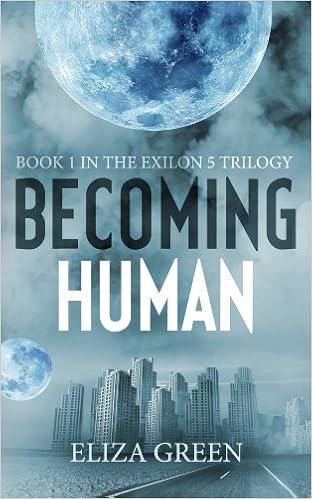
Book Review: Becoming Human


Book Review: Becoming Human by Eliza Green


Goodreads Description: In 2163, a polluted and overcrowded Earth forces humans to search for a new home. But the exoplanet they target, Exilon 5, is occupied. 

Having already begun a massive relocation programme, the World Government on Earth sends Bill Taggart to monitor the threat level of the Indigenes, the alien race that lives on Exilon 5. Bill is a man on the edge. He believes the Indigenes killed his wife, but he doesn’t know why. Until now. 

Stephen has every reason to despise the humans and their attempts to colonise his planet. To protect his species from further harm, he must go against his very nature and become human. 

Laura O’Halloran is losing her daily battle with Seasonal Affective Disorder. Her only chance at recovery is leaving the dark Earth for the sunnier climate of Exilon 5. She hopes her credentials as a World Government employee will secure her a one-way trip, but with the ever increasing relocation demand that is not a guarantee.

Her discovery of a deadly secret threatens her life and that of Bill and Stephen. A secret so great it could rip apart both worlds.


My Review: I was offered a reviewer's copy of Becoming Human by the author Eliza Green in exchange for an honest review. 

The book begins with a cinematic, omniscient view of Exilon 5 as it is terraformed by humans in an attempt to create a second Earth. We get to see the devastating effects of the chemicals used on the indigenous race there which sets a very dramatic tone compared to a very under-dramatic pace of the rest of the book. I really liked the ideas presented within Becoming Human: the ethical issues of attempting to eliminate an indigenous race in the name of human survival, the intelligent aliens, as well as the way the characters tried to resolve things without resorting to killing each other. Both the humans and the Indigenes take a rational approach and try to learn about each other instead of heading straight into conflict, which was really refreshing to see. 

Unfortunately, Becoming Human has a few major issues that cause the book to fall short. The first of which is the constant shifting of POV and the overwhelming amount of characters involved. In the beginning, I found it quite disorienting, as just as I was getting settled into a character and their story it switched to another, and another, and another, and another, which drastically cut down on my ability to care about each character. I wanted to hear more about Bill and his wife as there was an actual emotional connection there and something to sympathize with, but it kept switching away so by the time the story returned to him it was hard to focus. In that same vein, although I liked the scene of the alien and the young boy meeting, the boy's POV never came back again, in fact he had nothing else to do with the story, and thus made his POV feel pointless. Why did I get invested in him as a character with his mom, if he didn't have any sort of part in the story? 

The second fatal flaw was the lack of tension. There wasn't enough build up of anticipation and what attempts that were thrown in were cliches. "If only she knew what would be coming next..." Those types of lines are so overused that they don't hold any power to create tension anymore. The plot also crawled at a snail's pace, focusing more on explaining things than providing any action. I could probably sum up every action in the story in a paragraph, which is really quite scary for a full length novel. 

The final issue I had with the book was the simple fact that it wasn't finished. Every book, no matter where it stands in a series, must be able to stand on its own as a compete story. But Becoming Human wasn't the full story. Honestly, I believe the climax of the story (in which all our POV characters collide) should have been the inciting incident. The book leaves off with several main characters racing off to find out the truth on Exilon 5, when in reality that was the story I expected in this book. It's when the story can actually begin. Coupled with the slow action and lack of tension, it felt like filler just to force the reader to buy the second book to get the story they were promised. All this book did was raise questions, and then answer a few questions no one asked, which only raised even more questions and did little to give any sense of a conclusion. 

TL;DR: All in all, 2/5 stars. Definitely some potential, but some fundamental writing flaws hold the story back.