Showing posts with label science fiction. Show all posts

Friday, June 27, 2025

Book Review: The Memory of Animals


Book Review: The Memory of Animals by Claire Fuller

Goodreads Description: In the face of a pandemic, an unprepared world scrambles to escape the mysterious disease’s devastating symptoms: sensory damage, memory loss, death. Neffy, a disgraced and desperately indebted twenty-seven-year-old marine biologist, registers for an experimental vaccine trial in London―perhaps humanity’s last hope for a cure. Though isolated from the chaos outside, she and the other volunteers―Rachel, Leon, Yahiko, and Piper―cannot hide from the mistakes that led them there.

As London descends into chaos outside the hospital windows, Neffy befriends Leon, who before the pandemic had been working on a controversial technology that allows users to revisit their memories. She withdraws into projections of her past―a childhood bisected by divorce; a recent love affair; her obsessive research with octopuses and the one mistake that ended her career. The lines between past, present, and future begin to blur, and Neffy is left with defining questions: Who can she trust? Why can’t she forgive herself? How should she live, if she survives?

My Review: Written in the wake of Covid, this novel captures the emotional uncertainty of quarantine and ramps it up to a nightmarish, apocalyptic extreme. It strikes an interesting balance between the external and internal - between the mystery of Neffy's past and the mounting apocalypse outside her window. While this book has speculative elements, it's a literary novel first and foremost, with most of the narrative focused on reflection and introspection. The characters do eventually contend with the chaos outside, but the climax primarily revolves around the emotional and internal conflicts, rather than large scale action. 

This book has excellent tension and pacing. The narrative flip-flops between the past and the present at just the right moments, creating a series of mini-cliffhangers that kept me devouring pages. At the beginning of the book, I found the flashbacks to be the most engaging part of the story, but near the end, it was the present timeline that I was eager to return to, which mirrors their roles in the story. Neffy retreats into her memories at the beginning of the novel as a form of escapism, but eventually it becomes a maladaptive coping strategy which ends up taking her away from what she needs to focus on. I'm curious if other readers felt the same way towards the flashbacks, because the effect certainly seems purposeful, but maybe that was just my experience while reading. 

I would recommend this book on vibes alone, because the writing is GORGEOUS! The atmosphere, the prose, the very likeable and very flawed people trapped together. The climax doubles as a reveal, where the people we thought we knew turn out to have committed heinous acts out of fear, yet in order to survive the very real apocalypse outside, Neffy still has to find a way to work with these people. The end comes with this loss of innocence, yet despite everything, Neffy is able to pull her crew together and forge ahead. Even in the face of tremendous uncertainty, loss, and betrayal, the book seems to say: we will persevere and life will go on. I found that really beautiful. 

TL;DR: 5/5 stars. An introspective sci-fi that explores the psychological and interpersonal effects of quarantine.

Friday, May 16, 2025

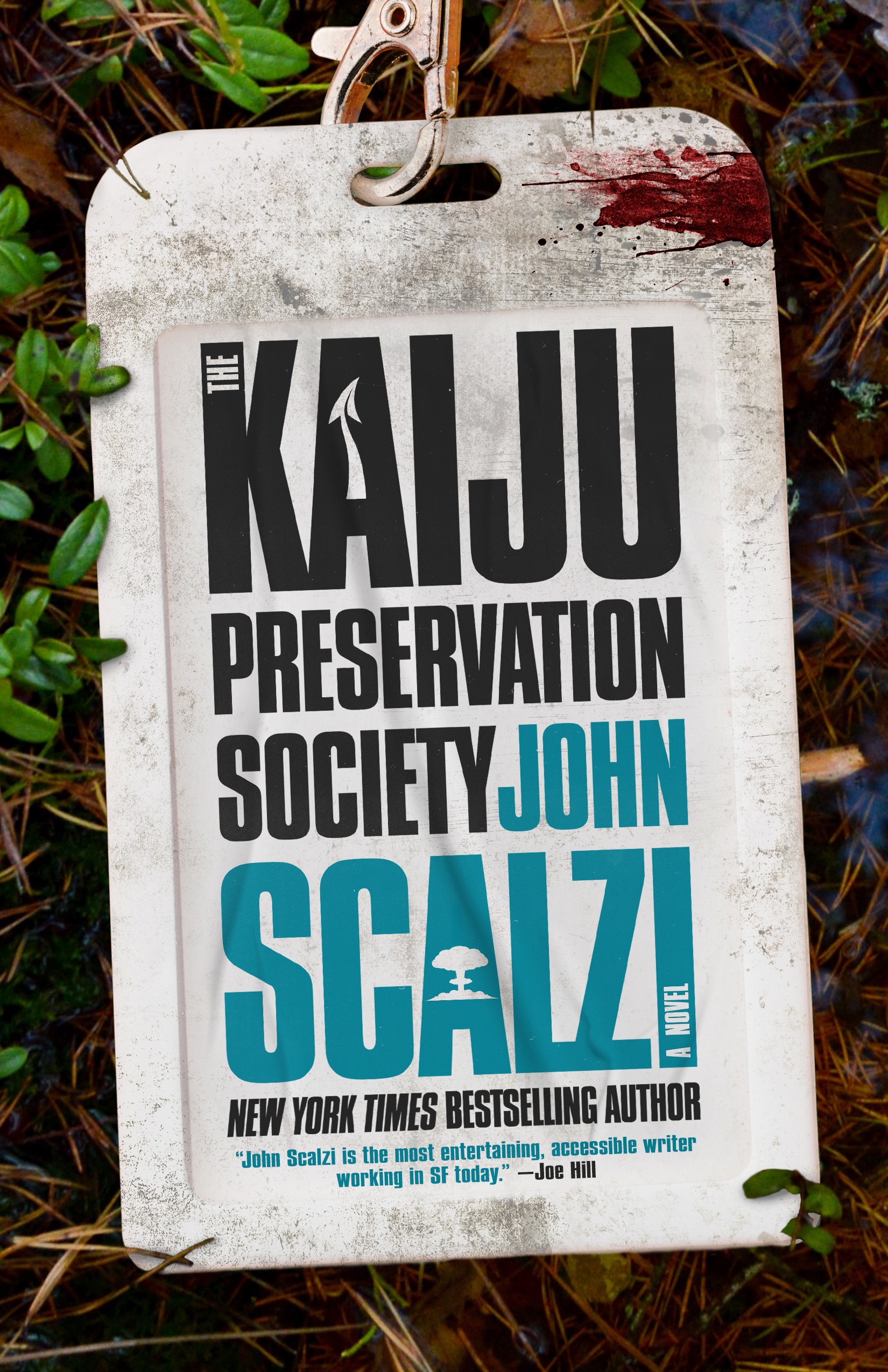
Book Review: The Kaiju Preservation Society


Book Review: The Kaiju Preservation Society by John Scalzi 

Goodreads Description: When COVID-19 sweeps through New York City, Jamie Gray is stuck as a dead-end driver for food delivery apps. That is, until Jamie makes a delivery to an old acquaintance, Tom, who works at what he calls "an animal rights organization." Tom's team needs a last-minute grunt to handle things on their next field visit. Jamie, eager to do anything, immediately signs on.

What Tom doesn't tell Jamie is that the animals his team cares for are not here on Earth. Not our Earth, at least. In an alternate dimension, massive dinosaur-like creatures named Kaiju roam a warm and human-free world. They're the universe's largest and most dangerous panda and they're in trouble.

It's not just the Kaiju Preservation Society that's found its way to the alternate world. Others have, too--and their carelessness could cause millions back on our Earth to die.

My Review: Oh man, this book was so much fun. It's a perfect dose of wish-fulfillment to combat how fucking depressing the world is these days. There's another world filled with wonder and majesty and kaijus? Jobs that offer stability, community, a decent salary, BENEFITS?? And to top it off, the corporate cronies destroying our environment and taking advantage of workers finally get what's coming to them? Sign me the fuck up! 

This book calls back to the old days of sci-fi, with a dose of hearty science and expansive world-building. The narrative doesn't linger on the science aspects, but it does offer more technical explanations than many other modern sci-fi novels, which may be a hit for nerdy world-building types. I was particularly fascinated with the science behind the kaijus, as they're often described as living worlds unto themselves. The book also dives into multiple ethical quandaries that are deeply applicable to our own world: should unregulated capitalism be allowed to reek havoc on the natural world? How much does corporatism influence science? How do we balance our needs while being environmentally sustainable? While these questions are explored throughout the text, at its core, this book is a wish-fulfillment fantasy that doesn't dive too deep into introspection. Most of the characters are fairly static, including Jamie himself, who doesn't learn a lesson or grow over the course of the story. Jamie functions as an everyman who has been screwed over by late stage capitalism in a way most of us can relate to, and serves as stand-in that readers can project themselves onto. Because of that, he doesn't come with much personality, or goals, or purpose of his own besides paying his rent. But this lack of dimension doesn't hurt the book at all, as it allows readers to turn their brain off as they wrangle some wily kaiju and take back a sense of control. 

TL;DR: All in all, 4/5 stars. A delightful action-comedy romp with heavy world-building and a heart of gold.

Saturday, June 8, 2024

Book Review: Brave New World


Book Review: Brave New World by Aldous Huxley 

Goodreads Description: Brave New World is a novel written in 1931 by Aldous Huxley and published in 1932. Set in London in the year AD 2540 (632 A.F.—"After Ford"—in the book), the novel anticipates developments in reproductive technology, sleep-learning, psychological manipulation, and classical conditioning that combine profoundly to change society.

My Review: Brave New World is a difficult classic to get invested in. Huxley had a point to make with this book, but he largely expresses that through worldbuilding rather than narrative. The dystopia he presents is indeed fascinating -- governments controlling people through pleasurable distractions rather than pain -- but it's coupled with next to no plot, unlikable characters, dry, colourless writing, and awkward pacing, which makes it a difficult swallow for modern readers. Brave New World is a quintessential dystopia through its soul crushing ending, but its lack of plot and character depth also robs that ending of some of its power. Instead of seeing how these characters struggled against the system and lost, we see them tour their world before ultimately submitting to it. I'm sure others feel differently, but I felt that many other classic dystopias do a better job at emotionally engaging the reader with the characters' struggle.

Now, the worldbuilding in this book is indeed fantastic. Huxley's ideas around governments conditioning behaviour and controlling people through pleasure was truly ahead of his time. It would be another 30 years before theorists like Michel Foucault began echoing these sentiments during their research on governmental and systematic power. Huxley's vision of this control is absolute, beginning with psychological and biological conditioning before birth, and continuing through pleasurable distractions like drugs (Soma) and sex (orgies). Huxley also questions the concept of civilized society, contrasting his "utopian" future against a racist caricature of Indigenous "tribal" life. Huxley posits that for all society's advancements, our moral regression has left us less civilized than the "savage" societies we purport to be superior to. While Huxley makes some interesting points about what is "savage" and "civilized," he singles out polyamorous sexual behaviour as the ultimate moral failing of modern society, which feels pretty dated. 

If you're just getting into classic dystopias, I don't recommend starting with Brave New World. It is worth the read, but more for the concepts it introduces rather than the story it's trying to tell. 

TL;DR: 3/5 stars. A fascinating world with a mediocre narrative. 

Thursday, September 7, 2023

Book Review: This Dark Endeavour


Book Review: This Dark Endevour by Kenneth Oppel 

Goodreads Description: Victor Frankenstein leads a charmed life. He and his twin brother, Konrad, and their beautiful cousin Elizabeth take lessons at home and spend their spare time fencing and horseback riding. Along with their friend Henry, they have explored all the hidden passageways and secret rooms of the palatial Frankenstein chateau. Except one.

The Dark Library contains ancient tomes written in strange languages and filled with forbidden knowledge. Their father makes them promise never to visit the library, but when Konrad becomes deathly ill, Victor knows he must find the book that contains the recipe for the legendary Elixir of Life.

The elixir needs only three ingredients. But impossible odds, dangerous alchemy and a bitter love triangle threaten their quest at every turn.

Victor knows he must not fail. Yet his success depends on how far he is willing to push the boundaries of nature, science and love—and how much he is willing to sacrifice.


My Review: Kenneth Oppel has had a special place in my heart since I was a kid, when his bat-tastic Silverwing series swooped into my life and made my oddball ass feel less alone. So, years ago, when I spotted a Frankenstein prequel by Kenneth Oppel, I was quick to snatch it up, but the book languished on my TBR shelf the last few years as more pressing titles jumped the queue. I finally found the time to pick it up, and to say I was disappointed would have been an understatement. This Dark Endevour is DULL. It's predictable. It's more than forgettable, it's why-bother-reading-able. The book's greatest weakness is that it's a Frankenstein prequel; its saving grace the target audience, who likely have not read the original Frankenstein and can't compare Oppel's changes to the original text. Yet even then, the book falls flat: the story is uninspired, the romantic and plot twists are contrived, lacking any sense of stakes, and the characters feel ripped out of the wrong time period. 

Slapping Frankenstein on this book leads to natural comparisons between the texts, but ironically, knowing the basics of Frankenstein makes the plot and twist ending of This Dark Endevour painfully obvious. Oppel introduces readers to his Frankenstein twins: Victor Frankenstein, the savant scientist that science-fiction knows all too well, and Oppel's creation, Konrad - the virtuous mirror-inversion of Victor, whose flaws have been bent backwards into much a nobler configuration. Konrad is sweet, he's compassionate, he's sensitive and gentle, but also brave, just, and level-headed - often the voice of reason, reigning Victor in when his lofty ideals pull them off the moral path. Yet this inversion of Victor's traits also reveals that Oppel either dislikes or doesn't understand the nuance within Shelley's Victor Frankenstein, as Oppel emphasizes Victor's negative traits - greed, ambition, stubbornness, solipsism - and crafts Konrad as the opposite of that, making both characters feel partly artificial and casting them in 'angel' and 'devil' roles. In the original text, Victor spent much of his time reigning himself back in, and the balance between doing wrong and trying to correct course is what made him so fascinating. Oppel's Victor feels more akin to the mad-scientist representations of Victor Frankenstein that pop-culture is more familiar with. 

Early in the book, Konrad falls deathly ill, motivating Victor and his friends Elizabeth and Henry to seek out alchemic knowledge that would lead them to the Elixir of Life to safe Konrad's life. At this point, the fact that this is a Frankenstein tale immediately gave away the ending. This is, after all, Victor Frankenstein, the man known for bringing back the dead, not for saving the living, so before I'd even opened the book (as Konrad's illness is spelled out on the back cover), it was painfully obvious that despite all efforts, Konrad wasn't going to make it. Oppel tries to combat this by drawing out the tension of Konrad's illness and faking out the reader in regards to his recovery, but the efforts fall painfully flat.  

The overall plot is organized around a three-point fetch quest that quickly became predictable and dull. Victor and his friends connect with an alchemist who tasks them with collecting the three ingredients needed to save Konrad, and holy crap was this boring. No amount of cool glow-in-the-dark moss, demon fish, or wolf's eye alchemy could distract from the terrifyingly predictable arcs of find thing - attacked by monsters - barely escape with item. This formula repeats again at the finale as trusted characters turn on each other and the actual creation of the Elixir becomes yet another fetch mission. The story could have worked if it was in a video game, where the agency of players could have mitigated some of the boredom from the plot's predictability. Instead, the reader is dragged along, beat by expected beat, without anything to change up the formula.

Finally, the characters. As I already mentioned, Victor and Konrad are two-dimensional representations of the "good" and "bad" twin, although thankfully this becomes less pronounced as Konrad becomes bedridden and less of an active character. Elizabeth was also difficult to stomach through much of the text. Many times, she asserts her equality to the boys by declaring that she's braver, stronger, and more tenacious than others (certainly Henry). The characters often have a "Don't You Know, Bob?" moment where they recount when Elizabeth bested the boys, was braver than them, or, GASP - wore trousers. These conversations feel so contrived, like Elizabeth is arguing against someone that isn't even there, asserting her autonomy and independence when no one was questioning it (other characters, narrative, even audience). I can't help but wonder why Oppel felt the need to assure audiences of Elizabeth's Girl Power! and can only assume it's because of the time period the book is set in. Finally, Oppel establishes an interesting romantic conflict between Victor, Elizabeth, and Konrad, but introduces this too late (so it feels like it comes out of nowhere, when this romantic tension could and should have been underlying their interactions from the beginning). This tension also doesn't lead to much besides some simmering resentment and moments of will-they-won't-they. I wish this romantic tension was better defined, upped the stakes, and actually lead to consequences in their relationship. It would have been nice to see that simmering resentment actually pitch up to a boil. 

All in all, this book isn't worth the read. Even as a fun, dumb pulp read, there's nothing really fun about it. With how predictable the whole plotline was, it would have been smarter to start the plot at book 2, where Konrad is already dead and build to how Victor plans to bring him back, even if that would have had its own complications. That concept at least has some creative possibilities within in, but this book left such a bad taste in my mouth that I don't care to see where Oppel takes this concept. It's dead in the water if you ask me, and not worth the lightning for its resurrection. 

TL;DR: 2/5 stars. Boring and uninspired. 

Tuesday, November 15, 2022

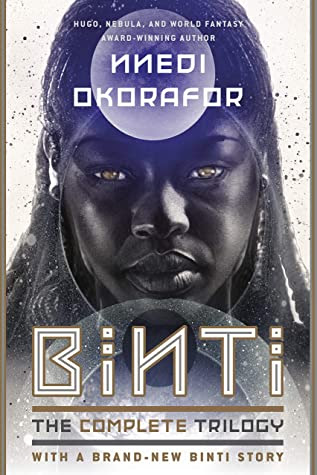
Book Review: Binti


Book Review: Binti: The Complete Trilogy by Nnedi Okorafor 

Goodreads Description: In her Hugo- and Nebula-winning novella, Nnedi Okorafor introduced us to Binti, a young Himba girl with the chance of a lifetime: to attend the prestigious Oomza University. Despite her family's concerns, Binti's talent for mathematics and her aptitude with astrolabes make her a prime candidate to undertake this interstellar journey.

But everything changes when the jellyfish-like Medusae attack Binti's spaceship, leaving her the only survivor. Now, Binti must fend for herself, alone on a ship full of the beings who murdered her crew, with five days until she reaches her destination.

There is more to the history of the Medusae--and their war with the Khoush--than first meets the eye. If Binti is to survive this voyage and save the inhabitants of the unsuspecting planet that houses Oomza Uni, it will take all of her knowledge and talents to broker the peace.


My Review: Okay, I'll be the one to say it. You know what's wrong with sci-fi? Not enough magic in it. 

Okorafor took on the challenge to blend the two genres in her space opera novellas about a human woman accepted into an intergalactic university - the first of her tribe to leave her humble Himba home and sharpen her skills alongside multiple races in an intergalactic university. For Binti, her math skills aren't just about numbers, they're a type of magic that allows her to understand other life forms and influence the universe. The novellas employ a soft magic system that's purposefully vague on its limitations, but appears to mainly facilitate communication between Binti and the wider universe. Math, as they say, is the universal language. 

In the west, science fiction and fantasy genres seem to inhabit opposite ends of the spectrum - mimicking the divide between religion and science outside of fiction. Religion and science are seen as dissonant forces, like oil and water, fascists and freedom, or the gays and a monochrome color scheme. Okorafor, however, takes a very different approach. The Binti novellas showcase a more African perspective by representing science and magic as two heads of the same coin. These novellas don't seek to separate and categorize, but to harmonize the various pieces of our world into one complete image. Math is a language. Science is only a technical definition of magic. The currents that run through machines also run through humans. We are made of stardust. This fusion of ideas unleashes a torrent of new opportunities for a genre that, like science itself, isolates pieces from the whole -- making itself smaller in an attempt to isolate truth. The Binti novellas are antithesis to that, and therefore a breath of fresh air for the genre. These novellas tackle the whole of human experience, yet lean on soft magic and vague technological explanations to enhance the mysticism of life -- that not everything can be known or seen, even when taking in the whole picture. 

Okorafor has stated that the Binti novellas are not young adult, but the novellas very much read like YA works -- coming of age narratives, leaving home/parents to exert independence, a school setting, the focus on action over introspection, the flavour of 'chosen one' that follows Binti throughout her adventures, etc. There's an innocence to these books that is incredibly heart-warming and makes these works accessible to both the young and young at heart. The way conflict is resolved over the works also adds to a more innocent/YA style, as each problem is resolved with relatively few complications. This is likely due to the novella format, as if these stories were combined into a single novel, it would prompt more escalation before resolution. This trend breaks by the end, as the conflict from Home and The Night Masquerade bleed into one another to make for a more triumphant climax. 

These stories tackle a variety of very human topics while taking us beyond the stars - racism, xenophobia, diaspora, transhumanism, trauma, etc. Binti spends most of the text reeling from the traumatic massacre that takes place in the first novella, which forces her to dig deep into her identity to create an internal stability and find resiliency. Several characters remark on Binti's unstoppable tenacity, yet Binti's healing remains at the forefront of the story, creating a balance between strength and pain that felt true to the human experience. The interactions between human and alien cultures also felt true to human psychology, as opposed to sci-fi's tendency to view culture clashing only through a militaristic lens. The first novella leans in that direction, as the Meduse at first appear quite militaristic in their willingness to complete a suicide mission for honor, their formidable war history, hive-mind structure, etc., yet the Meduse culture is rounded out as the novellas progress, creating a more nuanced picture of their reactions to other cultures. The university offers the perfect setting to explore xenophobia, as characters from very different races and backgrounds have to co-operate with each other, creating a setting that closely mirrors our own western society. Instead of the savage environment that sci-fi loves, where racism and xenophobia are expressed in kill-or-be-killed scenarios, a setting where different creatures have to co-operate and learn from one another or risk expulsion or jail, opens opportunities to show the nuances of our own experience reflected back under a fantastical metaphor. It's easy to see why these stories collected their share of Hugo and Nebulas. 

The only reason why I couldn't give the book full stars was I found a weird number of plot holes or confusing choices throughout, but particularly in the first novella. Some things are lightly contradicted later, and some moments felt weak without a proper explanation. Binti is used as a translator for the Meduse, yet when they arrive at the University, it's discovered Meduse is commonly-spoken. She knows what forests smell like, despite only reading about them. Okwu begins the story happy to die for a mission it knows it cannot win, yet in subsequent novellas, says it wouldn't fight a war it couldn't win. Little inconsistencies like this that may be due to the novellas being written at different times and them compiled into this book at a later date. 

All in all, what an amazing story. The only other complaint I have is there isn't more, and I hope Okorafor will write more novellas in Binti's world, should the ideas be there. I highly suggest picking up a copy, especially if you're a fan of science fiction, young adult, or just a damn good story. 

TL;DR: 4/5 stars. A beautifully human space opera that carries readers to the stars and then back home again. 

Sunday, June 12, 2022

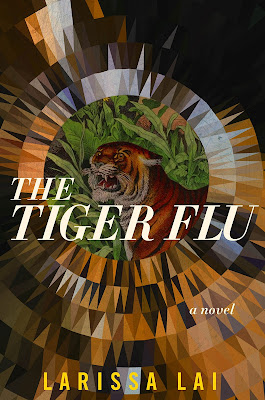
Book Review: The Tiger Flu


Book Review: The Tiger Flu by Larissa Lai 

Goodreads Description: Kirilow is a doctor apprentice whose lover Peristrophe is a "starfish," a woman who can regenerate her own limbs and organs, which she uses to help her clone sisters whose organs are failing. When a denizen from Salt Water City suffering from a mysterious flu comes into their midst, Peristrophe becomes infected and dies, prompting Kirilow to travel to Salt Water City, where the flu is now a pandemic, to find a new starfish who will help save her sisters. There, Kirilow meets Kora, a girl-woman desperate to save her family from the epidemic. Kora has everything Kirilow is looking for, except the will to abandon her own family. But before Kirilow can convince her, both are kidnapped by a group of powerful men to serve as test subjects for a new technology that can cure the mind of the body.

My Review: This book was probably the biggest disappointment in my recent reading history. There's so much to like about the world and characters, but unfortunately the writing style, coupled with the plot's handling, made for a huge let down within the last one hundred pages. 

And there's so much to like about this book! Sci-fi concepts ooze from these pages and fill the world with vibrant life: a village of parthenogenetic women, regrowing body parts, memory/knowledge in chips that can be plugged into the brain, cloning, uploading consciousness to a mainframe, etc, etc. It's set in a future ravaged by climate change, in the midst of a man-made pandemic, where patriarchy and greed poisons the land as well as the people. Our two protagonists, Kirilow and Kora, are both well-crafted characters that carry the story and its themes. The initial set up of the book is excellent: tension builds steadily, our characters push further into risky territory, until finally society springs closed around them. 

Something I found incredibly captivating about this book was the way Kora and Kiri's stories appeared to be individualistic in nature -- the hero's quest story, where a protagonist's agency and action shapes the world and plot around them. The Tiger Flu lulls you into believing that it will follow this same trajectory, and it's only when Kiri and Kora really assert themselves that they realize they are merely cogs in a giant machine. Much of the time, society, characters around them, villains, or even government figures have made choices that have pushed Kiri and Kora into the circumstance they're in. At first, Kiri's desire to go to Saltwater City appears to drive the plot, until it's revealed that the (seemingly innocuous) players around her have actually manipulated the her into thinking and behaving in ways that benefit them. In the end, the story reveals a more collectivist perspective. Yes, the plot is still driven by character agency and action, but it's revealed that individuals have less say over their success than they realize. Your successes are just as much determined by your allies and environment as your own actions. This book struck an interesting balance between individualist and collectivist perspectives, which raised some fascinating questions on how much control we have over our own lives. 

I also adored the contrast between Kora and Kiri's characters. Kora is younger by a few years, and filled with a compassion and gentleness for others that colours her every action. Even at the beginning of the book when a boy attempts to grope her, she fights him off and then chooses to help him when he nearly falls off a building. She's also much slower to aggression, which is contrasted by Kiri, who is so angry from the trauma she experienced that it threatens to destroy her. At one point, she becomes so consumed by the need for revenge that she's willing to abandon her goals and die like an animal. Kiri and Kora both learn to balance each other, as Kora's kindness can sometimes lead her into danger, while Kiri's anger blinds her to actionable solutions. I also just loved Kiri's journey to give up her quest for revenge and learn to quiet the hatred within her, and only wished that could have been expanded on further. 

All of this delicious build up led to an incredibly unsatisfying final 100 pages. As I mentioned earlier, I believe Lai's writing style heavily influenced this. Larissa Lai primarily writes poetry which is reflected in her beautiful use of diction, but it also shows when she's trying to get across plot concepts. When she introduces an idea to the reader (even something as simple as a worldbuilding piece or plot element), she starts out by describing it in very vague terms, or few words, which doesn't help the reader understand the role this object plays in the story, i.e., introducing the flu with "they've got it," which builds mystery and tension (got what?). This is often not enough information for the reader to figure out on their own, which drives them to keep reading. Not long after this, Lai will "explain" through an overuse of telling, often spelling things out to leave no room for misunderstanding. This jump from one extreme (too little info to solve on your own, but encourages you to puzzle over the info) to the other (too much blunt telling, taking away the promise of figuring out the mystery) leads to frustration and dissatisfaction. While the vagueness made it difficult for readers to figure it out on their own, I really enjoyed the mystery and tension that it built, only to have this excitement cut off at the knees when Lai overexplained what was happening. The climax concludes with over a page of As You Know, Bob infodumping that only seeks to explain what already happened, which made the scene drier than an overdone turkey with no gravy. Lai compounded all these incredible ideas and then couldn't explain their intersections without bouncing between vague poetic notions and infodumps. I almost wish Lai had left out the explanations all together and let readers piece together the fever dream on their own. 

Even with the low rating, I would suggest that others give this book a shot. Having such a solid start and then failing to deliver made this book a sore spot for me, but I know others may feel differently. If you aren't as put off by Lai's writing style, then you may enjoy the ending much more than I did, and honestly I hope you do. There are so many great elements to this book that I hope someone else can enjoy.

TL;DR: 2/5 stars. A captivating launch that fizzled into a disappointing ending. 

Wednesday, January 19, 2022

Book Review: Parable of the Sower


Book Review: Parable of the Sower by Octavia E Butler 

Goodreads Description: In 2025, with the world descending into madness and anarchy, one woman begins a fateful journey toward a better future.

Lauren Olamina and her family live in one of the only safe neighborhoods remaining on the outskirts of Los Angeles. Behind the walls of their defended enclave, Lauren’s father, a preacher, and a handful of other citizens try to salvage what remains of a culture that has been destroyed by drugs, disease, war, and chronic water shortages. While her father tries to lead people on the righteous path, Lauren struggles with hyperempathy, a condition that makes her extraordinarily sensitive to the pain of others.

When fire destroys their compound, Lauren’s family is killed and she is forced out into a world that is fraught with danger. With a handful of other refugees, Lauren must make her way north to safety, along the way conceiving a revolutionary idea that may mean salvation for all mankind.

My Review: The world as we know it is ending. In Lauren's version of America, society has all but collapsed, with only its skeletal remains in place. Democracy is only available to the privileged few, public services like police and firefighters work on a libertarian fee-for-service model that leaves their help woefully out of reach, and rising food and gas costs have left people using bikes and growing their own food. A gated community is all that keeps Lauren and her family safe from the gang violence that ravages the streets at night, but soon even the walls won't be enough to keep out the hungry. Lauren knows it's only a matter of time before the gate comes down and all hell breaks loose. She knows she can't risk her survival on chance, or the kindness of strangers, and so she prepares. Amaasses books, supplies, practices her shooting, refines her scripture. The end of days are coming, but Lauren will be ready. Out of the ashes, her new world will grow. 

Written in the 1990s, Parable of the Sower's depiction of 2020s California is haunting, to say the least. Like most dystopian novels written decades prior, it's fascinating to compare what Butler thought the world would become with what we actually got. There are a lot of ways in which the apocalyptic nightmare of Butler's America is very true to reality -- the depiction of police feels figuratively accurate, while they may not take direct payment from citizens (outright), they certainty do harm/cause legal trouble for the people who called them, do not solve/stop crimes, and utilize unchecked brutality. Butler's depiction of police reminded me of what so many black people in America today face when dealing with police, highlighting how little has probably changed in the 30 years since the book was written. Despite the apocalyptic description of life in California, Butler specifically leaves elements of our own society intact to highlight how this societal degradation can take place under our very noses. Much of our apocalypse narratives involve the dissolution of government systems as a signifier that the Thing (climate change, asteroid, virus, zombies, etc.) has succeeded in apocalypting the world, but Butler puts the breaks on that thinking and poses the question, "But what if we didn't have the usual signifiers of societal collapse? What if the frame was still there, but everything within had rotted away?" The result is both fascinating and refreshing. 

At its core, Parable of the Sower is a story about survival and patient resistance, especially for marginalized people, and how one can carve out space and a future for themselves in a hostile environment. Lauren knows the world she's living in is unsustainable and ultimately fatalistic, and from a young age begins preparing to leave her environment to build a new world, complete with a religious ideology to influence the culture of her new settlement. She spends years amassing supplies, knowledge, skills, and resources to actually succeed in her endeavours. Lauren's entire personhood is constructed around surviving and creating her community, and while some readers (and characters) find this part of her personality overwhelming, the narrative stresses that it is the entire reason why she (and thus her companions) survive and succeed. Some vulnerable moments reveal that this obsession strains Lauren, but she feels it's a necessary sacrifice in order to quite literally save the world. Like many marginalized people fighting against inequalities and injustices, the task ahead of Lauren is daunting, and she needs to prepare to fight for a long time in order to see success, so she finds ways to cope and build resilience so she can endure, such as building a community and falling in love. In this way, the novel presents an interesting perspective on what it means to resist for long periods, and not only how to survive that period, but thrive in it.

Personally, I struggled to connect with the story, hence the lowered rating. While it's obvious that Butler is a talented writer and deserves her place among acclaimed SFF authors, I didn't connect with the plot or its characters, despite the wide cast. This is just my personal opinion, which I feel I have to honor, even though objectively I realize there's a lot to love about this book. Butler's observations on human behaviour and society alone, as well as the gritty realism when it came to wilderness survival, built the narrative up into a satisfying and insightful read. So, despite the lowered star rating for this classic, I still highly recommend this novel for dystopian lovers far and wide. 

TL;DR: All in all, 3/5 stars. Badass black girl magic meets a defamiliarized apocalypse. 

Wednesday, August 25, 2021

Book Review: Terminal Alliance


Book Review: Terminal Alliance by Jim C Hines 

Goodreads Description: The Krakau came to Earth to invite humanity into a growing alliance of sentient species. However, they happened to arrive after a mutated plague wiped out half the planet, turned the rest into shambling, near-unstoppable animals, and basically destroyed human civilization. You know—your standard apocalypse.

The Krakau’s first impulse was to turn around and go home. (After all, it’s hard to have diplomatic relations with mindless savages who eat your diplomats.) Their second impulse was to try to fix us. Now, a century later, human beings might not be what they once were, but at least they’re no longer trying to eat everyone. Mostly.

Marion “Mops” Adamopoulos is surprisingly bright (for a human). As a Lieutenant on the Earth Mercenary Corps Ship Pufferfish, she’s in charge of the Shipboard Hygiene and Sanitation team. When a bioweapon attack wipes out the Krakau command crew and reverts the rest of the humans to their feral state, only Mops and her team are left with their minds intact.

Escaping the attacking aliens—not to mention her shambling crewmates—is only the beginning. Sure, Mops and her team of space janitors and plumbers can clean the ship as well as anyone, but flying the damn thing is another matter.

As they struggle to keep the Pufferfish functioning and find a cure for their crew, they stumble onto a conspiracy that could threaten the entire alliance… a conspiracy born from the truth of what happened on Earth all those years ago.


My Review: Terminal Alliance is a rip-roaring adventure through space from the first page to its very last. Hines uses humour to hook the reader and keep them invested in the foreign environment filled with different alien races, relying mostly on dramatic irony as characters fumble about with human history. The story focuses on Mops and her janitor crew who happen to be the only ones unaffected by an attack that kills their alien captains and leaves their human crewmates feral. From the first page, the book launches into plot-heavy action interjected with humor that doesn't waste time trying to catch the reader up to speed on the intricacies of this galactic society. Despite that, Hines is very skilled at layering important information throughout the action, so the reader isn't bogged down by information while also never feeling lost in the action. 

My biggest issue with the book came down to its characters. I'm a character-driven reader, and this story was very plot-driven, with little depth given to its characters. Hines kept his characters solid and consistent, and even managed to buck a few tropes, but the book isn't interested in who they are beyond the surface level or diving into their inner worlds. They are merely the players that help the plot move forward, which just isn't my style. Aside from the interesting mystery behind what happened to the human crew, I struggled to keep myself invested in the story. For readers who prefer more action heavy, "less talky, more blowing shit up," kind of reads, these characters are probably perfect. They're fun, funny, and each distinct without feeling like something I've seen before, but they don't grow or change much throughout the story. They encounter a problem and they solve it, while having sassy space battles along the way. 

The writing is solid, accessible, and cleverly utilized. This is clearly not Hines' first book, as he uses his words wisely to save 'space' and increase the flow. Instead of showing something and then having a character react to it, Hines will have a character react, and in that reaction, show us what's happening. This is a great tool for keeping the reader moving forward. The mystery was also written in such a way that I felt really smart? Which sounds like a funny thing to say. I don't usually play detective while reading, but if the clues line up just right, then it's hard to ignore an obvious solution. That's definitely how it felt in TA, and I can't tell if that's because Hines made the mystery too easy to solve, or if he just laid all the clues out in a way that felt obvious to me. While I didn't feel the mystery was stupid or 'too easy,' I did find myself getting frustrated with Mops by the end when the enemies all but told her the truth, and she still struggled to put together what I had pages ago. If you're someone who likes to solve puzzles, this one may be too frustratingly easy for you, but if you're just along for the ride, you may get the added benefit of feeling like Sherlock. 

Aside from my struggles to connect with the story, I really enjoyed the ride. TA was like that crazy sci-fi action flick you turn on, enjoy it for its popcorn simplicity, and then never watch again, though you remember it fondly. The world in TA was delightful and layered in a way I could see myself being drawn into, lore-wise, and I really enjoyed the worldbuilding scenes at the beginning of each chapter, with excerpts from military manuals, alien cookbooks, scenes from alien POVs, etc., that all helped to flush out the expansive starsystem. And again, Hines adds a touch of humor that keeps things from feeling like a dry alien textbook.

TL;DR: All in all, 3.5/5 stars. An all around fun, sassy space-opera driven by its exciting plot and inter-species mystery. 

Sunday, January 19, 2020

Book Review: Fahrenheit 451


Book Review: Fahrenheit 451 by Ray Bradbury 

Goodreads Description: Guy Montag is a fireman. In his world, where television rules and literature is on the brink of extinction, firemen start fires rather than put them out. His job is to destroy the most illegal of commodities, the printed book, along with the houses in which they are hidden.

Montag never questions the destruction and ruin his actions produce, returning each day to his bland life and wife, Mildred, who spends all day with her television 'family'. But then he meets an eccentric young neighbor, Clarisse, who introduces him to a past where people did not live in fear and to a present where one sees the world through the ideas in books instead of the mindless chatter of television.

When Mildred attempts suicide and Clarisse suddenly disappears, Montag begins to question everything he has ever known. 

My Review: "We have everything we need to be happy but we aren't happy. Something is missing...
It is not books you need, it's some of the things that are in books. The magic is only in what books say, how they stitched the patches of the universe together into one garment for us." 

Guy Montag seems like a happy, fulfilled man as he leaves his work as a fireman one night. He loves his job, his wife, and any nagging feelings of wrongness are washed away in the cacophony of mass media. Until the night he meets Clarisse, a curious 17-year-old who questions the barrage of ads and enjoys unusual pastimes like walking and chatting with people. Clarisse lives in a way that is completely contrary to what Montag is used to: she stops to observe the morning dew, she looks out for the man in the moon, she plays with dandelions to see if Montag is in love-- all of this childish innocence is enough to shake Montag of his certainty in life. Why don't people talk to each other? What did fireman do before they burned books? 

Is he happy? 

The transformation for Montag comes swiftly after that-- nothing in his life is luxurious anymore, nothing is worth whistling over. In fact, everything is dark, save for the flickering glow from the television wall screens that dominate his wife's time-- dominate everyone's time-- and Montag walks like a ghost through his life. He sees his wife with new eyes-- a woman who constantly keeps her Seashells, thimble radios, pressed to her ears so she never has to think, stuck in the room with screens covering three walls showing mindless television where she can't even discern a plot. Within their home, the pair were as far apart as two people could be. Technology brought Montag and his wife, Mildred, closer to the world and yet opened an ocean of space between them that Montag couldn't hope to cross alone. Upon arriving home, Montag finds the answer to Clarisse's question in the form of his near-lifeless wife, having swallowed an entire bottle of pills in a suicide attempt. 

They're not happy, he realizes. Maybe no one is. Yet Montag and Mildred had done everything right, hadn't they? They had everything they needed (save for maybe a screen on the fourth wall to complete their TV room), so why was everything so wrong? They didn't talk about sadness and emotion, or anything beyond the surface level, so why were so many people lining up to take their own lives?

Maybe the answer was in the books. 

I feel like I could write books about this book. Maybe that's what truly makes a classic a classic-- whether the conversation continues past the last page. Despite being written approximately 60 years ago, Fahrenheit 451 feels so incredibly relevant in our modern society dominated by mass media entertainment and an anti-intellectual "fake news" rejection of facts. The thing that makes F451 truly terrifying, and incredibly real, is the idea that the government did not crack down on books and ban them, rather it was the people themselves who checked out from reading in favour of mass media that didn't challenge or inspire emotion. The majority chose to stop thinking and began to feel challenged, inferior to, even threatened by well-read individuals who questioned the status quo. The laws banning books came because the majority wanted them. 

In Bradbury's dystopia, the reader doesn't feel the presence of the big bad as much as in other dystopian novels, such as 1984. The government oppression is felt through the work of the firemen, but as Montag is one of them, it's less a feeling of boogeymen hunting you down in the night and more like having an illusion shattered. It made the novel feel more personal; this is the story of a man's awakening, an intellectual "coming of age," framed within a dystopic setting. What makes Montag different from many other main characters of this type of sci-fi is that he generally didn't question the society he was born into until being triggered by Clarisse. Once he realizes that he's not happy, that something in his world is very wrong, he learns how to question things. But boy, is he awful at it-- he asks dangerous questions at work, lets phrases slip like 'once upon a time,' and just generally can't keep his secret books secret for the life of him. Montag stumbles into learning to think with all the grace of a toddler learning to walk, which grants him an innocence that reflects his level of intellectual development. 

Aside from reminding me of the terrors of majority tyranny, F451 poignantly touches on the feeling of disconnect that is born out of a mass media society. When we perceive that our social needs are being met by technology, we stop reaching out to others, and then often don't understand why we're struck with feelings of emptiness, depression, and anger. We can see this displayed through Mildred in how she checks out from the rest of the world. Even sleeping, she feels she needs to have the Seashells blasting in her ears, possibly to escape something in herself or, as is implied by the narrative, that she's searching for connection and finds it through watching the television show "the family." She obviously doesn't get her needs met this way, as the reader first meets her during a suicide attempt. 

Montag begins to realize how much distance lays between them by asking Mildred if she remembers how they met. The fact that neither can remember their first encounter could show how identity can be washed away when you allow yourself to stop engaging -- with the world as well as people around you. This is further supported when Montag eventually does remember how they met, and by then he's fully realized as his own thinking, feeling person. We can see after Mildred's suicide attempt that she doesn't have a great grasp on her emotions or inner world (or she's blatantly lying) when she denies attempting suicide, insisting "I wouldn't do that. Why would I do that?" I feel like that last question is especially important, as this is almost a legitimate question. Mildred has no idea why she would attempt suicide (they're happy, aren't they?) and yet she did. Her inability to put words to her emotions keeps her from truly knowing herself, as well as knowing anyone else. Montag also suffers from this inability to talk about his feelings or serious subjects, as we can see when he tries to talk to Mildred about the suicide attempt. At first he rolls over and agrees that the reason Mildred feels unwell is due to a party, and later even when he is able to say she attempted suicide, he gives her an easy out to avoid conflict ("Maybe you took two pills and then forgot and took two more..."). 

Mildred and Montag don't know how to talk to one another, because people simply don't talk anymore. And how can one get their social needs met by another living person if they don't know how to instigate it? But it's not just Montag and Mildred who can't communicate-- this distance can be felt everywhere. It's highlighted when the "men with machines" come to treat Mildred for her suicide attempt-- these men see "nine or ten cases [of suicide] a night," and Montag notes how cold and impersonal these men are in their work. "Nobody knows anyone," Montag thinks. That's certainly true in Bradbury's world. Bradbury's book would have us believe that mass media in itself is inherently harmful, but anyone living today would hardly deny the positives that mass media can achieve. However, relying on technology to replace human interaction and using it to consume rather than create could definitely lead someone to ending up like Mildred.

As for dystopians go, the ending is a rather positive note. I'm doing my best to avoid spoilers here, but comparing it against something like 1984, F451 doesn't leave you completely soul crushed and dots you with a bit of hope. It very much reads as a warning for what could come, but also shows ways that resistance can be achieved by individuals. 

Books, therein lies the power. But books on shelves do nothing but collect dust. They're meaningless bindings of paper. You need to read them, internalize them, then burn them and actualize its message. Don't become so attached to the tome that it sits like a totem to an ideal you never try to make a reality. 

TL;DR: 5/5 stars. Fucking read it, okay? Could you not tell from this gushing review that I love this? In fact if you don't read it, I'll punch you. 

Sunday, November 25, 2018

Book Review: Vengeful


Book Review: Vengeful by VE Schwab 

Goodreads Description: The sequel to VICIOUS, V.E. Schwab's first adult novel.

Sydney once had Serena—beloved sister, betrayed enemy, powerful ally. But now she is alone, except for her thrice-dead dog, Dol, and then there's Victor, who thinks Sydney doesn't know about his most recent act of vengeance.

Victor himself is under the radar these days—being buried and re-animated can strike concern even if one has superhuman powers. But despite his own worries, his anger remains. And Eli Ever still has yet to pay for the evil he has done.

My Review: This review will have major spoilers. There are no warnings beforehand as they are spaced through the whole review. So beware if you find spoilers spoiling. 

Vengeful picks up after the events of Vicious, but the story is told through multiple points of view across many points in time, so it's difficult to remember where in the book each part of the narrative gets revealed. Five years have passed since the end of Vicious, where Victor and Eli faced off and which left Victor dead and Eli in prison. After being resurrected by Sydney, Victor discovers her powers are a double edged sword, because he's been brought back wrong. His powers are different, and he keeps having fits that cause a surge of electricity to shoot through his body and kill him-- over and over and over. Desperate to find someone to fix what's broken in him, Victor begins hunting EOs, and in an effort to hide himself, Sydney, Mitch, and Dom from Stell, the detective who put Eli behind bars, Victor has to kill those he meets to cover their tracks. But it all turns out to be in vain, for Marcella Riggins, a new EO in Merit, is taking over the city, amassing EOs to work for her and dragging Victor, Stell, and even Eli into her sphere of influence, causing the three men to come crashing into each other once again. 

Okay. Okay. Okay, okay, okay. This is going to be hard for all of us, but it's important to be honest in order to get through this. 

I really, really didn't like this book. 

It's probably one of the first books Victoria Schwab has written that I actually didn't like. Not to say there wasn't anything to like about this book, in fact, there was a lot to love. But what sends the rating crashing down for me is that this book, this STORY, had so much potential that just wasn't lived up to. So now whenever I look at this book, all I can think about is what it COULD HAVE been, which makes the loss feel a little more profound. This was also the first book that I've ever pre-ordered. I'm pretty against pre-orders, just for the selfish reason that I like going into the store on release day and snatching up a copy, but I did it this time because I really loved the book, so it just added to that disappointed feeling. 

I think a major issue with this book is the dramatic shift it takes from the first book. Vicious was about Victor and Eli. Vengeful is about Marcella. While not a bad thing for a dramatic shift in focus, it was really off-putting because a lot of the bones of the story were still about Victor and Eli-- Victor trying to find a 'cure' to repeatedly dying, Eli being in prison and reevaluating his childhood and ideologies, and ultimately Eli's escape from prison, but all this took a backseat to introducing Marcella and her motivations. This was annoying because readers who were clamoring for this book were looking for Eli and Victor, as that's the story they were hooked on. Instead we're introduced to Marcella, who has the potential to be a really incredible character, but she falls horribly flat because she doesn't have the nuance that Victor and Eli had in the first book. What made them so interesting were the shades of grey in their characters, and Marcella had none of that. She was all ambition and vengeance with nowhere to go. After being wronged by her husband, she attempts to "ruin" him, which she succeeds early on in a very anti-climactic scene, and then decides to take over the mob and "ruin" them. Her desire for vengeance against her husband was clear and concise, and then after that the motivation kinda fell apart. She wanted to take over the mob, and do what with it? Did she want to rule the city? Destroy it? To what end? Some of her desires are outlined but it was kind of muddy, and all we really hear of Marcella's "grand plan" is that she's throwing a party, which does nothing but end in her death, making me wonder what the point of all of it was. Marcella was intended to be a powerful, intimidating, ambitious woman, and she came across as an empty-headed super villain with no depth. The story readers came for took a backseat to introducing us to this female villain, who didn't compare to the moral complexity of the male characters from the first book. And trust me, I wanted Marcella to live up to the characterization in the first book, but it just didn't happen. 

That lack of moral complexity wasn't just apparent in Marcella, though. Victor was significantly less 'grey' than in the first book. Vicious painted Victor as an anti-hero, and both he and Eli were well-balanced with good and evil parts to them. Though the same framework for those dilemmas exists in this book-- the whole aspect of Victor killing EOs to cover their tracks could have be a great moral grey area to explore further-- but instead it's glossed over and so Vengeful just doesn't have the same interesting moral complexities that made Vicious so interesting. 

Unfortunately, there was a serious lack of character and development in this book. We're introduced to a host of new characters like June and Jonathan, but there's not enough there to show us who they actually are. Jonathan, Marcella's "shield," is such a pathetic cardboard cutout of a character that it makes me a bit embarrassed for Schwab, but it is definitely a symptom of having too many characters and not enough time to explore them. June and Jonathan are also characters created with a purpose-- Jonathan is the shield that keeps Marcella from being shot and June is the connector between Sydney (and Victor's group) and Marcella. This wouldn't be so bad if it wasn't so apparent. June is also really infuriating, because other than having a cool and trendy power, we know absolutely nothing about her-- not where she came from or how, not who she was before, no real hint as to what she actually wants, aside from being creepily obsessed with Sydney (though still not sure why). Her motivation is just all over the place. She's helping Marcella, but doesn't like her, then wants to be on her side because she's powerful, then tries to betray Marcella (seems like because of Sydney), then betrays Sydney anyway. It's a complete mess. I have no idea what June actually wanted out of any of this, and I suppose that's the point, because it's clear from the epilogue that there will be a third book in the series with June as a major character (why else include a scene where she wipes herself from EON's database if not to use it somehow?) which is even more infuriating. It feels like her backstory was withheld so she can be a central character in the next book at the expense of her characterization (and the reader understanding her and her motivation) in this book.

The book read like I was reading two separate stories smashed together-- Marcella's and then Victor and Eli's. And unfortunately the story that I signed up for was crammed into the last 50 pages of the book, hidden after Marcella's death. The parts with Eli and Victor were great (if a little less morally subjective) but there just wasn't enough of them. There were too many threads in this book and the ones that should have mattered the most got dropped. I probably would have loved this book a lot more if Victor and Eli's story was better integrated into Marcella's, instead I get a handful of pages with Victor that I'm pouring over trying to imagine the rest of the book with him actually in it. 

I really enjoyed the writing, as always. Schwab has a command of language that really shows through her use of vocabulary. However, the book had a lot of tension with not a lot of payoff. There were so many scenes that were setting up atmosphere, tension, and building up to a climax, and yet when we got there, the climax did not live up to all the build up that came before. Sydney is a perfect example of this, as she spends the whole book obsessing over her sister's ashes, building an exorbitant amount of tension as we see her master her resurrection skills, and then she decides not to bring her sister back in a rather anti-climactic resolution. I can appreciate the choice that Sydney made, but because Schwab spent scene after scene building her power, and the tension with it, it felt painfully underwhelming. 

The same could be said for many other parts of the book, such as Marcella's "big plan" which turns out to be a party. She claims this party will change the city, and yet all we can see that she planned was to bring a few reporters and maybe show off her powers. Because of the lack of a satisfying climax, Marcella came off as weak and more concerned with how she appeared to be powerful than actually being powerful. Which, yawn. I was excited by Marcella because I love powerful, dark, ambitious women. But Marcella wasn't powerful, she was just a sparkler-- pretty to look at, looks like it could burn or hurt you, but really it just fizzles itself out on its own. If you want to create a real Marcella, don't just give her ambition, because ambition without direction is meaningless. Give her goals, give her plans, give her ends to her means and give her a damn good reason for pursuing them. Make it clear that nothing will stand in her way. Don't just have her sip champagne and then melt a glass when she gets angry. Give me a woman who changes things. Give me a woman who knows what she wants and gets it. Give me actual power, not just the illusion of it. 

TL;DR: 3/5 stars. Disappointingly doesn't live up to its potential. 

Saturday, November 10, 2018

Book Review: Frankenstein


Book Review: Frankenstein by Mary Shelley 

Goodreads Description: Mary Shelley began writing Frankenstein when she was only eighteen. At once a Gothic thriller, a passionate romance, and a cautionary tale about the dangers of science, Frankenstein tells the story of committed science student Victor Frankenstein. Obsessed with discovering the cause of generation and life and bestowing animation upon lifeless matter, Frankenstein assembles a human being from stolen body parts but; upon bringing it to life, he recoils in horror at the creature's hideousness. Tormented by isolation and loneliness, the once-innocent creature turns to evil and unleashes a campaign of murderous revenge against his creator, Frankenstein.

Frankenstein, an instant bestseller and an important ancestor of both the horror and science fiction genres, not only tells a terrifying story, but also raises profound, disturbing questions about the very nature of life and the place of humankind within the cosmos: What does it mean to be human? What responsibilities do we have to each other? How far can we go in tampering with Nature? In our age, filled with news of organ donation genetic engineering, and bio-terrorism, these questions are more relevant than ever. 

My Review: Frankenstein was an assigned reading for my college class, and being the masochist that I am, I decided to throw a review out there as well. Frankenstein was on my list of Classics That I'll Read Someday, so reading it for class was super productive. One less book off the never ending TBR list. 

Like many out there, I didn't know a whole lot about Frankenstein before I began, aside of course from the things pop culture has taught me: Victor Frankenstein was an old, crazy, white-haired scientist, his creature was a groaning, drooling, bolt-in-the-neck kinda monster, and there would definitely be villagers with torches and pitchforks chasing the creature into the night, this I was absolutely sure of. But pop culture led me astray again, for none of these things actually happened in the book (although there were some villagers with torches chasing off the creature, but it was one sentence in the middle of the book, more the response of walking into the wrong change room than the dramatic climax of a monster movie). By the time I'd finished the book, I felt a little ripped off. Where were the accurate movie adaptations of Frankenstein? Why had pop culture mangled the story so badly? 

The book begins far north in the arctic where we meet Walton, a young explorer searching for knowledge and glory. Out in the wilderness he discovers a man, frozen half to death, and when he revives him the man tells Walton that he was once young and ambitious, and sought out knowledge and power over nature, just as Walton was doing. After a few days of kindness, the man decides to reward Walton with a story: one of warning, hoping to save Walton from falling prey to the same fate as the old man. And so we realize the old, weathered man is Victor Frankenstein as he tells Walton, and the reader, the story from his birth to what led him to be old and dying out in the wilderness, still desperately searching for the creature who destroyed his life. 

First off, the prose is spectacular! I found myself awed continually by Shelley's wordplay and use of descriptors all throughout the novel. She describes nature so intensely that it's difficult not to feel as though you are out in the wilderness yourself. Being a Romantic writer, Shelley focused on the beauty and terrifying power of nature, and many of the confrontations between Victor and the creature take place in the throes of nature. Although Frankenstein was written 200 years ago, the writing style is not difficult to get accustomed to. It borders the line (at least in my opinion) between modern novels and historical classics. Like classics, the book takes its time to build to revelations, and spends a lot of time on backstory or information that would seem superfluous to modern writers. We start Victor's tale before he's even born and are introduced to his parents and family culture before Victor is even around, which is a testament to how a lot of classic novels tends to linger over every detail. Despite the intense backstory, the flow of action is actually very steady. Like modern novels that tend to get right to the inciting incident and keep pushing with plot and conflict, Frankenstein had a pretty steady pacing and tension that kept me engaged straight to the end. It does have a bit of a slower burn to the tension-- we're not talking thriller level pacing, but it's enough to keep the story moving without losing the reader along the way. 

The beauty of the story comes down to Victor and his creature. Victor was a wonderful character, and has already become one of my favourites in literature. He is not always likable - as he can be quite depressed and mopey at times, and ruminates on problems that he could (with some work) solve himself. After giving life to his creation, he becomes horribly depressed and heads down a spiral that he doesn't recover from. For some readers, Victor probably comes across as very annoying, especially as he becomes more and more depressed. He does less and less for himself, turns very inward, and generally comes across as a little brat. However, I really connected with this as I feel Shelley accurately portrayed someone with worsening mental health. The creature is an interesting character study as well. He is extremely articulate and intelligent, and seeks to confront Victor with words (at first) rather than violence. As he is driven more into isolation, he becomes more enraged and violent, and yet is shown to be in complete control of himself as he spirals downwards, which we can see through how he doles out the violence against Victor and the world. These two characters mirror each other in interesting ways, so the few scenes where they are together hold a lot of weight and were the most interesting scenes, in my opinion. They are both driven to insanity and violence through isolation, and while Victor isolates himself by choice, he is not as aware of how that loneliness is causing the degradation of his mental health, contrasted with the creature, who is isolated by force, and is aware of how that solitude is slowly wearing away at him. It reminds me of an African proverb: "A child not embraced by the village will burn it down to feel its warmth." The creature knowingly attempts to "burn down the village" of his creator, all out of a short-sighted need for revenge. The creature purposefully chooses to use violence, and plans out how he wants to use it against Victor, as he feels it is the only way to justify his treatment and satisfy his anger. 

Frankenstein is a rich, Gothic horror tale and one of the first science fiction books to be written. Many readers are disappointed by the "horror" in this book, probably thinking it's going to be something like jump-scares from horror movies or the Stephen King style horror of something's coming to get you. But Shelley's horror is a different kind. She doesn't create a monster that's just waiting in the shadows to get you, instead we find horror in how Victor Frankenstein, a smart, kind boy with so much potential, could take one step too far against nature, create something that horrified and terrorized him, and how he couldn't stop himself from falling for the creature's trap and dooming himself to be a miserable, obsessed man whose only joy in life was to seek revenge for all he'd lost. You're not supposed to be scared of the creature, you're supposed to be scared of how far a sensible young man could have fallen, and how easily, but for the grace of God, that could have been you, or at least, someone you know. 

TL;DR: 5/5 stars. A classic tale of horror that asks the reader to look at the monster within themselves rather than the one just outside the window. 

Monday, May 7, 2018

Book Review: The Falcon Flies Alone


Book Review: The Falcon Flies Alone by Gabrielle Mathieu 

Goodreads Description: As the sun rises on a quiet Swiss mountain village in 1957, runaway Peppa Mueller wakes up naked and stranded on the roof of her employer’s manor, with no idea how she got there. As she waits for help, she struggles to piece together fragmented memories of the previous night. Did she really witness the brutal massacre of a local family? Did she kill them? Her fear of sinister house guest Dr. Unruh fuels her panic—as do electrifying flashes of a furious falcon, trapped inside her.

Wanted for murder, Peppa flees the police, intent on finding out if there’s a scientific explanation or if she’s just going mad. Her godfather, world-renowned chemist Dr. Kaufmann, risks his career to help her. In the meantime, Peppa fights her attraction to the handsome priest from India who offers her shelter. With their help, she not only finds Dr. Unruh but places herself at his mercy. His experiments may be the reason Peppa now shares her body with a bloodthirsty bird of prey—but the revenge she plans could kill them both.

My Review: I was given a review copy by the author in exchange for an honest review. There will be some spoilers in this review, but there will be a warning before they come up.

After her father's death, Peppa Mueller takes a job as a caretaker to a wealthy family to wait out the weeks until her 20th birthday, when she can claim her inheritance and move on with the rest of her life. On her first night in a new town, Peppa witnesses a brutal massacre that lands her right in the center of a murder investigation. She doesn't know how to process the things she sees-- the family that suddenly starts killing each other, her new boss, Dr. Unruh, smiling down on the violence, her own hands reaching out to snap a man's neck, or her body transforming into a falcon and soaring high above it all--so Peppa runs from the police, at least until she can find a scientific explanation for what happened to her. She doesn't believe in spirits or the occult, and is willing to bet Dr. Unruh dosed their drinks that night with a psychoactive substance. If Peppa can prove it, she might be able to clear her name as a suspect. But to find the answers she needs, she'll have to find Dr. Unruh and earn his trust so she can get into his lab, and the doctor may not be so easy to fool.

"I'd taken his bait, and the trap was closing." 

The Falcon Flies Alone is an incredible story of fantasy versus science, filled with well-balanced characters that flesh out a historical setting from not so long ago. The book takes place in 1950s Switzerland and is filled with fabulous notes from the period, from the Elvis records, the fashion, to the political landscape. There was an intimate way of describing things, making it obvious that the author was very familiar with the time period. Characters throughout made comments that were anti-Semitic, racist, and sexist, but they were authentic to that time period, fit well into the world, and the main character did shoot down those comments appropriately. The differences between cultures were highlighted throughout the book, and it was interesting to see the distinctions made for what was appropriate for Swiss culture and what wasn't. The book is historical fantasy and does an excellent job of really bringing the history alive from start to finish.

As for the characters-- wow! They were all incredibly well-constructed and balanced, fitted with their own sets of flaws, motivations, secrets, and shames. I fell in love with Peppa and Tenzin, and even Dr. Unruh. As a villain, Dr. Unruh was positively evil-- rapist, murderer, sadist-- but also very articulate and charming. The way he rationalized his abuse to Peppa was downright frightening at times, and very convincing. Peppa was smart and strong the whole book through; every obstacle she solved creatively, which made for an interesting read. This made it easy to root for Peppa, as she wasn't just bumbling her way through the plot events. It also made Dr. Unruh even scarier, since no matter how clever Peppa was, he was still getting the best of her.

**SPOILERS, skip to the next paragraph if you don't want to be spoiled** The whole dynamic between the two is interesting, although I am concerned with the way their relationship developed and ultimately, how Dr. Unruh's death was presented. As I said, Unruh is a deeply sick man, but Peppa is drawn into his charismatic spell and develops a bit of lust towards him, even if she expresses a lot of disgust at herself for it. While she's under the influence, of a drug as well as magic, Peppa and Unruh have sex, which comes across as very date-rapey, especially as Unruh sticks something in her vagina while she's still unconscious. Despite all this, when Dr. Unruh is dying, Peppa is kind to him, even gives him a bit of a prayer with sacred sand as he dies. Honestly, the book did such an excellent job of building Unruh up to be a horrific man that to see him being redeemed in his death felt anti-climactic. I expected Peppa to take revenge against the man who had literally tortured and raped her, and instead the book tried to play him off as a tortured soul. It came off as an attempt to minimize the horrible things he'd done in the name of a redemption.  It was disappointing at best, offensive at worst.

The book has some really incredible writing. There were many times where I stopped and marveled at the word choice and the ease with which the author commands language. The book kicks off from the first page with humor and mystery as Peppa wakes up naked on the roof of her employer's, and has to piece together the events of the previous night. The tension mounts and builds at a very steady pace, and the book has well-defined stakes that gets the reader emotionally invested. Even during slower parts of the book, the author was able to uphold the tension to keep the reader eagerly turning pages. The only issue I had with the writing structure is the climax seemed to come too soon. **SPOILERS** Unruh's death was the climax of the book, yet there was still a lot of plot that needed to be resolved. However, those conflicts didn't top the weight of taking out Unruh, leaving the last 20% of the book to feel like a drawn own denouement. The pregnancy, which could have been a big enough conflict to top Unruh's death, had a very underwhelming resolution, which contributed to that feeling.

The book deals with a lot of YA themes-- firsts, coming of age-- but I would recommend the readership as upper YA, even adult. The book deals with a lot of adult themes, but it's the voice and the mature way it's viewed that makes me slot this as an adult book rather than YA. It is heavy at times on the science, which was fascinating, but I could see teen readers getting turned off by the long periods Peppa spends in the lab.

All in all, I really enjoyed this book, aside from some concerns. It made for such an enjoyable read with truly awesome characters that stole my heart. I'm definitely looking forward to the next books in the series.

TL;DR: 3/5 stars. A beautifully written period piece where fantasy and science collide.

Friday, December 2, 2016

Books That Fight Hate


The world can be a scary place sometimes.

No matter how loud hate shrieks, love is louder. No matter how much evil there is in the world, there is ten times the amount of goodness behind that.

Since the American election, there has been a lot of fear and anxiety. As a Canadian, the whole situation has left me feeling heartbroken and helpless. I want to march along the streets and #resist, but I know this isn't my battle to fight. Supporting those who are hurting is my duty as a human, however, and something I will gladly do. On Twitter after the election, Justina Ireland, author of Promise of Shadows and Vengeance Bound, started a hashtag on Twitter called #BooksFightHate to promote diverse books written by marginalized authors.

People have since jumped on board to tweet out their favorite books that not only promote diversity, but that fight prejudice. I absolutely love the idea, and while there are a lot of lists out there promoting #BooksFightHate, I wanted to take it one step forward to include a short bio with each title to help people find the books they really connect with.

Most of the recs below are YA, MG, and some adult in the fantasy/sci-fi range. As publishing is constantly moving towards diversity, there will be more titles to add to this list. So if you see something I've missed, make sure to comment below and I'll add it. There has never been a more important time to support and spread the love for marginalized authors.


Books That Fight Hate 

1. Something in Between by Melissa de la Cruz
Jasmine is an overachiever with her whole future ahead of her- until she discovers her family's visas expired years ago. Now not only are her college prospects in jeopardy, but her family could be deported if they're discovered. Featuring a Filipino MC and deals with immigrant struggles. 

2. The Absolutely True Story of a Part-Time Indian by Sherman Alexie 
Junior, a budding cartoonist, decides to take his destiny into his own hands as he leaves the reservation to attend school in an all-white community. Featuring a Native American MC, this book highlights the harsh reality for a lot of Natives living on reservations in North America, from Fetal Alcohol Spectrum and racism. 

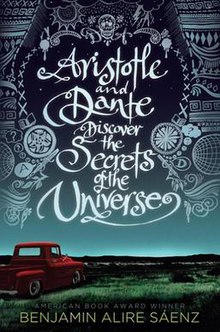
3. Aristotle and Dante Discover the Secrets of the Universe by Benjamin Alire Saenz 
The story of friendship between Ari, who doesn't understand why he's so angry, and Dante, a quirky know-it-all. This is a coming of age story about friendship, family, and identity. Features a subtle, gay relationship between the two characters. 

4. The Hate U Give by Angie Thomas 
Starr balances life between the poor neighborhood she grew up in and the fancy prep school she attends. But when she witnesses her unarmed friend shot by police, her entire world becomes upended. Inspired by the Black Lives Matter movement. 

5. When I Was the Greatest by Jason Reynolds 
Ali has never been interested in the violence and drugs in his neighborhood, but his best friend, Noodles, is a ticking time bomb. Features a black MC and dealing with life in a rough neighborhood. 

6. A Wish After Midnight by Zetta Elliott
Genna lives in a drug-infested world of poverty, but she's planning an escape to a different life. Until the night she makes a wish and is transported back to Civil-era Brooklyn, where she has to fight through a time still rife with slavery. Features a black MC, and her boyfriend from Jamaica takes time to make Genna appreciate her black skin and curly hair, which is really lovely to see. 

7. Time Keeper by Tara Sim
Danny is a mechanic that fixes not only clocks, but time. After moving to a new town, he finds himself falling in love with his assigned apprentice-- who also happens to be the spirit of the tower's clock. Gay romance here. (I'm drooling over this one, not going to lie.) 

8. The Girl from Everywhere by Heidi Helig 
Nix spends her days traveling everywhere on her father's ship-- if they have a map of it, real or imagined, they can go there. But the one map her father wants more than anything-- the one that will lead him to his love and Nix's mom-- could threaten to erase her existence. Plethora of diversity here, from Nix being half-Chinese, to loads of ethnic culture, as well as LGBT characters. 

9. Written in the Stars by Aisha Saeed
When Naila breaks her family's rule by falling in love with a boy, they take her back to Pakistan to reacquaint her with her roots-- as well as to introduce her to the husband they have picked out for her. Featuring a Pakistani main character, this book focuses a lot on arranged and forced marriages and Pakistani culture. 

10. Tiger Moon by Antonia Michaelis
In this fantastical Indian fairy tale, Farhad, master of disguises, sets out on a journey with his talking tiger to rescue a princess from marrying a demon king. Rich with Indian culture and myths, this is a true treasure to read. 

11. Run by Kody Keplinger 
Bo is known for being a delinquent from a delinquent family. Agnes is legally blind and has never stepped farther than the end of her parents' leash. Together, they form an unbreakable friendship. So when Bo asks her to run, Agnes doesn't even question it. Featuring a blind MC and a bisexual MC (woo disability lit!) 

12. Gabi, A Girl In Pieces by Isabel Quintero 
Gabi's final year of high school will be epic, if she can survive her best friend coming out gay, her other best friend's pregnancy, rape, slut-shaming, and reconciling her "Mexicanness" with her "Whiteness." What can I say about this one? Mexican MC, LGBT, feminism, oh my!

13. Sorcerer to the Crown by Zen Cho 
In an alternate history of Britain, the sorcerer royal, Zacharias, ventures to the border of Fairyland to find out why the magic reserves are drying up. On his way he encounters a school for Gentlewitches, where young women have the magic stomped out of them, and meets Prunella, a young woman with a wealth of magical ability. In this book, Zacharias is a freed-slave turned sorcerer and faces a lot of issues with oppression and institutionalized racism. 

14. Not Your Sidekick by CB Lee
For Jess, the best way to spite her superhero parents was to take the internship with the local super villain. As a perk, she gets to work alongside her crush, who may just be hiding secrets of her own. Featuring a MC who is half-Chinese, half-Vietnamese, and doesn't feel accepted with either. Also: BISEXUAL REP!!

15. The Education of Margot Sanchez by Lilliam Rivera
Margot has spent years denying her culture and her family in order to fit in at her prep school. But after stealing her father's credit card, she's forced to work in her family's deli to work off the debt. Featuring a Latina MC. 

16. We Were Here by Matt de la Pena 
After it happened, Miguel was sent to juvi and then to a group home, which he was grateful for. It was better than living at home, where his mother couldn't even look at him. With a plan to head to Mexico, Miguel breaks out and runs for the border, hoping to start over. Featuring a Latino MC, and also deals with a lot of guilt, self-punishment, and hitting rock bottom. It's also nice to get a glimpse of the social services systems. 

17. When The Moon Was Ours by Anna-Marie McLemore 
Sam and Miel are best friends and as odd as they come. Roses grow from Miel's wrists while Sam paints moons in the trees. A group of witches sets their sites on the roses growing from Miel's wrist, believing their scent can make anyone fall in love, and intend to use Sam's secrets to get them. Featuring: Latina and Italian-Pakistani MCs, also, TRANS REP! 

18. The Memory of Light by Francisco X Stork
After a suicide attempt lands her in the hospital, Vicky finds her strength through the other kids she meets in the psych ward. But when a crisis splits them up and Vicky must return back to the situation that made her suicidal, she has to find her own source of strength. This novel is all about mental health representation, and does an excellent job of shining a light down the dark hallway of depression. 

19. The Grace of Kings by Ken Liu
Two rebels become friends during the overthrowing of a tyranny. But after the dust settles, they find themselves leaders of opposite factions with very different ideals of how the world should be run. Features a lot of Asian and Middle Eastern mythologies with a culture built on Ancient China. 

20. Juliet Takes a Breath by Gabby Rivera 
After coming out to her mother, who she is sure will never talk to her again, Juliet leaves the Bronx to spend a summer in Portland interning under her favorite feminist author. Featuring a Puerto Rican lesbian MC, and lots of feminist goodness. 

21. God Help the Child by Toni Morrison
Bride's blue-black skin was the reason her light-skinned mother denied her any love, but it doesn't stop her from finding love, success, and confidence. This novel focuses a lot on racism, but also features a survivor of child sexual abuse and shows how it affects their life. 

22. Under the Udala Trees by Chinelo Okaparanta
Goodreads Amazon 
Inspired by Nigerian folktales and war, Ijeoma, a young Nigerian child, is sent away to escape the civil war where she meets a girl from another ethnic community. The pair quickly fall in love, but must hide their relationship if they hope to survive. Features a lesbian romance, feminism, African characters, as well as looks at religion and homosexuality.

23. The Sun is Also a Star by Nicola Yoon
Goodreads Amazon 
Natasha meets Daniel the day before her family was going to be deported to Jamaica. But one day is all it takes to find love. Features a Jamaican and Asian MC, as well as tackles issues of deportation and displacement.

24. Lies We Tell Ourselves by Robin Talley 
Goodreads Amazon 
In 1959, Sarah is one of the first black students to attend an all-white Jefferson High. Linda is the daughter of the town's most vocal opponents to school integration. Lesbian couples! Mixed race relationship! Plus heavy on racism and segregation.

25. Fat Kid Rules the World by KL Going 
Goodreads Amazon
Troy, an obese teenager, befriends Curt McCrae, local punk star and homeless drug addict. Together, their friendship ends up saving them both in ways they didn't know they needed. This book is definite on the fat acceptance.

26. Shadowshaper by Daniel Jose Older 

Goodreads Amazon
After a zombie crashes her friend's party, Sierra learns she's part of a community of shadowshapers-- those that connect with spirits through paintings, music, and storytelling. Featuring an Afro-Latina MC with Caribbean-based folklore. Also features a very diverse cast including LGBT characters.

27. Simon and the Homo Sapiens Agenda by Becky Albertalli 
Goodreads Amazon 
When an email falls into the wrong hands, Simon finds himself as wingman to the class clown Martin, under threat that his secret will be exposed. Or worse, the pen name of the boy he's been flirting with over email could be compromised. Featuring a gay romance, black love interest.

28. Dumplin' by Julie Murphy 
Goodreads Amazon
Self-proclaimed fat girl Willow has always been comfortable with her size, until the day she starts a relationship with a handsome jock, and she begins to doubt herself. To regain her confidence, she enters the city's beauty pageant to prove she deserves to be up there as much as any other girl. Features a lot of fat positivity.

29. More Happy Than Not by Adam Silvera
Goodreads Amazon 
After his father's suicide, Aaron struggles to find happiness again with the help of his girlfriend and hard-working mom. But when a new guy enters the picture, who makes Aaron feel things he never thought possible, he considers following through with a memory-altering procedure to fix himself. Features suicide, depression, mental health, and deals with homophobia. 

30. Americanah by Chimamanda Ngozi Adichie 
Goodreads Amazon 
Ifemelu and Obinze are teenagers living in Nigeria under a military dictatorship. While Ifemelu managed to immigrate to America, post 9/11 politics prevents Obinze from following. After years, they find themselves reunited in their homeland and their love, and come to face the toughest decisions of their lives. Featuring Nigerian MCs, written by a Nigerian author, and tackles a lot of race issues.

31. Santa Meurte by Cynthia Pelayo
Goodreads Amazon 
Life is quiet for Ariana until her father, a federal investigator from Mexico targeting criminal organizations, arrives on her doorstep. After he's involved in a car accident, Ariana begins seeing a veiled skeletal figure asking for her father. Featuring a Latina MC and plenty of Mexican folklore.

32. Lailah's Lunchbox by Reem Faruqi 
Goodreads Amazon 
The adorable story of Lailah, a 10-year-old Muslim who is very excited to join her family in her first Ramadan. She just needs to figure out how to explain it to her non-Muslim classmates. Such a cute story featuring a Muslim MC and discusses Islam and Ramadan. This is a picture book, but worth the read.

33. The Story of Maha by Sumayya Lee
Goodreads Amazon 
After her parents are killed during a political rally, Maha goes to live with her Indian grandparents. She learns how to wind around the strict boundaries of her Muslim community as she develops into a rebellious teenager. Book is set in a South African Indian Muslim community, and features an Indian MC.

34. Alif the Unseen by G Willow Wilson 
Goodreads Amazon 
In the Middle East, a young Arab-Indian hacker by the alias of Alif shields his clients from surveillance groups and tries to stay out of trouble. But when the woman he loves begins courting the head of the state's security, Alif's computer is compromised and he flees underground for his own, and his client's, safety. A POC MC and features Islam in a positive light, also showcasing some Islamic myths and folklore.

35. The Moor's Account by Laila Lalami
Goodreads Amazon 
An alternative history account of the Narvaez expedition which would leave only four survivors, one of which was Mustafa al-Zamori, a Moroccan slave and the first black explorer of America. POC MC and written by a Moroccan author.


36. The Unintentional Time Traveler by Everett Maroon
Goodreads Amazon 
Jack agrees to try an experimental clinical trial to cure his epilepsy, but instead finds himself in the body of a girl--Jacqueline-- from 1920s era. Disability rep, as well as tackles identity and how much our gender affects who we are.

37. Homegoing by Yaa Gyasi 
Goodreads Amazon 
Effia and Esi, sisters born in separate villages, end up leading very different lives. While Effia is married to a slaver and lives in luxury, Esi works as a slave in the palace dungeon beneath her, before being shipped off as a slave to America. This novel follows the sisters' descendants 300 years and illustrates how slavery and colonialism shaped America and Ghana. The author was born in Ghana as well.

38. Does My Head Look Big in This by Randa Abdel-Fattah
Goodreads Amazon 
Everyone has a reaction when Amal decides to wear the hijab full-time. Dodging prejudice and fending questions from her friends and teachers, she still intends to attract the cutest boy at school. Islam rep! Also, love how it tackles stereotypes and misconceptions.
39. Girl Mans Up by M-e Girard 

Goodreads Amazon 
All Pen wants is to be the kind of girl she wants to be, but for some reason everyone thinks the way she looks and acts means she wants to be a boy. Portuguese MC, lesbian MC, and tackles a lot about gender identity. I can't wait to read this one!

40. If I Was Your Girl by Meredith Russo 
Goodreads Amazon 
Amanda transferred schools to get a new life, but when she begins to fall for Grant, she fears how he'll react when he learns of her past... and that her name used to be Andrew. Trans rep!! Also, #ownvoices

41. Songs that Sound Like Blood by Jared Thomas 
Goodreads
Roxy heads to the big city for a new start and to study music. Singing for her dinner is soul crushing, but her newfound crush on Ana might make it worth it. Indigenous and Maori MCs, as well as a lesbian romance.

42. On The Edge of Gone by Corrine Duyvis 
Goodreads Amazon 
Denise, her mother, and her sister are supposed to head for a shelter to wait out an incoming comet blast. On the way they encounter a generation ship leaving to colonize new worlds, but all passengers must have a skill to contribute, and Denise fears her autism may hold them back. Very diverse cast with half-black autistic MC, lesbian, Muslim, bisexual trans, and Jewish characters, to name a few.

43. Sister Mine by Nalo Hopkinson 
Goodreads Amazon 
Conjoined twins Abby and Makeda were separated by surgery that left Abby with a limp and Makeda cut off from the magic her sister possesses. Makeda moves on to start a new life of her own, but she must reconcile with her sister after her father disappears in order to save him. Urban fantasy with Caribbean mythology written by a Caribbean author.

44. All We Have Left by Wendy Mills
Goodreads Amazon 
Jesse finds herself caught up in the wrong crowd after her brother passes away in the September 11 attacks, and one momentary hate-filled decision turns her life upside down. Alia is a proud Muslim who finds herself in the Two Towers when the plane hits. Trapped inside the burning building, Alia meets a boy who changes her life. An authentic Muslim character, and presents the hatred and prejudice that Muslims have faced since 9/11.
45. Throne of the Crescent Moon by Saladin Ahmed 
Goodreads Amazon 
In the midst of a brewing rebellion, supernatural murders cause unrest through the Crescent Moon Kingdoms. Doctor Adoulla Makhslood, “the last real ghul hunter in the great city of Dhamsawaat,” his young assistant, and a woman with the power of the lion-shape set out to learn the truth behind the killings.  Set in the Middle East during the Islamic Golden Age.

46. George by Alex Gino  
Goodreads Amazon 
When people look at George, they see a boy, but she knows she's a girl. She just has to find a way to show everyone else that, too. Middle grade book featuring a trans MC! A must have!

47. Labyrinth Lost by Zoraida Cordova 
Goodreads Amazon 
Alex is a bruja, one of the most powerful witches in her generation, and hates it. While attempting a spell to rid herself of her powers, it backfires and her family vanishes, and she must travel to Los Lagos, an in-between land, to save them. Latinx culture and folklore, cast of POC characters, and an #ownvoices book featuring a writer born in Ecuador.

48. Radio Silence by Alice Oseman 
Goodreads Amazon 
Frances has always been a study machine with one goal-- elite university. But when she meets Aled, the shy boy behind her favourite podcast, he reveals a side to Frances that she thought she'd locked away. Bisexual and biracial MC!

49. Behold the Dreamers by Imbolo Mbue
Goodreads Amazon 
Jende has come to America to provide a better life for his family, and can't believe his luck ending up as a chauffeur for the Lehman Brothers. But the cracks in the American dream begin to show when the company goes under. Featuring the Jonga family, who are West African, and features the immigrant struggle as they struggle to become citizens.

50. It Ain't So Awful, Falafel by Firoozeh Dumas
Goodreads Amazon 
Zomorod is the new kid on the block, for the fourth time. With a new school, she plans to change her name to Cindy to fit in. But it's the mid-70s, and Iran is making headlines with protests, revolution, and hostage takings, and the anti-Iran sentiments are making it difficult to feel at home in her own country. Featuring an Iranian MC and examines prejudice through a middle grade lens.