Showing posts with label books. Show all posts

Saturday, December 30, 2017

Too Sensitive for Sensitivity Readers

Quote from Kira Hawke


'Twas the day before Christmas, and all the writers on twitter,
Were snuggled in their jammies, filled with wine and baked fritters.
When a post appeared online that arose such a clatter,
and had writers yelling, "Sensitivity readers matter!"

The New York Times is known for ruffling feathers in the YA community and kid lit with tone-deaf articles based in sensationalism rather than the full picture. Just in time of the holidays, they've gifted us with a new piece called, In An Era of Online Outrage, Do Sensitivity Readers Result in Better Books or Censorship? in which NYT picked and chose their words in a way we might call censorship to make it seem like the white authors who've used sensitivity readers were victims of an oppressive scheme to destroy art. I hate to give articles like this any extra hits but I think it's important to read the other side of the story (hah). Plus, I like knowing the opposing viewpoint, so I figured you would to.

So What Are Sensitivity Readers Anyway?

When an author finishes writing a book, it's not actually finished. Not if that writer has plans to publish it in any way. As said in many acknowledgement sections in books, "writing is a solitary art, but publishing is a group project." When someone writes a story, it is a wholly personal thing, a reflection of what's in their heart, and a testament to their experience. But once that person shares their story with others, it's no longer theirs. Readers are affected by it, and they ascribe their own interpretations and meaning that can change the message actually being conveyed, which makes the whole writing-publishing process a bit trickier. At the end of the day, you are trying to convey a message or story, and you want to do that as clearly as possible without inadvertently having your narrative say something you didn't mean to, such as reinforcing racism. This is where sensitivity readers come into play.

Sensitivity readers are a part of a book's editing stage, and are similar to beta readers. What makes them different is they are specifically looking for how a minority group is portrayed on the page, looking for accuracy, and to get rid of things that might be offensive. When writers write outside their cultural experience, they can sometimes get it wrong. No matter how much research one does-- and writers often have to research non-stop while writing-- when writing about a different way of life, tiny inaccuracies can pull readers out of books, can cause readers to put it down, or just plain offend someone. (Think of the marine biologist getting so worked up over Jaws inaccuracies, then imagine POC and minorities feel that except x100000). Sensitivity readers are people with the same experience or background as the characters, who can (hopefully) pick out the things that would be culturally insensitive or inaccurate. That way we could avoid the whole cycle of people getting mad on the internet and poorly worded apologies and conveniently trying to forget that book is a thing.

Notes from sensitivity readers hold no more power than a beta reader or your mom's opinion ("Oh sweetie, your characters shouldn't use so many naughty words") and though major publishing houses are starting to hire them, most sensitivity readers are unpaid, unofficial, and just trying to help out their fellow writers. Though some people's reactions have been harsh, sensitivity reads are a voluntary thing for writers, and many do seek them out. Because at the end of the day, this is a craft issue. Characterization is a major component of good writing and this is just another side to writing characters. For decades, publishing has, and most media as well, assumed the only experience out there is white, able-bodied, straight, with westernized views and a Christian background. That any other experience is considered 'niche,' 'specialized,' and in a 'significant minority,' and most people have the same experience in life. Slowly, we're realizing the opposite is true. Each of our experience is so varied and our culture hugely affects how systems and people react to us, that we can't paint all people in one brush. That even the experience of walking down the street is hugely different if you're white, compared to black or Muslim. Now that we're realizing that, we are striving to make each character's experience wholly accurate, and sensitivity readers, or input from people in the same shoes as your character, is vastly helping writers improve their craft. We're taking characterization to a new, better level. We're bringing our literature to eye level with reality, so we can more accurately express what it's like to be alive in this world.

The NYT article really said it best in the article with: "Like fact checkers or copy editors, sensitivity readers can provide a quality-control backstop to avoid embarrassing mistakes, but they specialize in the more fraught and subjective realm of guarding against potentially offensive portrayals of minority groups, in everything from picture books to science fiction and fantasy novels."

Oh yeah, fact checkers handling some seriously subjective subject matter. Which is probably why things are getting a little explosive.

The "Outrage"

I hate how the word "outrage" has been used lately. It's thrown out as a demeaning phrase used to devalue legitimate concerns, often raised by people of colour. Adding "online" seems to knock it down another peg, insinuating that because it's done online it has less merit somehow. It's not people marching in the streets, so it must not matter. Which is utterly ridiculous.

Minorities and people of colour have for decades felt this level of outrage for misrepresentation in
Black people protesting Birth of a Nation in 1915
media. Sometimes, before the days of the internet, they took to the streets to express their disgust at the level of harmful misrepresentation. Now that we have the internet, there is a public platform for minorities and POC to voice their concerns-- allowing publishers to easily see it and respond. Which makes it so much harder on the part of publishers, producers, creators, everyone, not to take responsibility for these things. If you know better, you do better. Or isn't that what we expect of each other? Publishing is beginning to listen to these concerns and is responding with sensitivity readers, especially children's publishers. As they publish content for the most vulnerable and impressionable, they need to ensure their representation is accurate. More than just making POC kids feel bad about themselves, books with stereotyped characters and cultures can indoctrinate white kids (or those unfamiliar with that culture) with inaccurate and harmful information, which perpetuates the racist and white supremacist systems in our society.

For most writers, this all seems pretty simple. Writing about a major medical incident? Get a doctor to read over your manuscript. Writing about Victorian London? Consult a historian. Writing about Navajos living on the reserve? Maybe you should talk to a Navajo living on the reserve.

One of the examples from the article really hit home the importance of sensitivity readers, especially for me, as someone who works with kids in foster care and who are in adoption processes. Kate Milford received feedback from sensitivity readers for her middle grade novel Ghosts of Greenglass House, who, like her character, were also adopted internationally by white American families. "In one small but meaningful change that a sensitivity reader suggested, she stopped referring to Milo’s mother and father as his adoptive parents, and simply called them his parents." This, to an adopted child, is a huge change they would've definitely noticed. They are often highly sensitive to the concept of "real" families and belonging. So reading this book, it may be a trigger for them to see a distinction between "my adoptive mom" and just "my mom" normalized in a published book. That word sticking out there reaffirms that they're outside the norm which can have damaging effects to their self-esteem over the long run.

So where's the problem? Sensitivity reading seems to do a lot of good. But the article, as well as some writers, seem to suggest this is all censorship.

Censorship? 

Cries of censorship echo all across the writing world, flying hand-in-hand with sensitivity readers. Yet I have trouble seeing the issue, especially when the process of sensitivity reading is the same as beta reading but with a different focus, and we didn't see cries of censorship there. Some writers (primarily white) are feeling afraid in this climate to "write outside their lane" as they fear getting it wrong and the inevitable backlash. Some are even claiming that they don't feel they can write about people of other backgrounds anymore, which doesn't make any sense to me. The whole point of sensitivity readers is to allow writers (primarily white) to write outside their own lane and do it successfully. The NYT article claims this is leading us to more homogeneous literature, when really the scrutiny towards accurate representation will allow us to write wider and write better. Instead of relying on internalized stereotypes and assumptions, we can get the inside scoop to allow writers to improve their craft and connect better with readers. Some critics are claiming that sensitivity readers are only one voice of a minority, and one black person can't speak to how all black people will feel. And while I agree wholeheartedly, it is still better to get the opinion of a few black people rather than none, is it not?

Criticism hurts at any point. It sucks to be told that the writing you've poured your heart into is bad, but that's all part of the process. If you want to improve, you have to take a hard look at your faults. If you want to publish, you have to be aware of your impact.
Shades of Magic series

Real censorship is awful, but criticism isn't censorship. Censorship is what happened to author VE Schwab. Her fantasy series, Shades of Magic, contains a gay relationship which was redacted from the Russian publication of the series without her permission. The contract stipulated that the plotline would remain, but the Russian publisher breached the contract to keep in line with the Russian "gay propaganda" law. Censorship comes without your knowledge or your consent. Censorship is the suppression or elimination of information. Sensitivity reading is the improvement of your content so you can tell the story you want. Sounds like the opposite of censorship to me.

People who take up arms against sensitivity reading don't have a lot of answers to the concerns POC raise about the lack of diversity in publishing. Nor do they really care. The way publishing Has Always Been benefits and suits them, and it can be difficult to engage people who can't see problems outside their own experience. So they claim that those who "don't like what's being published" should go off and "start their own" publishing houses/imprints/magazines/etc/etc. Aside from how difficult that is for people who don't come from rich backgrounds, POC have been starting their own houses/imprints/magazines/etc/etc for decades now. They've put in the work, building everything from the ground up just to publish works with accurate representation, and are still outpaced by big publishing houses who continue to publish books with harmful representation. Segregating publishing does nothing to address the problematic books being published all across the board.

The Core of It

Why is all of this such a big deal? Why should we even have to bother with sensitivity readers? At the end of the day, the need for sensitivity readers reflects the lack of diversity in the publishing industry. Where are the black editors? The Muslim agents? The Asian-American immigrant book reviewers for major publications? The more diversity we have within the industry itself, the less we'll have to reach out to sensitivity readers working unappreciated on the fringes. We're already asking for these people's input, and it's about time we put them in places where they can use their input to influence publishing. Not only will that open the door to more unique voices, but it will help to build sensitivity reading into the foundations of publishing itself, which is something we're long overdue for.

As it stands now, most of the gatekeepers within the publishing industry are of that white, straight, able-bodied, westernized, Christian background, and so don't have the experience to culturally vet so widely. That is also why we have more of a focus on white experiences. This is also why it's so much easier for white people to publish books about POC than for POC to publish books about POC. The expectation is (because the industry is mostly white) that the audience will also be mostly white. So even when books on POC are published, it needs to be through the viewpoint of a white person to make it more appealing to the "general" audience. And once that "Book about POC" slot is filled on a house's list (and because the assumption is the audience majority is white, there usually is only one or two slots a year for books about POC), most other submissions are shit outta luck until next year. So even when publishing about POC, white people still have the advantage to get those coveted spots of POC books to be published that year.

At the end of the day, sensitivity is nothing to be afraid of. If you want to write about black people, don't you want to get it right? If you're publishing anything at all, don't you want to make sure you put your best work forward?

And if your major concern is that there's too much focus on diversity, and we need less of it? Well then you can go fuck right off. Because we all deserve a voice. And it's about time we all learned to share the spotlight.

Friday, May 5, 2017

Should Books Contain Trigger/Content Warnings?


Riddle me this, book lovers: should books contain trigger and/or content warnings?

This question has made its rounds in literary circles many times before. A few years ago, many editorials came out discussing the idea after university students began asking for trigger warnings on course material. You know, mostly to have a head's up in case a disturbing scene is just around the corner. I was amazed at the amount of anger such a consideration sparked. It was as if these students had asked for regular book burnings to take place on campus. Many of the objections boiled down to some simple themes:

1) You are ruining the Sanctity of Literature if you spoil plot points through trigger warnings.

2) These special snowflakes need to buck up and deal with it. Life doesn't come with trigger warnings.

3) Being able to "opt out" of uncomfortable situations or scenarios is unhealthy.

4) Trigger warnings will lead to banning books. 

So let's really get into this. Because I want to know what you think about all this.

For the purpose of this post, when I talk about trigger warnings, usually I'm referring to graphic depictions that could trigger someone who has a history of trauma. Things like suicide, war,
racism, rape, child murder, domestic violence, etc. When I talk about content warnings, it's usually in a broader sense and covers things that may not be triggering, but many still would like to be aware of, such as group or kink sex, swearing, drug use, etc.

Frankly, content warnings are something that should have been added to books years ago. Every other media has a rating system to let people know what kind of content they're about to walk into. From movies, to television, video games, comics-- all have their own system to let you know what kind of content it holds, from a G rating all the way through to NC-17. Even TV shows have general disclaimers to make audiences aware of swearing, nudity, and violence. These rating systems don't spoil content-- it allows us to be informed consumers.

Yet books are exempt from this? Why?

Probably because books pre-date any sort of rating system. We were dragging around dusty tomes before we decided what was offensive and what wasn't. But does that mean they should stay exempt? It's easy to excuse a novel from needing a rating system simply because you need to immerse yourself to actually get the full impact. A person strolling by a grotesque movie poster only has to glance at it to feel the triggering effects. A book, however, can look innocuous enough until you realize what those words are building towards. Of any type of media, books are most deserving of content warnings and a rating system because you often have no inkling of it coming before you're immersed in a very triggering scene. Movie trailers give you a much stronger picture than vague back covers, and yet there are still ratings and systems in place to make sure you go in informed.

Also, to add to the argument against "content warnings are spoilers" lets remember that according to the University of California, spoilers don't spoil. In fact, they often make the experience more enjoyable.

But what about real life? Nobody hands you a content warning when you walk out the door. And could it be harmful to self-censor yourself from upsetting content? Unfortunately, when we talk about people who have been "triggered" by content like this, it's not because they've lived sheltered lives. It's because that person has a mental illness that is being aggravated by this trigger. To be triggered often means panic attacks, extreme anxiety, hallucinations or flashbacks, and are absolutely debilitating. People who suffer through experiences like this, often stemming from Post-Traumatic Stress Disorder, cannot control their triggers and are often hit by them when they least expect it. A traumatized individual could be triggered and not even know what by, which can create a life paralyzed by fear of the next trigger. Because of that, people will often avoid things they KNOW will trigger them, as they will inevitably be triggered by something they can't control anyway. Might as well minimize the damage, right?

Imagine PTSD as an allergic reaction. Every time you come in contact with coconut you break out in hives, so the logical thing would be to avoid coconut, would it not? You would want ingredient lists on anything you eat so you can know if it has coconut. If a teacher handed you raw coconut water and said you had to drink it for a grade, would you? Or would you protest, because this could severely hurt you, if not kill you?

Do people avoid certain topics and content? Sure, because everyone has preferences. At the end of the day, why should people be forced to read something they don't want to? There is no "book everyone must read" no matter what people say. Most importantly, due to life experiences, everyone will take away something different from a story. You may have found something beautiful in a book about a soldiers' journey through war, whereas an ex-military personnel may walk away feeling disgusted and horrified. It makes me think back to how media personnel vs military personnel responded to Trump's speech which honoured a fallen Navy SEAL, William "Ryan" Owens.

Media Reaction (left) and the Veteran's Reaction (right). 


Finally, will trigger warnings lead to banning books? I suppose I can see where the thought comes from, though to me it makes about as much sense as saying that if we offer people free healthcare they'll start running into traffic. In fact, everything I've seen when trigger warnings are put in place leads me to believe the opposite. Content warnings get people more excited about what's available to read. It's used as a tool to track down what you want through an over saturated market. To me, these 'warnings' are no different than tagging a book as sci-fi, fantasy, romance-- it helps to narrow down where in the world of literature this piece fits.

Before I came into the publishing world, I wrote fanfiction and participated in a lot of communities. Content and trigger warnings were STANDARD. It was EXPECTED. Often there were warnings on a chapter by chapter basis for longer pieces, so you knew exactly when the troubling content was coming. And how did people feel about it? Great! In fact, those content and trigger warnings became like lifeblood. Often, instead of turning people away from a story, it would engage them to click on and read. Back in those days, when I wanted to read a sweet romantic story featuring two gay men, I knew to look for tags such as "fluff" and usually the coded tag for that relationship (dating myself here, but in Saiyuki fandom, numbers were used to represent characters 3, 5, 8, and 9, so looking for a certain relationship meant looking for those numbers 3/9, 5/8, etc.) It worked amazingly. Going back to spoilers don't spoil piece, if people knew a story was especially dark, or contained graphic sex, or torture, tagging it as such let allowed people who were looking for those stories to find them easier.

When I transitioned out of the fanfiction world and started reading YA, I was thrown off by how little you are able to find out about a book. I wanted to find gay characters, especially as a teenager, and while in fanfiction such things would be easily tagged as such, in the book buying world I was flying blind. Unless the whole book focused around an Issue, you had to read the thing to find out if it had the content you were looking for. And then, Issue Books are often so formulaic and focuses so much on the problem that it can be hard to just enjoy the stories. Not to mention (especially for marginalized people) it's unfair that the only representation offered painted those people as People with Problems and forgot that they're just human.

Even today, when you look at how readers refer books to one another, you can see readers are concerned about content, not just when it comes to picking what not to read, but what to read as well. So many people on Twitter shoot out questions like, "Any recs for books with lesbian MCs/Disability rep/losing virginity/etc?" Yet if books had a content warning or rating page, it might be easier for people (especially teens) to track down the content they actually want to read about.

Content warnings don't have to be scary.
A content/trigger warning page doesn't have to be the end of the world. It can work like in the picture above, or a page like the acknowledgements listing out any troubling material, which can be easily skipped if you're not concerned and prefer to fly in blind. And if fanfiction is any indication, content warnings could serve to drum up excitement about books and reading. Would trigger warnings lead to censorship? Doubt it. If so, then we wouldn't have television, movies, video games... Besides, trying to slip in potentially distressing scenes in the name of Literary Sanctity, or to "teach readers" some moral or another, or because you know it won't be received well (slipping gay characters into Christian fiction, for ex)-- just comes across as, what we call in bird culture, a Dick Move.

I'm not asking for censorship. I just want the chance to be informed.

Friday, December 2, 2016

Books That Fight Hate


The world can be a scary place sometimes.

No matter how loud hate shrieks, love is louder. No matter how much evil there is in the world, there is ten times the amount of goodness behind that.

Since the American election, there has been a lot of fear and anxiety. As a Canadian, the whole situation has left me feeling heartbroken and helpless. I want to march along the streets and #resist, but I know this isn't my battle to fight. Supporting those who are hurting is my duty as a human, however, and something I will gladly do. On Twitter after the election, Justina Ireland, author of Promise of Shadows and Vengeance Bound, started a hashtag on Twitter called #BooksFightHate to promote diverse books written by marginalized authors.

People have since jumped on board to tweet out their favorite books that not only promote diversity, but that fight prejudice. I absolutely love the idea, and while there are a lot of lists out there promoting #BooksFightHate, I wanted to take it one step forward to include a short bio with each title to help people find the books they really connect with.

Most of the recs below are YA, MG, and some adult in the fantasy/sci-fi range. As publishing is constantly moving towards diversity, there will be more titles to add to this list. So if you see something I've missed, make sure to comment below and I'll add it. There has never been a more important time to support and spread the love for marginalized authors.


Books That Fight Hate 

1. Something in Between by Melissa de la Cruz
Jasmine is an overachiever with her whole future ahead of her- until she discovers her family's visas expired years ago. Now not only are her college prospects in jeopardy, but her family could be deported if they're discovered. Featuring a Filipino MC and deals with immigrant struggles. 

2. The Absolutely True Story of a Part-Time Indian by Sherman Alexie 
Junior, a budding cartoonist, decides to take his destiny into his own hands as he leaves the reservation to attend school in an all-white community. Featuring a Native American MC, this book highlights the harsh reality for a lot of Natives living on reservations in North America, from Fetal Alcohol Spectrum and racism. 

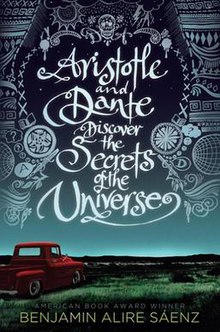
3. Aristotle and Dante Discover the Secrets of the Universe by Benjamin Alire Saenz 
The story of friendship between Ari, who doesn't understand why he's so angry, and Dante, a quirky know-it-all. This is a coming of age story about friendship, family, and identity. Features a subtle, gay relationship between the two characters. 

4. The Hate U Give by Angie Thomas 
Starr balances life between the poor neighborhood she grew up in and the fancy prep school she attends. But when she witnesses her unarmed friend shot by police, her entire world becomes upended. Inspired by the Black Lives Matter movement. 

5. When I Was the Greatest by Jason Reynolds 
Ali has never been interested in the violence and drugs in his neighborhood, but his best friend, Noodles, is a ticking time bomb. Features a black MC and dealing with life in a rough neighborhood. 

6. A Wish After Midnight by Zetta Elliott
Genna lives in a drug-infested world of poverty, but she's planning an escape to a different life. Until the night she makes a wish and is transported back to Civil-era Brooklyn, where she has to fight through a time still rife with slavery. Features a black MC, and her boyfriend from Jamaica takes time to make Genna appreciate her black skin and curly hair, which is really lovely to see. 

7. Time Keeper by Tara Sim
Danny is a mechanic that fixes not only clocks, but time. After moving to a new town, he finds himself falling in love with his assigned apprentice-- who also happens to be the spirit of the tower's clock. Gay romance here. (I'm drooling over this one, not going to lie.) 

8. The Girl from Everywhere by Heidi Helig 
Nix spends her days traveling everywhere on her father's ship-- if they have a map of it, real or imagined, they can go there. But the one map her father wants more than anything-- the one that will lead him to his love and Nix's mom-- could threaten to erase her existence. Plethora of diversity here, from Nix being half-Chinese, to loads of ethnic culture, as well as LGBT characters. 

9. Written in the Stars by Aisha Saeed
When Naila breaks her family's rule by falling in love with a boy, they take her back to Pakistan to reacquaint her with her roots-- as well as to introduce her to the husband they have picked out for her. Featuring a Pakistani main character, this book focuses a lot on arranged and forced marriages and Pakistani culture. 

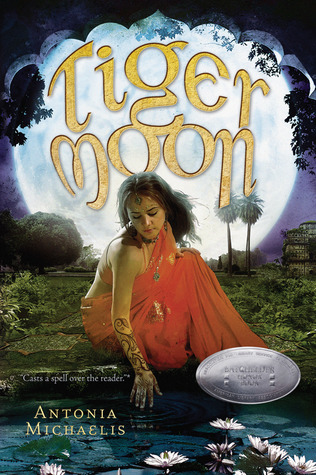
10. Tiger Moon by Antonia Michaelis
In this fantastical Indian fairy tale, Farhad, master of disguises, sets out on a journey with his talking tiger to rescue a princess from marrying a demon king. Rich with Indian culture and myths, this is a true treasure to read. 

11. Run by Kody Keplinger 
Bo is known for being a delinquent from a delinquent family. Agnes is legally blind and has never stepped farther than the end of her parents' leash. Together, they form an unbreakable friendship. So when Bo asks her to run, Agnes doesn't even question it. Featuring a blind MC and a bisexual MC (woo disability lit!) 

12. Gabi, A Girl In Pieces by Isabel Quintero 
Gabi's final year of high school will be epic, if she can survive her best friend coming out gay, her other best friend's pregnancy, rape, slut-shaming, and reconciling her "Mexicanness" with her "Whiteness." What can I say about this one? Mexican MC, LGBT, feminism, oh my!

13. Sorcerer to the Crown by Zen Cho 
In an alternate history of Britain, the sorcerer royal, Zacharias, ventures to the border of Fairyland to find out why the magic reserves are drying up. On his way he encounters a school for Gentlewitches, where young women have the magic stomped out of them, and meets Prunella, a young woman with a wealth of magical ability. In this book, Zacharias is a freed-slave turned sorcerer and faces a lot of issues with oppression and institutionalized racism. 

14. Not Your Sidekick by CB Lee
For Jess, the best way to spite her superhero parents was to take the internship with the local super villain. As a perk, she gets to work alongside her crush, who may just be hiding secrets of her own. Featuring a MC who is half-Chinese, half-Vietnamese, and doesn't feel accepted with either. Also: BISEXUAL REP!!

15. The Education of Margot Sanchez by Lilliam Rivera
Margot has spent years denying her culture and her family in order to fit in at her prep school. But after stealing her father's credit card, she's forced to work in her family's deli to work off the debt. Featuring a Latina MC. 

16. We Were Here by Matt de la Pena 
After it happened, Miguel was sent to juvi and then to a group home, which he was grateful for. It was better than living at home, where his mother couldn't even look at him. With a plan to head to Mexico, Miguel breaks out and runs for the border, hoping to start over. Featuring a Latino MC, and also deals with a lot of guilt, self-punishment, and hitting rock bottom. It's also nice to get a glimpse of the social services systems. 

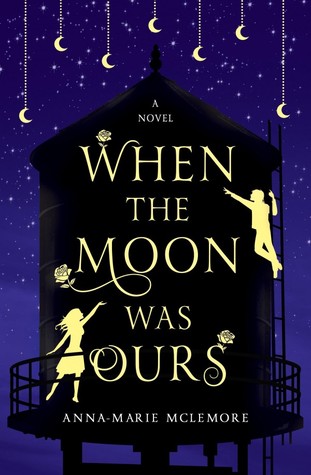
17. When The Moon Was Ours by Anna-Marie McLemore 
Sam and Miel are best friends and as odd as they come. Roses grow from Miel's wrists while Sam paints moons in the trees. A group of witches sets their sites on the roses growing from Miel's wrist, believing their scent can make anyone fall in love, and intend to use Sam's secrets to get them. Featuring: Latina and Italian-Pakistani MCs, also, TRANS REP! 

18. The Memory of Light by Francisco X Stork
After a suicide attempt lands her in the hospital, Vicky finds her strength through the other kids she meets in the psych ward. But when a crisis splits them up and Vicky must return back to the situation that made her suicidal, she has to find her own source of strength. This novel is all about mental health representation, and does an excellent job of shining a light down the dark hallway of depression. 

19. The Grace of Kings by Ken Liu
Two rebels become friends during the overthrowing of a tyranny. But after the dust settles, they find themselves leaders of opposite factions with very different ideals of how the world should be run. Features a lot of Asian and Middle Eastern mythologies with a culture built on Ancient China. 

20. Juliet Takes a Breath by Gabby Rivera 
After coming out to her mother, who she is sure will never talk to her again, Juliet leaves the Bronx to spend a summer in Portland interning under her favorite feminist author. Featuring a Puerto Rican lesbian MC, and lots of feminist goodness. 

21. God Help the Child by Toni Morrison
Bride's blue-black skin was the reason her light-skinned mother denied her any love, but it doesn't stop her from finding love, success, and confidence. This novel focuses a lot on racism, but also features a survivor of child sexual abuse and shows how it affects their life. 

22. Under the Udala Trees by Chinelo Okaparanta
Goodreads Amazon 
Inspired by Nigerian folktales and war, Ijeoma, a young Nigerian child, is sent away to escape the civil war where she meets a girl from another ethnic community. The pair quickly fall in love, but must hide their relationship if they hope to survive. Features a lesbian romance, feminism, African characters, as well as looks at religion and homosexuality.

23. The Sun is Also a Star by Nicola Yoon
Goodreads Amazon 
Natasha meets Daniel the day before her family was going to be deported to Jamaica. But one day is all it takes to find love. Features a Jamaican and Asian MC, as well as tackles issues of deportation and displacement.

24. Lies We Tell Ourselves by Robin Talley 
Goodreads Amazon 
In 1959, Sarah is one of the first black students to attend an all-white Jefferson High. Linda is the daughter of the town's most vocal opponents to school integration. Lesbian couples! Mixed race relationship! Plus heavy on racism and segregation.

25. Fat Kid Rules the World by KL Going 
Goodreads Amazon
Troy, an obese teenager, befriends Curt McCrae, local punk star and homeless drug addict. Together, their friendship ends up saving them both in ways they didn't know they needed. This book is definite on the fat acceptance.

26. Shadowshaper by Daniel Jose Older 

Goodreads Amazon
After a zombie crashes her friend's party, Sierra learns she's part of a community of shadowshapers-- those that connect with spirits through paintings, music, and storytelling. Featuring an Afro-Latina MC with Caribbean-based folklore. Also features a very diverse cast including LGBT characters.

27. Simon and the Homo Sapiens Agenda by Becky Albertalli 
Goodreads Amazon 
When an email falls into the wrong hands, Simon finds himself as wingman to the class clown Martin, under threat that his secret will be exposed. Or worse, the pen name of the boy he's been flirting with over email could be compromised. Featuring a gay romance, black love interest.

28. Dumplin' by Julie Murphy 
Goodreads Amazon
Self-proclaimed fat girl Willow has always been comfortable with her size, until the day she starts a relationship with a handsome jock, and she begins to doubt herself. To regain her confidence, she enters the city's beauty pageant to prove she deserves to be up there as much as any other girl. Features a lot of fat positivity.

29. More Happy Than Not by Adam Silvera
Goodreads Amazon 
After his father's suicide, Aaron struggles to find happiness again with the help of his girlfriend and hard-working mom. But when a new guy enters the picture, who makes Aaron feel things he never thought possible, he considers following through with a memory-altering procedure to fix himself. Features suicide, depression, mental health, and deals with homophobia. 

30. Americanah by Chimamanda Ngozi Adichie 
Goodreads Amazon 
Ifemelu and Obinze are teenagers living in Nigeria under a military dictatorship. While Ifemelu managed to immigrate to America, post 9/11 politics prevents Obinze from following. After years, they find themselves reunited in their homeland and their love, and come to face the toughest decisions of their lives. Featuring Nigerian MCs, written by a Nigerian author, and tackles a lot of race issues.

31. Santa Meurte by Cynthia Pelayo
Goodreads Amazon 
Life is quiet for Ariana until her father, a federal investigator from Mexico targeting criminal organizations, arrives on her doorstep. After he's involved in a car accident, Ariana begins seeing a veiled skeletal figure asking for her father. Featuring a Latina MC and plenty of Mexican folklore.

32. Lailah's Lunchbox by Reem Faruqi 
Goodreads Amazon 
The adorable story of Lailah, a 10-year-old Muslim who is very excited to join her family in her first Ramadan. She just needs to figure out how to explain it to her non-Muslim classmates. Such a cute story featuring a Muslim MC and discusses Islam and Ramadan. This is a picture book, but worth the read.

33. The Story of Maha by Sumayya Lee
Goodreads Amazon 
After her parents are killed during a political rally, Maha goes to live with her Indian grandparents. She learns how to wind around the strict boundaries of her Muslim community as she develops into a rebellious teenager. Book is set in a South African Indian Muslim community, and features an Indian MC.

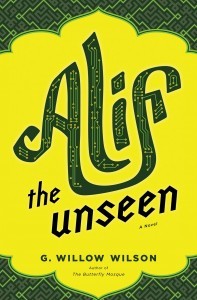
34. Alif the Unseen by G Willow Wilson 
Goodreads Amazon 
In the Middle East, a young Arab-Indian hacker by the alias of Alif shields his clients from surveillance groups and tries to stay out of trouble. But when the woman he loves begins courting the head of the state's security, Alif's computer is compromised and he flees underground for his own, and his client's, safety. A POC MC and features Islam in a positive light, also showcasing some Islamic myths and folklore.

35. The Moor's Account by Laila Lalami
Goodreads Amazon 
An alternative history account of the Narvaez expedition which would leave only four survivors, one of which was Mustafa al-Zamori, a Moroccan slave and the first black explorer of America. POC MC and written by a Moroccan author.


36. The Unintentional Time Traveler by Everett Maroon
Goodreads Amazon 
Jack agrees to try an experimental clinical trial to cure his epilepsy, but instead finds himself in the body of a girl--Jacqueline-- from 1920s era. Disability rep, as well as tackles identity and how much our gender affects who we are.

37. Homegoing by Yaa Gyasi 
Goodreads Amazon 
Effia and Esi, sisters born in separate villages, end up leading very different lives. While Effia is married to a slaver and lives in luxury, Esi works as a slave in the palace dungeon beneath her, before being shipped off as a slave to America. This novel follows the sisters' descendants 300 years and illustrates how slavery and colonialism shaped America and Ghana. The author was born in Ghana as well.

38. Does My Head Look Big in This by Randa Abdel-Fattah
Goodreads Amazon 
Everyone has a reaction when Amal decides to wear the hijab full-time. Dodging prejudice and fending questions from her friends and teachers, she still intends to attract the cutest boy at school. Islam rep! Also, love how it tackles stereotypes and misconceptions.
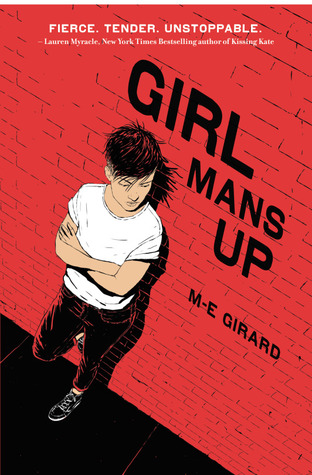
39. Girl Mans Up by M-e Girard 

Goodreads Amazon 
All Pen wants is to be the kind of girl she wants to be, but for some reason everyone thinks the way she looks and acts means she wants to be a boy. Portuguese MC, lesbian MC, and tackles a lot about gender identity. I can't wait to read this one!

40. If I Was Your Girl by Meredith Russo 
Goodreads Amazon 
Amanda transferred schools to get a new life, but when she begins to fall for Grant, she fears how he'll react when he learns of her past... and that her name used to be Andrew. Trans rep!! Also, #ownvoices

41. Songs that Sound Like Blood by Jared Thomas 
Goodreads
Roxy heads to the big city for a new start and to study music. Singing for her dinner is soul crushing, but her newfound crush on Ana might make it worth it. Indigenous and Maori MCs, as well as a lesbian romance.

42. On The Edge of Gone by Corrine Duyvis 
Goodreads Amazon 
Denise, her mother, and her sister are supposed to head for a shelter to wait out an incoming comet blast. On the way they encounter a generation ship leaving to colonize new worlds, but all passengers must have a skill to contribute, and Denise fears her autism may hold them back. Very diverse cast with half-black autistic MC, lesbian, Muslim, bisexual trans, and Jewish characters, to name a few.

43. Sister Mine by Nalo Hopkinson 
Goodreads Amazon 
Conjoined twins Abby and Makeda were separated by surgery that left Abby with a limp and Makeda cut off from the magic her sister possesses. Makeda moves on to start a new life of her own, but she must reconcile with her sister after her father disappears in order to save him. Urban fantasy with Caribbean mythology written by a Caribbean author.

44. All We Have Left by Wendy Mills
Goodreads Amazon 
Jesse finds herself caught up in the wrong crowd after her brother passes away in the September 11 attacks, and one momentary hate-filled decision turns her life upside down. Alia is a proud Muslim who finds herself in the Two Towers when the plane hits. Trapped inside the burning building, Alia meets a boy who changes her life. An authentic Muslim character, and presents the hatred and prejudice that Muslims have faced since 9/11.
45. Throne of the Crescent Moon by Saladin Ahmed 
Goodreads Amazon 
In the midst of a brewing rebellion, supernatural murders cause unrest through the Crescent Moon Kingdoms. Doctor Adoulla Makhslood, “the last real ghul hunter in the great city of Dhamsawaat,” his young assistant, and a woman with the power of the lion-shape set out to learn the truth behind the killings.  Set in the Middle East during the Islamic Golden Age.

46. George by Alex Gino  
Goodreads Amazon 
When people look at George, they see a boy, but she knows she's a girl. She just has to find a way to show everyone else that, too. Middle grade book featuring a trans MC! A must have!

47. Labyrinth Lost by Zoraida Cordova 
Goodreads Amazon 
Alex is a bruja, one of the most powerful witches in her generation, and hates it. While attempting a spell to rid herself of her powers, it backfires and her family vanishes, and she must travel to Los Lagos, an in-between land, to save them. Latinx culture and folklore, cast of POC characters, and an #ownvoices book featuring a writer born in Ecuador.

48. Radio Silence by Alice Oseman 
Goodreads Amazon 
Frances has always been a study machine with one goal-- elite university. But when she meets Aled, the shy boy behind her favourite podcast, he reveals a side to Frances that she thought she'd locked away. Bisexual and biracial MC!

49. Behold the Dreamers by Imbolo Mbue
Goodreads Amazon 
Jende has come to America to provide a better life for his family, and can't believe his luck ending up as a chauffeur for the Lehman Brothers. But the cracks in the American dream begin to show when the company goes under. Featuring the Jonga family, who are West African, and features the immigrant struggle as they struggle to become citizens.

50. It Ain't So Awful, Falafel by Firoozeh Dumas
Goodreads Amazon 
Zomorod is the new kid on the block, for the fourth time. With a new school, she plans to change her name to Cindy to fit in. But it's the mid-70s, and Iran is making headlines with protests, revolution, and hostage takings, and the anti-Iran sentiments are making it difficult to feel at home in her own country. Featuring an Iranian MC and examines prejudice through a middle grade lens.

Sunday, August 28, 2016

Slow Burn: Why I Read Slowly

There's definitely the assumption out there that to be a book reviewer, you have to be a fast reader. And while I'll admit that's definitely an asset, I don't think it's necessary in the pursuit of spreading the love of books. I get a lot of people (writers especially), who say things like, "I could never be a book reviewer, I just can't read fast enough/don't have the time." On the one hand it's meant to be a compliment, but I feel especially strange fielding comments like that, especially when I'm thinking, "I don't read quickly at all..."

It doesn't bother me. I don't stress out over how quickly I read or finish a book. I set goals for myself, usually yearly goals, but I don't do daily monitoring or beat myself up if I don't reach my goals. I also don't psyche myself out about other bloggers who can post over a hundred reviews a year, while I'm just bumping along at a little over twenty.

I don't stress because reading slow, for me, means I have fallen in love.

As a book reviewer, I receive a lot of requests for reviews. Since I don't like to turn people away, and since I always like to try new authors, I end up reading a lot of things that I would never, in a million years, pick up myself. Whether because of writing quality, or the way the pitch is framed, or whatever. There are those out there that say life is too short for a bad book, and while I agree in part, I also believe there's something to learn from every book. Even if it's What Not To Do. Often those books are the greatest teachers, as it allows you to understand why the rules are there in the first place.

When it comes to books I don't really enjoy, I tend to read much faster. The more I'm not enjoying it, the more I power through just for the sake of finishing. That isn't to say I skim. I just spend more time, and in longer stretches, with the book out in front of me.

But those books that I really fall in love with, I tend to read slowly. Not only do I read slower, but I often pause and stop. Most often at the end of a chapter or a break, and sometimes when something resonates with me just so.

I put a finger in the book, put it down, and stare back unseeing in space, relishing in the feeling. The only way I can describe my reaction to a beautiful piece of writing is like a high. I'm filled with awe or glee or just plain joy of language, and it usually takes a few minutes before I'm able to return to reading. I'm sure I must look like a spaced out lunatic to my roommates. If I'm hit with these continued blows of awe, I often have to put the book down entirely and take a break, which leads to the days stretching on while I slowly digest and work through the story.

If I really enjoy a book, I do what I consider 'savouring.' I roll the words around in my brain, churn the story and characters about, and 'taste' the prose like fine caviar. I can't stand the idea of ending a good book, so I try to enjoy it for as long as possible.

So at the end of the year when I reassess my reviews, I wouldn't at all be disappointed with a smaller number. Because at least it means I've really enjoyed what I've been reading.

Monday, May 30, 2016

Falling in Love (With a Book)


You never expect to fall in love.

It always comes when you're not looking.

Or when you're not sure what you're looking for.

You're reaching blindly out into the dark, scratching at something, until a hand finally reaches back. All you intended for the day was a coffee, a bit of time out with the girls, when that striking someone catches your eye from across the room, jacket hugging them just right, all sleek and sharp. Attraction is undeniable, but you're not looking, just out for a good time.

Something tips your favor, and you decide to walk over, just to test the waters. An introduction isn't a commitment, after all. Something clicks, right from the start. It could be the entrancing art stamped on their jacket, or the swell of words and wisdom that spill forth once you get them to open up. Before you know it, an introduction becomes a fluttering of attraction and suddenly you can't walk away. Not that you can think of a single reason to anymore.

You spend hours together, pouring out words and sharing a connection you can't put a label to. There are ups and downs, tense moments, and times where you cry from sheer joy at knowing this someone was out there, just waiting for you. Inside the honeymoon phase with the two of you, it seems as though nothing could ever break up your happiness together.

Eventually, the firsts run out.

The last new words are spoken, and though you can replay the favorite stories again and again, you've grown comfortable in your knowledge of each other. So you bring your love to meet your friends, your family, and you know they will love them as much as you do. Your someone is perfection personified, and the people who know you best will recognize that.

Except they don't.

Because there are flaws in your special someone, in your perfect love. Some you don't want to admit to, some that don't bother you in the way they do others. And though you're disappointed-- how could people not see what you see?-- there's a small part of you that's relieved, because this is a love that is yours.

It's a love that makes you feel like the only one who matters in a crowded room.

A love that makes you the star of your own Hollywood happily ever after.

That piece of your heart clings to your words, to your love, because though they may not be perfect, something about them just syncs with you. All their jagged pieces fit your jagged pieces and you feel invincible. They press up against your back; a reassurance that you will never be alone. You can't describe why you're filled with such warmth, where this love for this flawed someone wrapped in an artist's jacket came from.

But you know it's magic. There's something otherworldly in the feeling.

You vibrate on the same frequency. Their words are your feelings.

They speak to something in you that you never knew could be communicated with words before.

You never expect to fall in love.

You never know when you'll find the book that seems like your soul personified on paper.

But when you do, you'll wonder how you ever did without it.

Monday, December 28, 2015

Reviews in Review 2015

At the beginning of the year, I set my goal for reading for 2015. I intended to read 25 books, and unfortunately only made it to about 14. I'm a slow reader, exceedingly slow compared to some others around the reviewing watercooler, but I consider myself determined. I plan to set the same goal of reading 25 books for 2016, and I'm confident I can accomplish that.

Mostly, this year in reading brought a lot of new experiences for me. I decided that if I was offered a book to review, I would take on the project and give it a fair shot. (So long as it wasn't completely outside of my expertise. I'm not about to start reviewing non-fiction about the flight patterns of North American birds. Unless it's like, really good or something.)

Since the end of the year is usually a time of reflecting as well as setting new goals, I thought I'd take a look back at the books that I've read and reviewed this year. Not just as my own "Best Books of 2015" list, but also re-evaluating some of the reviews I left. So let's kick this sucker off.

Most Feels of the Year 
The Unbound by Victoria Schwab

Ah, the Unbound. I went into this book not at all expecting what would come of it. The emotional impact from this book was huge. It hit me in all the right spots, and though my review for the book was full of synonyms for FUCKING AWESOME, looking back I can see that was probably due to how it connected with me and my experiences. Others may not be so enamored with the book simply because they didn't connect to Mac's struggle as intensely as I did. Even still, I stand by my review while admitting my bias. The truths this book touched on left me in tears, those sort of happy delighted tears borne of understanding and feelings of connection to others. That's mainly why I write and read: to connect to those around me through the way they express themselves and view the world. Sometimes a book will describe an intangible feeling so well that it feels like it touches in on my soul, like the story has transcended words and the author has just touched my mind to hers like the kids in the Chrysalids, and we don't need words because I can feel it. When that happens, it's like freaking magic. If you want to talk about book hangovers, this one left me moaning with pain. Especially after I found out that the series had been discontinued by the publisher, and I would have no more of this fabulous world to immerse myself in. And that brought out a whole other set of feels. 

Best ARC 
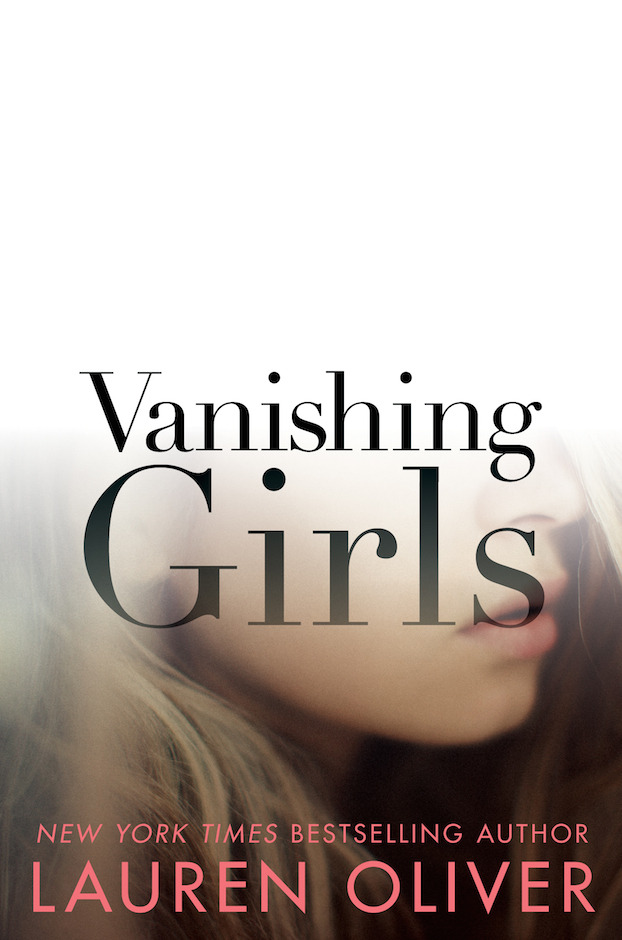
Vanishing Girls by Lauren Oliver

This almost seems like an unfair advantage, since Lauren Oliver was an author I had read and enjoyed before, so I had an idea of what to expect. Then again, if I had received Panic (the other book of hers I've read) instead, then I don't think I would have regarded it as highly. This book was simply so beautifully character driven. I could not put it down, because the characters felt so real they could have been my friends. It wasn't just the vivid characters, but the honesty of this book that really got me. It didn't shy away from tough topics, but more so it didn't try to sensationalize or demonize them. VG simply laid out the truth and let the reader form their own opinion on it, which was really refreshing. It reminded me of when I only wanted to be treated like an equal in my teenage days. This book doesn't talk down to its audience and doesn't try to instill a 'moral.' It respects its readers, which for some books isn't quite the case. 

A Review Too Harsh 
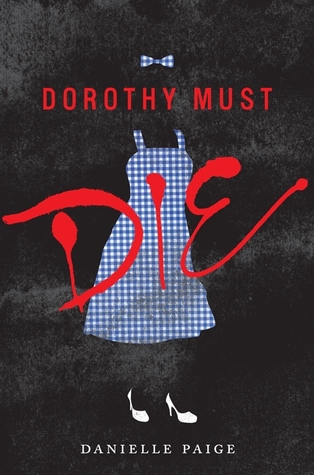
Dorothy Must Die by Danielle Paige

Yes, I really hated Dorothy Must Die. I'm not going to deny that. It was filled with enough troupes and cliches to make your eyes bleed. Still, I feel like my hatred for those troupes colored my impression some, and made it harder for me to find redeemable qualities in the rest of the story. I did manage to read it till the end, mind you, and that was because there were aspects there that appealed to me, such as the re-imagined 'monsters' of Dorothy and her friends. And perhaps that's what spurred such a scathing review; I love creative world building, and like Zodiac, I wanted the story to be good so bad because of the world. When that didn't come to be it ended up making me hate it more than if it had only been a boring book. My little heart is broken so easily, and then usually turns pretty cold. 

Most Bad Assery 
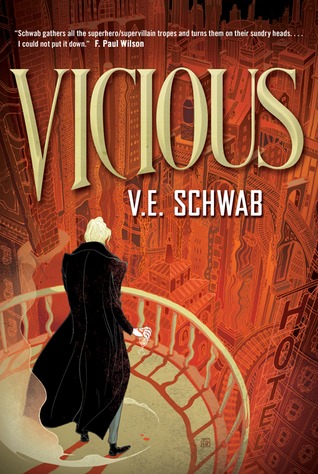
Viscious by VE Schwab

Gah. Holy balls, guys. This book. Yes, Schwab has made it onto this list twice, and with good reason. I'm pretty sure she spins word gold. This book had everything I've ever really wanted in a book. It was so good it made me want to cry. More so, it was something that I would have loved to write, which is strange. It's rare for me to find a book that I could have written myself. The best friends turned enemy relationship, the moral ambiguity of heroes and villains, and the incredibly realistic explanation of superpowers. Gah. Even now it leaves me speechless in its awesomeness. If you weren't protected by a computer screen I would smack you in the face with my copy and make you read it. Believe me. I did that to my reading buddy. Don't worry, she thanked me for it later. 

A Review Too Soft 
Survive the Night by Danielle Vega 

From the cover to the content, I really wanted to like this book. I was excited to see drug culture being tackled in YA. When it came down to it though, the book just fell short. It fell short with character motivations, with its attempt at an unreliable narrator, and its attempt at horror. Though I admit to projecting what I wanted onto the book in the review, I was still too soft on this book because of what I wanted it to be. I shoved on beer goggles and convinced myself this was the book I wanted, or was at least passable, but when I sobered up the next morning (figuratively), there was no denying that it just wasn't as good as I wanted it to be. At the end of the day this book had a lot of potential, but potential is not the same as actually following through on it.

Ending With a Bang 
Shades of Grey by Jasper Fforde 

The first book I read this year still riles me up as much as it did when I first read it when I think about the ending. Perhaps what makes it so enjoyable for me is that I'm horrible for flipping to the last page and reading the last line. Well, when I did it with Shades of Grey, the scene involved a very happy ending at a train station. Only when I reached the end of the book did I understand the context of what was going on, and realized it was anything BUT a happily ever after kind of ending. It was such a smack in the face as a cheater reader like me, but I adored it. It completely threw me and my expectations on its head, which is exactly why I read. Not to mention the book was such an incredible delight the entire way through, and so the ending still has a big impact on me. The books that stay with me for years always end up being those I treasure most. 

Sunday, January 25, 2015

Sex, Drugs, and Rock & Roll: Why Edgy Gets Me Excited

So, currently I'm reading Vanishing Girls by Lauren Oliver, and boy, am I smitten. The characters, story, and tension are all wonderful, but what really gets me are the parts most people may consider "edgy." I love the language-- the swearing is few and far between, but it feels accurate. The mentions of sex and sexuality, as well as what goes along with it-- sexual assault and porn to start. Then there's the drug mentions. One main character may only do a little pot or smoke cigarettes, but the harder stuff exists on the fringes-- it's there, mentioned in passing, just another part of the atmosphere.

But why do I love that this book touches on all of that? It's by no means an edgy story-- not about drug addicts or the like-- it's a story of sisters and their relationship. Truthfully, I may be a bit of an angst bunny. I love it when things get a little dark, but really, these things make books more real (when done well) because they were a part of my teenage experience. As a teenager, these things weren't the forefront of my life. I wasn't a druggie or had a lot of sex. In fact, aside from a little underage drinking I was a fairly straight laced kid. But I knew these things existed. I knew kids in my grade who would experiment with drugs, who were caught having sex in school (and thus, suspended). The gritty realities of life were in my line of sight, even if I didn't participate in them.

Perhaps that's why I'm so attached to VG. Most of the plot does not involve those things, but they do have an effect on their lives of the characters. As teenagers, sex, drugs and the like are relatively new experiences, and they don't always know how to react or how to stay away from them. After all, it can be hard to look away from a car crash. Even if you consciously know it is bad, you don't always have the willpower needed to turn away from it.

Yes, a lot of parents and publishers would like to keep YA fiction clean, hence why most of these subjects are referred to as "edgy." They tone down real life in the hopes of keeping teenagers naive for just a little longer. It's something that I'd consider "edgywashing," an attempt to focus in on things that won't be offensive. I have nothing wrong with a G rated story, but it often feels unreal, like the author has stuck blinders up on readers to only focus on certain areas of life. Sure, there's a time and place for it, but much like Hollywood's whitewashing, it feels as something's missing. When we get whitewashing, we ignore the diversity in our world and suddenly, a whole bunch of people don't have anything to relate to. Often, that is how I feel in an edgywashed story. Sure, I can enjoy the ride, but it's hard for me to relate to a lot of these characters. They feel unreal, because my experience as a teenager wasn't nearly as sheltered as some others'.

I know I'm not the only one who feels that way. I work in a residential treatment facility for traumatized children, who have come from horrible backgrounds. Some have been abandoned by their parents, abused in innumerable ways, others have serious addiction problems, whatever. These kids are definitely the exception to the rule, but they often relay a similar issue as many POC-- they don't feel like they can relate to characters in most fiction. They don't know what it's like to live in a normal house with normally functioning parents, something that can be found in many YA novels. Because they have a hard time relating, they don't pick up a book as often. It doesn't feel "real" to them. They want to read about characters who have similar experiences as they do, and they want to learn from how the character deals with that situation.

I'm not saying every book should have sex and drugs and rock and roll. There's a time and place for it, and there's a right way to do it. Some books definitely don't need it. But, there's a plethora of conflict within those subjects, innumerable things to be done with it and kids out there who need those stories-- not because they want things that are "cool" and "edgy," but because that is their lives, and they're trying to figure out how to deal with those struggles. They need to know they're not the only ones dealing with those issues, and that there is a way out. Because like POC, like LGBT, like children with disabilities, they just want to see someone like themselves in fiction. They want to know they're not alone.