Monday, August 31, 2015

Art and Truth


There are bars on the window of my hotel room.

The room sits on the sixth floor of an older building, and the brass framed windows open large enough to slide through, without a screen to feign the idea of security. Three white bars stretch across only the opening, bolted to stone and porcelain, with a bold-type logo stretched across the bottom reading ‘Guardian Angel.’

The bars make me want to jump more than the inviting cement waiting at the bottom of the six-storey drop.

Not that I want to die, mind you. I actually enjoy my life and am quite happy with the way things go, most of the time. But it’s difficult to fight that urge to leap from a rooftop, to play chicken with a transit train and lose, or to pull the steering wheel and send my car into a tree. I think it’s that adrenaline of oncoming death, that brief moment before tragedy hits where everything seems to hang still, that I’m really aching for. Something beyond the mundane, the trivial conflicts and strife that do more to drag you down rather than make you feel alive.

Of course, it’s not something that I talk to many about. Urges of destruction are rarely a socially acceptable topic to entertain at tea time, and yet these impulses are very real, and very there. It joins the many other dark little secrets of mine that are not tea-time worthy, and despite the fact that I know others face similar demons and entertain morbid thoughts, we all keep them tucked away, out of sight and out of mind.

But things don’t stay buried. Not in the mind and not in the world. And when wild dogs dig up our skeletons, we have no choice but to answer for them. I believe the more frightening option, however, is that these skeletons stay buried, that we harbour them in secret until the day we die, and those we leave behind have no idea what really took place within us.

Unfortunately, or fortunately, I am not able to silence the demons for long, or keep these morbid thoughts from bleeding out. Most often these themes and ideas creep out into my art. Stories of war, racism, utter despair, and struggle are those that I’m drawn to write. I want to look into the abyss and see what looks back. I want to know what’s hiding beneath everyone’s tea-time demeanour. I don’t want those secrets to stay secrets.

And today, as I leaned against the bars of my hotel room, looking out over the gloomy downtown Seattle and imagining a moment of free falling, I realized: you can’t lie in art. It is pure truth, and the things you create are a reflection of all you are within, the nice things and the not so nice things. It is impossible to create art without truth. Whether that truth is a well-known and accepted one, like the love between a mother and child, or something not so talked about, like the daily struggle against depression, you cannot make art without a reflection of soul taking place.

And perhaps that’s where I’ve gone wrong for the last little while. It’s difficult as a writer to sometimes share your work with others, as that is a piece of raw, unprotected soul that you are offering to them. It can be crushing to have others dismiss or criticize it, and I believe as we grow older, it makes us more guarded and less willing to show those pieces of ourselves, whether in art or otherwise. Without realizing it, we quietly censor ourselves more and more as life goes on, until we are nothing more than our tea-time demeanour, our polite little masks. For me, it’s become more and more difficult to share and create my work, being so overwhelmed by the opinions and criticisms of others, not necessarily about me or my writing, but about what I’m actually trying to say.

Is my message too dark? Will people be offended if I talk about these subjects? How do I portray this in a way that doesn’t make people think that I’m a monster?

On a walk with my boyfriend the other night, we discussed art and what made something “real” art. He made the point that art wasn’t to be shared, that “real” art was something created by the artist, for the artist. And though I argued vehemently, (“Of course art should be shared! It can’t be locked up in a box and forgotten!”) I think there’s definitely some truth in there. When you become so overwhelmed by what everyone else wants, which is very common when getting into the business side of art, you can’t hear your own inner muse. You can’t find your truth, because it gets mixed up in everyone else’s truths. And when you lose your own truth, you either can’t produce anything, falling prey to the devil’s “writer’s block,” or you lose all love for the craft.

I like to think diversity in art isn’t just about the artists themselves, but what you’re really saying. I like to think that the stories and truths within need to be as individualized as the artists, and we should be mindful of looking over each other’s papers too much. When you have too many people trying to stick their thumbs in the pie, you only get a crust full of holes. Inspiration is great, but there’s always a balance to things, and too much outside influence dilutes your individual style.

So, at least for me, that’s what I need to do: write truthfully. Be honest about what I feel and experience as a human. There are always those out there who feel just the same, who need those stories or that art to make them feel connected to someone else. To make them feel not so alone.

At the end of the day, what keeps me from pulling the steering wheel, from taking a swan dive, from leaping to dark impulses, isn’t some stupid ‘guardian angel’, but the fact I know I’m not alone. I know there are others out there like me, because I’ve shared my art and they’ve shared theirs. I know the world is dark and morbid and so am I, but it’s also full of incredible people, whom I hope to understand and who can understand me.

So I’ll be honest, even when it’s not easy. I’ll try to remember the feeling of art as a child, when it felt like my skin was as thick as steel. Because, let’s face it: I will have zero control over my demise when the time comes. I could die tomorrow, and I couldn’t bear to leave anything left unsaid.

Tuesday, August 18, 2015

Interview with Carter Roy and Giveaway!


Today on the blog, on the release date for the Glass Gauntlet, I have the privilege of hosting Carter Roy, as well as a giveaway of his awesome new release. Why head to the bookstore when you can win this baby with the click of a button? To celebrate its release I'd like to welcome Mr. Roy to the Underground!


1. Out of the many jobs you've had, which one most influenced your writing?

It is boringly obvious, but my jobs in publishing have most influenced how I write. I started as an editorial assistant and ended up in the position of editorial director at a major publishing house, and along the way I learned from the literally hundreds and hundreds of books I was lucky enough to work on.

2. What made you switch from writing for adults to children? What appeals to you about each?

I don't really feel like I made a "switch," exactly—I still write both! But the stuff for younger readers is less thinky and a lot more fun, while the adult stuff assumes a greater sophistication in the reader.

(This is not to slander younger readers; far from it. But part of growing up as a reader is to acquire a readerly sophistication that allows you to switch with ease from a novel by Charlaine Harris to one by Thomas Harris to one by Thomas Pynchon. Writing for adults has a bigger playing field as a result, if that makes sense.)

3. Did you have any trouble switching from short stories to a novel length tale?

Yes and no. Figuring out the pacing of a novel turns out to be really a lot of work. Ideally, there is a page-turning quality to the storytelling, right? But there also needs to be breathing room for exposition and character development and so on, so it can't all be breathless excitement. (Besides which, breathless excitement gets pretty dull after a while, and proper lulls in the storytelling make the more active bits all the more thrilling.) But with a novel, you get all this room to play around in that you don't have in a short story. The reader has settled in for the long haul with a novel, so she gives you more space for your tale. Not so in a short story. There, every line has to count. There are real challenges to each form.

4. When do you write? Do you have any routines or rituals?

I try to write to a schedule, but those can be awfully hard to nail down. (I recently became a father, and suddenly all routines went out the window.)

Ideally, I get up early (five to six am), brew some coffee, read the news, and then turn on Freedom (a program that blocks the internet for a set amount of time). And then I write that day's word count target, which can be anywhere from 1,000 to 2,000 words depending on the draft and where I am at in the book. (Later chapters and earlier drafts come faster; revision is where the writing slows to a crawl.)

Between chunks of the story (when I reach the end of a scene, say), I take a break and do other things. It's important to give your brain a break once in a while, and doing something else often shakes things loose. Walks are good for solving story problems.

5. Do you have any difficulties switching from editor mode to writer mode?

I don't think so. If anything, I'm too severe with my edits on later drafts. "When in doubt, cut it out" is my mantra. Each successive revision of The Blood Guard came in shorter than the previous one, because if I feel something is slow or not working well or showing the author's hand too much, I toss it. The first draft was a 100 pages longer than the finished book. The story is all still there, but there's no fat on its bones.

6. What advice do you have for young writers on writing an excellent story?

Never mind writing what you know, or what you think the market wants. Instead, write what you love. Nothing else is worth your time, and anything other than a story you love is going to get mired down in dreary, dead prose. Writing is tough, surely, but it is also fun. When you're clicking along writing the kind of book you want to read, then a certain kind of alchemy happens, and you find little pockets of joy in the writing all over the place. Love it or loathe it, but The Blood Guard is the kind of book I loved when I was eleven. Write what you love. Otherwise, why bother?

7. Are you a plotter or a pantser? Do you find it easier to plan or go with the flow?

Both. I work up a very detailed outline ... and then I feel free to diverge from it as the story comes together. I'm a firm believer in the liberating power of formal constraint. Outlines? They're safety nets. They allow you to feel secure as you blindly follow inspiration. As a writer, you can attempt bigger feats of daring when you know that even if you fail, you'll have the outline to fall back on.

8. What made you choose Evelyn as your main character's name?

Evelyn because I am fan of the hilarious, cutting novels of Evelyn Waugh; Truelove is because a friend's last name is actually Truelove, which struck me as both wonderful and a kind of curse.

9. What was the most challenging part of writing the Glass Gauntlet?

Making the story stand more-or-less alone but at the same time matter in the larger arc of Ronan's story.

Middle books in a series are always challenges—they can't move the story all the way to the end, but no reader wants to feel as though she is spinning her wheels waiting for the book three to thump down onto the doorstep with the conclusion of the tale. I knew Ronan and his friends couldn't leap right into full-blown action yet, because there is no way they could be ready to go to battle by book two. Instead, they needed to face a contained set of experiences that could dovetail with the larger story—and also set them up for the third book. Did I succeed? Beats me. But I certainly tried my best.

10. What is the best feedback you've received from readers? Got any stories?

I suppose my favorite (?) feedback comes from a few impassioned commentators who see The Blood Guard as having an agenda. (It doesn't. Honest.)

One letter writer accused me of having an anti-science, pro-religion bias, because the bad guys in the series employ cutting-edge technology. Another was sure I was against organized religion because the same bad guys have strange religious underpinnings to their beliefs.

The truth is that I didn't want to malign my villains just because they are true believers. Why shouldn't such people also recognize the power of science and technology? That bad people take advantage of technology doesn't mean I think science is bad; and just because some people commit heinous acts in the name of a religious belief doesn't mean religion is bad, either. It's a very complicated world out there, and I was hoping to make the opponents Ronan faces reflect that a little bit.

Why this has to be an either/or thing for some readers mystifies me. But I do appreciate their passion for their points of view, and I am grateful that they read my book and took the time to write to me.


Wow! Gotta love the last answer there. I definitely didn't see that one coming. Thank you so much Carter Roy for stopping by, and for those of you excited to get your hands on The Glass Gauntlet, I hope you'll enter the contest below! Simply comment that you would like a copy with an email address to contact you, and I will select a winner using a random number generator on Monday, August 24th. The contest is international, so enter quickly! 


Trust me, you'll want this one.

Monday, July 27, 2015

Book Review: The Glass Gauntlet


Book Review: The Glass Gauntlet by Carter Roy

Goodreads Description: Ronan Truelove barely survived his first encounter with his father and the Bend Sinister. Now, he’s determined to become one of the Blood Guard, a sword-wielding secret society sworn to protect thirty-six pure souls crucial to the world’s survival.

Eager to prove he’s got what it takes, Ronan is sent on his first mission with his friends Greta and Sammy to visit a weird-sounding school and take a series of tests called the Glass Gauntlet. Paper and pencils and nerdy scholarship—where’s the life-or-death challenge in that?

But the Glass Gauntlet is actually something much more dangerous: head-to-head competitions against ruthless opponents. Nothing and no one are what they seem. Who can he trust, and who will kill him? Ronan has to figure it out fast because his enemies are multiplying, and soon he will have to pass the ultimate test: facing his father again and standing up to those who threaten not only him and his friends but also the world.

My Review: An ARC of the Glass Gauntlet was given to me by MB Communications, but my opinion is entirely my own.

I hit the ground running when reading THE GLASS GAUNTLET as I had not read the first book in the series. I could have taken the time to read the first one, but I more wanted to read TGG on its own to see how well it stood up as its own story. After all, even though we write a series, aren't we told to make each book able to stand on its own? Its with that thought that I dived into these pages, and I gladly wasn't let down.

The beginning of the book is a little bogged down with some telling of what occurred in the previous book. As I had not read the first book, I found this information helpful, though many other readers could quickly grow tired of the explanations. Besides that, the book starts right into action, begginning with training in the Blood Guard's base camp before moving out to the estate of Agatha Glass to compete in some sort of 'test.' At first glass, Agatha's test could be seen as a refinishing of the Hunger Games trope-- a competition with life threatening challenges that runs the majority of the plot. Thankfully, this is not the case, as the "test" is not what the story focuses on, but rather everything going on outside of the test, which was refreshing. The tension and voice kept the story moving fluidly until all the tipping points are in place. It was nice to see that the major complications that Ronan faces in this story is caused by his own actions. Rather than being dragged along as a tool of the plot, Ronan instead makes choices both in the beginning and at the end that greatly shapes the outcomes. I especially liked how his decisions made things worse rather than better, as it keeps the tension high and the main character in the action seat.

The entire book had a definite feel of Rick Riordan's books, and many mirroring ideas. But where Riordan's stories focus more on magic, the GG is more focused on tech. The main mystery focuses around the glass gauntlet, what it can do, and how they were going to make it work. The writing is smooth and rather descriptive without going on for paragraphs and paragraphs. The way Carter Roy described scenes and actions made it very easy to visualize. His writing style keeps the pace swift and with deliberate details that are easy to latch onto.

One of the downsides was the lack of serious character changes or development over the course of the novel. I figure that more characterization of the main three characters took place in the first book, and the second is now more focused on plot than building up characters. It was nice to see some of Ronan's struggles-- how he dealt with thinking of his father and his responsibility to Greta-- but outside of him there's not much there besides showcasing character skills to convey personality. The character I was most interested in was Jack Dawkins, mostly because the mystery of his history and the emotion brought out of him, having to face friends he hadn't seen for many many years.

All in all, The Glass Gauntlet made for an enjoyable and fast-paced read. It definitely feels like a book that would appeal to boys, especially those interested in things like the Percy Jackson series. I did not expect to enjoy this book as much as I did and was delighted with the ideas and plot elements Roy brought to the table.

TL;DR: 3/5 stars. A good adventure story for those who dream of being a hero.

Book Review: The Girl in the Torch


Book Review: The Girl in the Torch by Robert Sharenow

Goodreads Description: At the dawn of the twentieth century, thousands of immigrants are arriving in the promised land of New York City. Twelve-year-old Sarah has always dreamed of America, a land of freedom and possibility. In her small village she stares at a postcard of the Statue of Liberty and imagines the Lady beckoning to her. When Sarah and her mother finally journey across the Atlantic, though, tragedy strikes—and Sarah finds herself being sent back before she even sets foot in the country.

Yet just as Sarah is ushered onto the boat that will send her away from the land of her dreams, she makes a life-or-death decision. She daringly jumps off the back of the boat and swims as hard as she can toward the Lady's island and a new life.

Her leap of faith leads her to an unbelievable hiding place: the Statue of Liberty itself. Now Sarah must find a way to Manhattan while avoiding the night watchman and scavenging enough food to survive. When a surprising ally helps bring her to the city, Sarah finds herself facing new dangers and a life on her own. Will she ever find a true home in America?

My Review:  I was sent an ARC of The Girl in the Torch, but my review is entirely my own opinion.

Right from the beginning of this book, I was pulled into Sarah's struggles and admired the way the author set up each conflict and could make every little problem feel like the end of the world for Sarah. As a new American immigrant arriving around the turn of the century, Sarah faces many varied challenges, from losing her mother, to choosing to jump from the boat to avoid deportation, to scavenging for food and a place to sleep among the Statute of Liberty. Through all of this Sarah remains resilient and hopeful, which is part of what made this book so special. Though Sarah undergoes horrible tragedies, she is always trying to move forward and overcome her next challenge. She doesn't dwell on things and remains optimistic and kind to those around her. Moreso, what made me admire Sarah's character is she was actually smart. The author, Robert Sharenow, didn't have her ignore red flags and walk blindly into danger. She could realize when something wasn't quite right, stand up for herself, and get out instead of allowing herself to be dragged into serious trouble. This is balanced well with a bit of the meekness and naivety that one would expect of a young girl on her own. The balance made her not only a realistic girl, but one that young readers can really look up to.

The pacing of this book is slow at first, but is in no short supply of tension. Each problem that Sarah has to overcome is presented in a way that makes it hard to look away, and each step builds upon itself. The last third of the book runs through like a thrill ride as Sarah has to find a way to rescue her new found friends and family from getting sent to prison because of her, while still find a way to stay in America. It was delightful to see all the pieces come together by the end. The epilogue definitely has a bit of sugary sweet cheesiness to it, but the overall ending to the story was very delightful. I can't think of a better word for it than that, since I was just delighted reading it.

The book had a very diverse flavour to it, since the story is of American immigrants. Sarah rooms with Chinese people and a black couple, befriends an Irish orphan, is rescued by a half-native man, not to mention encounters a variety of cultures settling throughout New York City. It definitely reminded me of something I would have read in school. It would be perfect for young readers to discuss in a classroom setting, as it does touch lightly on things like racism and life for immigrants to the USA.

I highly encourage teachers and librarians to pick this one up for their students. It would also appeal to those who enjoy a historical tale as well.

TL;DR: All in all, 3.5/5 stars. A very sweet and diverse tale, and one to savor.

Friday, May 8, 2015

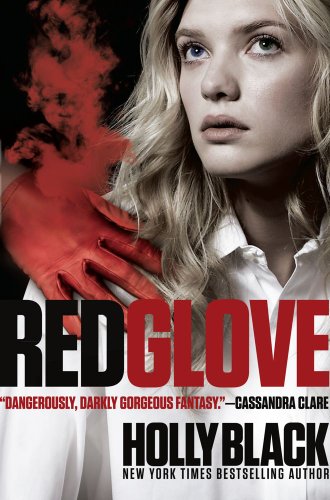
Book Review: Red Glove


Book Review: Red Glove by Holly Black 

Goodreads Description: After rescuing his brothers from Zacharov’s retribution, Cassel is trying to reestablish some kind of normalcy in his life.

That was never going to be easy for someone from a worker family that’s tied to one of the big crime families—and whose mother’s cons get more reckless by the day. But Cassel is coming to terms with what it means to be a worker, and he’s figuring out how to have friends.

Except normal doesn’t last very long. Soon Cassel is being courted by both sides of the law and is forced to confront his past—a past he remembers only in scattered fragments, and one that could destroy his family and his future. Cassel will have to decide whose side he wants to be on, because neutrality is not an option. And then he will have to pull off his biggest con ever to survive….

My Review: I had picked up Red Glove a long time ago and it took the right mood before I was able to read it. What intrigues me about this series is the world itself, the way the magic works at the touch of a hand and the whole mobster and criminal backing to it, which creates room for a great deal of conflict. Cassel's character has developed quite a bit since the previous book, and the loss of his naivety and innocence really improves the overall feel of the story. What I didn't enjoy about the first book was that Cassel seemed too naive to have grown up around criminals and mob families. After learning everything from the first book, Cassel becomes a bit darker and a bit more reserved, which made for a much more pleasant and believable read.

Along the line of characters, I really enjoyed getting to see Lila and her character progression throughout. She came into her own in a way she didn't-- and probably couldn't-- in the first book. She went from some mysterious and wonderful thing in Cassel's mind to a real character, which was nice to see.

Most of my sighs in this book just comes down to fundamentals. I feel like Holly Black spends too much time trying to build up the mystery and doesn't leave enough time to let the resolution of it hit home. The entire book the plot focuses around this woman in red gloves who murdered Cassel's brother, and the resolution to that plot is shoved into half a scene at the end. There was no satisfaction to the resolution because it almost felt tacked on, a secondary thought to the plot between Lila and Cassel, which ends on a tense note.

Which leads me to another annoyance. I have yet to make any conclusions until I read the final installment, but that final scene between Lila and Cassel felt like the most exciting part of the book, which made the rest feel like fodder and set up for the finale. I suppose that's my own grievance more than anything else.

The writing style is very straight to the point, and at times, I find rather bland. Because of this, when the author describes anything, it becomes painfully obvious that it's going to play a part in the story, even just a minuscule one, as opposed to describing an entire scene and leaving the 'smoking gun' hidden among other details. It makes the narrative feel predictable at times.

All in all, Red Glove is an easy, smooth read, though not at all "dark" or "noir," unless you consider PG13 noir. I'll be looking forward to the finale, at least to see how this all comes together.

TL;DR: 3/5 stars. An interesting idea but a not so interesting execution.

Book Review: Mister Death's Blue Eyed Girls


Book Review: Mister Death's Blue Eyed Girls by Mary Downing Hahn 

Goodreads Description: Based on an actual crime in 1955, this YA novel is at once a mystery and a coming-of-age story. The brutal murder of two teenage girls on the last day of Nora Cunningham's junior year in high school throws Nora into turmoil. Her certainties, friendships, religion, her prudence, her resolve to find a boyfriend taller than she is - are shaken or cast off altogether.

Most people in Elmgrove, Maryland, share the comforting conviction that Buddy Novak, who had every reason to want his ex-girlfriend dead, is responsible for the killings. Nora agrees at first, then begins to doubt Buddy's guilt, and finally comes to believe him innocent - the lone dissenting voice in Elmgrove.

My Review: It's taken me a bit to actually write this review, mostly because Mister Death's Blue Eyed Girls left me in such a funk. It's an incredible book and so different from what I'm used to seeing in YA that it was a stark breath of fresh air. The story followed Nora in the days leading up to and the weeks after her friends' murder. The whole town is abuzz, certain that one of the girl's ex-boyfriend, Buddy, was behind it, though Nora isn't quite so sure. Aside from the fact that this story is based on a true crime, the events feel so starkly real. Not in the murder or the reactions of people, which were all very well done, but in the little minute details most writers easily overlook. We get to see our MC "fall" for nearly every guy who pays her the time of day, we see our MC and her friend badmouthing their murdered friends before they realize what has happened to them. We get to see the complexities of emotion-- like how Charlie really likes Nora, and yet can't be around her after the incident due to the conflicting feelings and memories. Yes, all of these little tidbits may look unfavorable on a character, but the reason they stood out so strongly is because they were true to being human. Teenage girls don't meet "the one" off the first bat. They fall in love with anyone, (or at least that's what it felt like), they turn to sharp words easily because they don't realize the lasting effect, and most of all, the feeling of confusion and uncertainty remains strong throughout the teenage years. The little negative characteristics creeping out really brought that dose of reality in. The character felt like real people because of, not just what they experience, but how they experienced it.

Mister Death is a powerful loss of innocence tale and a strong period piece. Through every moment in that book, the time period bled in and didn't let you forget it. Records are playing. Long shorts have been introduced. The girls talk about how it sucks that James Dean passed away. Some writers may think they're being overbearing when trying to set a scene or time period, but this book only proves that you simply cannot overdo it. Adding more to instill scenery or setting really has a big impact. Aside from the time period, even just the way the author described the town and the summer heat left a lasting impression and made the setting come alive like another character. As well, the loss of innocence is stark. The first few chapters we get to see our MC, Nora, and all her friends living their lives as normal, which allows for the sharp contrast to what happens when the murders take place. Because of this, most of the characters can come off as a little bit like boy-crazy bimbos in the beginning, but I believe this is more reflective of the time period and their naivety than anything else.

This book is strongly character driven and best when you're in more of a reflective mood. Aside from the murders, there isn't a whole lot of action that goes on, and it is a story of a personal journey and discovery. The only thing I would complain about is having a bit more closure with the actual killers. The book spends time alternating between POVs and we get the chance to see things through the killer's eyes. However, I felt like it was left a little unfinished and would've liked to see one or two more scenes from them. Other than that, the relationships in this story are really what's gold, my personal favourite being the relationship between Buddy and Nora. There's something really beautiful in their scenes together, and not in a lovey-dovey way, but in a way that speaks to the truth and mystery in human relationships.

I would greatly encourage anyone to pick this up, especially if you've ever faced some sort of tragedy. Though not a lot happens, the pace is swift and makes for a quick and invested read.

TL;DR: 4/5 stars. A great period piece and a strong loss of innocence story with some intense ideas explored.


Thursday, April 9, 2015

Book Review: Zodiac


Book Review: Zodiac by Romina Russell

Goodreads Description: Rhoma Grace is a 16-year-old student from House Cancer with an unusual way of reading the stars. While her classmates use measurements to make accurate astrological predictions, Rho can’t solve for ‘x’ to save her life—so instead, she looks up at the night sky and makes up stories.

When a violent blast strikes the moons of Cancer, sending its ocean planet off-kilter and killing thousands of citizens—including its beloved Guardian—Rho is more surprised than anyone when she is named the House’s new leader. But, a true Cancerian who loves her home fiercely and will protect her people no matter what, Rho accepts.

Then, when more Houses fall victim to freak weather catastrophes, Rho starts seeing a pattern in the stars. She suspects Ophiuchus—the exiled 13th Guardian of Zodiac legend—has returned to exact his revenge across the Galaxy. Now Rho—along with Hysan Dax, a young envoy from House Libra, and Mathias, her guide and a member of her Royal Guard—must travel through the Zodiac to warn the other Guardians.

But who will believe anything this young novice says? Whom can Rho trust in a universe defined by differences? And how can she convince twelve worlds to unite as one Zodiac?

My Review: Warning: Spoilers and swearing ahead!

Confession time: I'm terrible for covers. I will often judge a book by its cover and pretty ones make me go grabby hands. That's why as soon as I saw ZODIAC by Romina Russell I had to grab it. The story looked intriguing, and plus, Space! Who the hell doesn't love sci-fi? You? You're lying.

I was severely disappointed.

The beginning of Zodiac starts off pretty strong. We step into a pretty typical high school experience (save for taking place on one of cancer's moons) and we're introduced to Rho Grace and her friends, all part of a band. The beginning did an excellent job of introducing a lot of necessary information. In fact, all throughout the book, the author really excelled at weaving information into the story so nothing felt terribly bogged down. Through the first several chapters, I realized there was a lot of information being relayed, but it didn't feel heavy or bogged down, which is essential when you're building your own world. To add to that, the beginning really drew me in, especially by the time our initial calamity sets in. When the moons of cancer collided, I could really feel it. The way the author describes the terror and tragedy really hits home, which is especially important, as we don't get enough time to see and get attached to the world before it's destroyed. I didn't know the characters much, as the story starts with the tragedy, but the author managed to get in some real empathy from me, just through the way she described the loss and pain the characters felt. All of this was without feeling too bogged down by "woe is me" which is nice.

Along with being skilled with laying information into the narrative (both plot wise and world building), the author really excels at world building. The system of Psy energy, how the constellations came to be and existed together all felt pretty well put together. It felt solid, and each time the characters landed on a new world was the best part of the book. I'm a sucker for world building and Zodiac had it in spades. However, that is where this book's strengths end.

Let's start with the characters. I'm not normally one who pickets for strong female characters, but Rho pissed me off by how passive and pathetic she was. Throughout the whole book, she does absolutely nothing. It's her idea to warn other signs of the coming danger and what happened on her home world, yet no one believes her or she gets blown off. She has some skills with Psy energy (which she doesn't EVER need to practice, because she's a SUPER SPECIAL SNOWFLAKE.). And she faces Ochus at the end, a battle that ends in a tie because she was able to use her Super Special Powers That She Never Has to Actually Learn to beat him back just enough to survive. The story involves Rho being picked and given power because "It's in the stars" and what's a YA book without a goddamn speshul widdle princess. She then runs around to a bunch of other planets, all in an attempt to show off more of the author's world, to convince people that their version of the boogeyman is real. Meanwhile, despite planets BLOWING UP, all the official adults are too stupid to actually do something about it. Then when she finally convinces them (which she doesn't even do, they're swayed by the fact that SHIT KEEPS BLOWING UP) they all run off to a battle which they have little to no plan for (other than using our Speshul Princess as bait for the baddie), and then get beaten. Big surprise.

I would be a bit more forgiving if Rho actually did small heroic things throughout the book. You don't have to blow up a baddie or save a planet to be a hero. Sometimes our heroes are those who help out children, go out of their way to do something they know is right, or even just speaking up and telling people what they think. There are no small chances for Rho to show off what an "awesome" person she is. (I certainly couldn't figure it out, but every other character wouldn't stop telling her how fabulous she was, so there must have been SOMETHING there.) Even when there is a chance to rescue some people on Virgo, instead the author chooses to have the people they were going to rescue (mind you, this wasn't even Rho's idea) die instead. Just to make her look worse. Well, congrats, mission accomplished. There was nothing about Rho that made me like her, let alone cheer her on as a hero.

The other characters in this are no better. Hysan is probably the most forgiving, but too many parts had me rolling my eyes (especially when he talks about how speshul Rho is despite her NEVER HAVING DONE ANYTHING.) Mathias was eye-roll worthy, and the only thing that made me like him was when he died at the end. Which I don't foresee as sticking, since we don't get to see his corpsey body. Boo.

Ultimately, this book would have been wonderful had it had a completely different plot and characters. There was nothing to sympathize with with the characters, their motivations and actions often seemed stupid and unreasonable (such as Mathias Tasing guards in one of the Houses. You know, that shouldn't get you in trouble or anything.) Plus the plot felt so formulaic that it made me sick. Here's a tragedy. Here's our MC getting chosen. Here they are with their plan to save the day. Here's the two boys that make a love triangle. And then yaaay, the special snowflake saves the day without making any difficult decisions. Everything about this book was wonderfully creative-- except the parts that matter.

TL;DR: 1.5/5 stars. Unless you enjoy the cliched love triangles and a plot you can foresee blindfolded, don't bother.